Root Tones: Getting to the Root of People, Places & Things Musical Earth's Musical Kinship
In this issue, I will explore connections among various musical traditions from diverse parts of the planet. For example, have you ever wondered why traditional music from one part of the planet sometimes sounds exactly like traditional music from another part of the planet? These two places might be very far away from each other on a map, yet they share precisely the same sound. Additionally, people from these two diverse locations have been playing the same type of music long before the advent of modern travel and communication devices, such as the airplane, telephone, TV, railroad, telegraph, or steam ship. In most cases, thousands of years before any of these. So, it all begs to ask: "How does this happen?"
I have wondered about this for many years. First, I thought, "Hmmm, if there was no possible way these people could physically communicate across these great distances, they must have been psychically communicating the music to each other on some level, or, maybe they were tapping into a common continuum, a stream of consciousness where they simultaneously, yet separately, accessed these expressions." This is valid on some level because we know that experienced healers from around the world can visit each other without physically going anywhere. But unfortunately, I was going too far because there is an extremely important piece I was leaving out, one that was hidden to me because of the arrogance imparted by my western education.
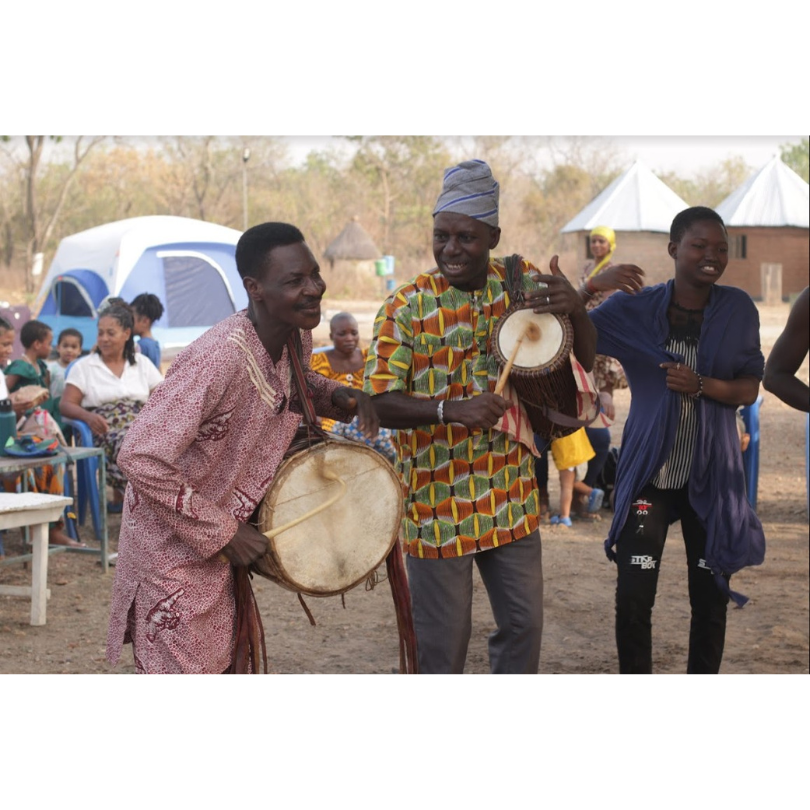
It is this: people have been walking, boating, trading and interacting around the planet for many thousands of years. It is in the interest of hegemony that modern rulers have painted themselves as the ones who have brought the world together. If you want to rule, you start by making yourself number one, then you make everyone else follow you. You also rewrite history. Unfortunately, for me and others, this concept was so hard to grasp because I was convinced that nobody was "advanced" enough to travel around the planet until the his- tory books told me so. With this updated information, we now can see clearly how people can share similar musical styles in diverse locations on Earth. Also, we can see that "neighborhood Earth" is not as large as they have been making it seem.
There is something of the highest value that we, as Kem people, learn in the traditional education. We learn that we are products of what we are exposed to, and we learn that invention is an illusion. Inventions are only the mistakes we make in the replication of the things we are exposed to. It is difficult for some of us to accept this aspect of the human mind, mainly because of our resistant egos. For example, somebody who learns to speak a language as a child is surrounded by that language, and therefore learns through exposure to it. Music is much like a language. The complexity of a musical style is exactly like the complexity of a language. Just as the romance languages share a Latin base, diverse musical traditions share common roots. I would say, then, that musical invention is the intersection of the varied musical & non-musical exposures of the individual, coupled with mistakes. For example, someone who grows up listening to Jazz, Psychedelic rock, Funk, and Indian music would potentially invent a "new style" , but what he or she is really doing is expressing a unique combination of their exposures. What this means on a global scale, considering music in all its infinite variety, is that styles of music that share very definite characteristics are probably related to each other causally. This is not to discount the fact that musical traditions derive melodies and rhythms from naturally occurring phenomena; it is just to say that we must incorporate the human being's historic global travel into the equation.
There are some examples I would like to state, and these are some of the more obvious and intriguing ones: the connection between the Chinese and the African, the West African and the Irish, the Finnish and the Native American, the Hungarian and the Native American, and, lets not forget, the African and the Native American.
I wish that I could include in this article recordings of the actual music, but I cannot, nor do I have on hand listings for CD's that you could pick up at Amazon, but I urge to do your own research and listen to traditional music from around the world. I have done my research by listening to various ethno-musicological recordings during my life. Some libraries now have audio sections where you can do your own research. Go and listen for yourself.
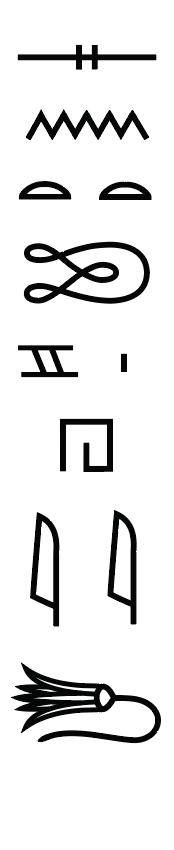
The Chinese and the African connection can be made on a couple of levels. There is a thing called a "pentatonic scale" by modern musicians. It is a scale which is composed of five notes. There are several standard variations of this scale. The Africans and the Chinese share all of these same variations, expressed in the same ways. If you listen to rural music from both traditions, this will become blaringly obvious. Similarities are not only in the notes they use, but also in the way they are sung, and even in the instruments they are played on. In China there is an instrument called the Sian-Xian. It is just like the African "lute" on which this type of music is played. These are both strummed instruments, like a guitar with only 2 or 3 strings. They resemble the ancient Kemetic instrument expressed in the "hieroglyph" for the sound "Nefer" which means beautiful. Also, there is the Chinese Erhu, an instrument just like the Retee of Senegal. They are both bowed like a violin and share a strikingly similar traditional style music that is played on both. We know that Africa and China have communicated for thousands of years in the past as our elders, initiations and historical documents (those that have not been destroyed) have told us this for millennia.
The West African and Irish connection is one that is very interesting. If you listen to music from Mali and then music from some pub in Dublin, this fact also starts to become clear. It is latent in the melodies and in the rhythms as well as in the repetition with which the accompanying melodies are played. This connection is exemplified in the "guitar" playing in Mali and the "Bagpipe" playing in Ireland. If you listen to the modern form of traditional music in both countries, you will see this connection. An interesting addition to this is that, in Ireland, bagpipes replaced the harp only recently (in the last thousand years in fact) as the principal instrument of the culture. And the guitar only recently replaced the older string instruments in Mali that also include the "harp" or Kora. These musics also share a very strong pentatonic tradition, but what stands out especially is the way the accompanying melodies are played. Also, the rhythms that are played on the Malian calabash drum have the same rhythmic propulsion as Irish Bodhran drum rhythms.
The Finnish and the Native American connection is exemplified in the singing styles and in, once again, the pentatonic tradition. The connection is so strong that I was startled when I first heard it. The similarity between the traditional style of singing in Finland, called Joika, and the singing of the Native Americans from the "Plains" region of the country, is very clear. Sung melodies are projected in a similar way and share many similar song melodies. Another interesting commonality is that the Feni or "Laps" (indigenous peoples of Finland) also live in Teepees and use the same kind of drum. Also, the artistry on their clothes is similar. I was startled one year when I saw a broadcast of the "Siberian Music Festival" that showcased acts from Finland to Alaska. The similarity of the music they were playing and/or the traditional clothes they were wearing was very clear.
The Hungarian and the Native American connection is extremely specific. It is between the Magyar/Huns (traditional Hungarian peoples) and the Dakota (a peoples from the Americas). It is a very specific song that is sung in both cultures. The lyrics are the same in both songs, and the melody is the same (in the Magyar version it is simply sung down a fourth within the same mode). The biggest difference is that some of the words now sound slightly different, having changed over the passage of time. Here is the Dakota version: "Rakattu ja dizet, Ill ja fusti hezod." Now, here is the Magyar/Hun version: "Megraktak a tuzet, Szall a fustje hozzad." In both cultures, this means something like "They put the fire on; the smoke is flying to you." Additionally, some of the visual "artistry" of the Dakota and the Magyar is identical. Examples of this can be found in several complex painted symbols that exist in both cultures. The connection is fascinating.
Finally, there is the African and the Native American connection. All you have to do is listen to African Music, especially West African singing, and then listen to Native American Pow Wow songs. The Pentatonic tradition and the melodies are exactly the same in many cases. It is not startling because people have been traveling back and forth between the two continents long before Columbus was a twinkle in his father's eye --thousands and thousands of years before the illegitimate conquest of 1492.
Have you noticed that the two principal groups I have tied together in all my examples are the Native Americans and the Africans? This is not a coincidence. The Africans have influenced the Irish, Chinese and Native Americans. The Finnish have a trans-Siberian connection with the Native Americans, and the Hungarian connection is, well, still making me think. I have heard that the Magyars/Huns have connections with Kemetic culture, which is evidenced in their traditions and their ancient writing.
So, in combination, all this is food for thought. I am simply stating the connections. Anything else would be speculation on my part. We know many scrolls were burned, and many people died during the enthronement of the current powers, but maybe music has left us a trail of breadcrumbs. We are here now, and even the slightest whisper of this historic global kinship is enlightening. Look around you, and you will soon find the connections shouting to you, very loudly.