Organics and CultureGrassroots preservation in India: Venu Madhuri Trust
Spotlight: Organics and Culture
Grassroots preservation in India: Venu Madhuri Trust
The villagers of Ramanwadi suffer from a lack of water. Water is extremely scarce during summer. Irrigation is difficult because water is not plentiful, even though the village rests in a tropical forest reserve. The forest itself is over-exploited for fuel wood and timber, and the land is becoming less fertile due to deforestation and soil erosion. Villagers are poor, and their farms continue to produce less than optimal yields due to environmental stresses and wild animals consuming their plants. Women must walk over ten miles for drinking water in the hot season, and over 15 miles for firewood. As conditions for the villagers worsen, their traditional lifestyle is threatened.
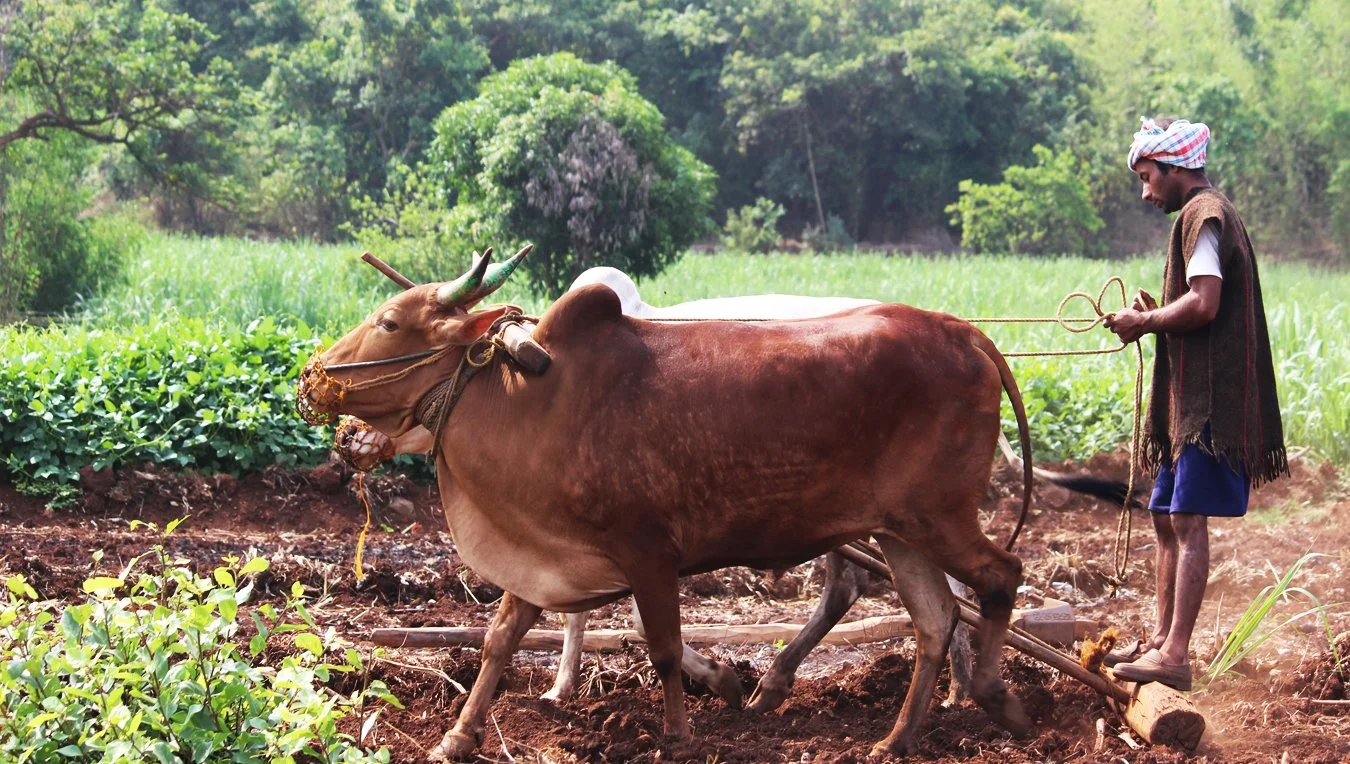
India is a country of vast cultural and spiritual wealth, but like most places where tradition and indigenous culture re- main strong, the spread of Western culture, technology and outside influences pose a threat to the precious in- digenous lifestyle. The village of Ramanwadi in the Kolhapur district in Maharshtra, India, consists of 1112 hectares, over half of which is "medium forest". The village has a population of 360 people living in 52 households, 43 of which are below the poverty line. The village is located in a biodiversity hotspot - the Western Ghats - and is home to diverse flora and fauna. Surrounded by tropical wet evergreen forests, the village enjoys rich natural resources. But. like most forested areas, the forest is shrinking and the ecology of the environment is disturbed. Luckily, the Venu Madhuri Trust, an. NGO in India, knows the importance of environmental and cultural preservation and is working to ensure the safety of both the environment and the traditional lifestyle in this small village.
The Venu Madhuri Trust's mission statement says: "We shall strive with sincerity, to promote integrated, sustainable rural development that is based on traditional, time-tested wisdom, which aims towards local self-sufficiency with special emphasis on preservation of indigenous breeds of cattle and which fosters the highest human values." Their goal is to enable Ramanwadi to achieve and maintain self-sufficiency while preserving the environment and local culture. Their vision involves four phases: Health and value-education for children. Watershed development, Organic farming and cottage industry and Animal husbandry. "The village was selected based on a basic survey conducted among various villages," explains Neera Danji, a director for the Trust. "A survey was done to determine not only the material and social condition of the residents, but also the prevailing cultural and spiritual environment. We were on a look-out for a village where there is a scope of holistic development based on indigenous knowledge. Ramanwadi is materially poor but culturally rich compared to other villages in its vicinity. This leaves ample scope for all round development based on eco- friendly holistic practices, as this not only will improve their lives but also sustain them in the long run.''
Venu Madhuri's work began in 2001, and their efforts have made a huge difference in the lives of the villagers. Most villages in India depend on the government for their development, and government projects are, in general, ineffective or are "paper projects" without active action. Venu Madhuri choose the village of Ramanwadi to begin bringing VISIOn development and preservation to India. Upon its arrival in the village, the first task for Venu Madhuri was to unify the villagers, who were largely divided by politics, caste and rivalry. An eleven-member committee was also set up by the villagers themselves to help speed up the developmental work. This committee includes three women, helping to strengthen the role of women in both the community and in the development programs.
ANNAMRITA
Venu Madhuri provides a free mid-day meal to the schoolchildren of Ramanwadi that is nutritious and tasty. Since May 31, 2002, every day, a dietician prepares the meal with locally available food. The kitchen is clean and adequately equipped, and has been given a cleanliness certificate by the Zilla Parishad district health department. Additionally, an organic vegetable garden has been started to help support the Annamrita kitchen.
Because the meals are only available to school children, it encourages the village youth to attend school every day. Ramanwadi has a high rate of illiteracy, and its government school is of poor quality, but the rise in school attendance is seen as a positive result. Internal reports state that the health of the village children has improved due to this project, and they are less susceptible to disease and infection.
SAMSKARA VARGA (CLASSES ON VALUE EDUCATION):
Due to the lack of quality of the government schools in the village, Venu Madhuri has implemented a supplemental schooling class. Every day before their regular school, a group of 40 children meet to be educated in moral values, environmental concerns, yoga, etc. The government school teaches none of these things, and because of the tradition and culture in the village, these are necessary components to a young person's education.
Samskara Varga continues year round, and during government school vacations, secondary school students also participate (there is no secondary school in the village). Kids become involved in many activities, such as quizzes, nature trail walks, afforestation, village cleaning, competitions and excursions. The activities are hands-on, and children have an opportunity to make a difference in their village and gain valuable skills and experience. Village children are very enthusiastic and eager for their Samskara Varga activities, and their traditional education and values system is effectively transmitted.
"Generally the present day schools impart only material education. Our program, "Samaskara Varga'' literally means *classes on value education,' Neeraj explains. *Here we take sessions on morality, discipline, obedience, respect for elders, cleanliness and personal hygiene, various aspects of local culture and spiritual knowledge, merits of residing in a village, fallacies of modern education and living and so on."
WATERSHED PROGRAM
Water is a fundamental problem for the Ramanwad village. Women must walk over ten miles in the hot season to fetch drinking and cooking water for their families, ligation is poor, and crops do not produce optimal yields due to a lack of moisture. The village has three wells, one of which does not function; one of the two working wells goes dry in the summer. Although the village is in a forest, heavy deforestation and erratic rainfall has changed the environment. Streams are disappearing and there is only one water-harvesting structure on the mainstream near the village. The structure, made of mud, is only four feet high and does not come close to meeting the water needs of the village. Although a traditional irrigation system is in place, the water supply is lacking and villagers must take turns irrigating their farms. Because water is necessary for life, making water adequately available is one of the main objectives of Venu Madhuri in Ramnwadi.
A survey done in 2002 has shown that the first step to ensure an adequate water supply in the village is to recharge the groundwater table. Venu Madhuri has secured a geologist, engineer and water resource people to build drainage line treatments to help stop rainwater and resurrect the groundwater table. While funds (including daily wages to villagers) are provided by Venu Madhuri, villagers are providing shramadaan (volunteers) to help with the much-needed project.
In June 2003, a dam was created to help prevent future water crises. Unfortunately, after the 35 foot long and 9 foot high dam was constructed to harvest rainwater, a heavy rain carried away a portion of the dam, which was made of mud. Repairs are scheduled to begin in 2004.
AFFORESTATION
The forest surrounding the village is disappearing. The reduction of the forest affects every living thing, from plants to wildlife to humans. Reforestation is an important part of ensuring that both the environment as well as the traditional lifestyle of the villagers are maintained intact. The afforestation portion of the project was started in August 2003, when 275 saplings of Mango, Cashew, Jack fruit, Drumstick and Guava trees were distributed. Not only will these saplings help vegetate the area, but they will eventually provide food for the villagers. Members of the village are currently working to ensure that the saplings grow and thrive.
WOMEN
The traditional arts and crafts of the Ramanwadi villagers once played an integral role, as they were a means of income and of cultural identity. Because of the increasingly demanding living environment, much of the traditional artwork has become a second priority. Venu Madhuri is working to strengthen the traditional culture by offering monthly stitching classes to the women of the village. Not only will these skills give women and girls of the village an opportunity for generating income, but this knowledge will strengthen the traditional culture and values.
The Venu Madhuri Trust is working hard to ensure the preservation of indigenous culture and lifestyle in the Ramanwadi village of India. The trust is privately funded, without government aid. The majority of their funding comes from within India, and villagers play a very active role in the development of their village. As with all nonprofits, funding is vital for their activities. Patrons are invited to sponsor a child's meals for one year ($100), feeding the entire village ($100), a one or three day educational field trip ($111 and $178) or various educational expenses.
Neeraj elaborated on the effects that the project has had on the villagers: "When we selected Ramanwadi in 2001 for development, the village community was divided into groups based on political affiliation, caste division and internal rivalry. Today most of the villagers are realizing the importance of unity and sidelining their earlier rivalry or affiliations. They have come together to actively participate in development work. Children are no longer malnourished. Some people have given up vices like drinking and smoking. There has been a positive change in youth and children due to the Samaskara Varga program. Due to this social change our infrastructural development programs in future would be more successful."
New projects in Ramanwadi include the commencement of a veterinary clinic that will serve animals of Ramanwadi as well as surrounding villages. The Trust also plans to build a village technology center to help strengthen traditional technology and broaden production of cultural products.
The Venu Madhuri Trust is one example of an honest and hard-working non-profit organization that is working to strengthen indigenous culture from the inside rather than relying on foreign "aid" or funds. The active and fundamental participation of villagers, coupled with the fact that traditional culture and values are understood, promoted and seen as vital parts of the lifestyle of the villagers, ensure the success of their projects.