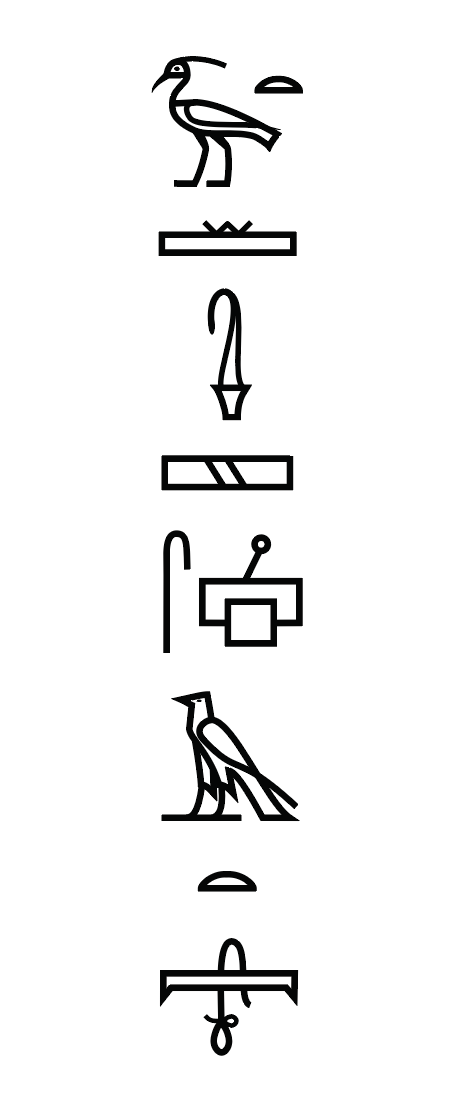
How We Freed Philae
Night Fire: How We Freed Philae
Can we? This is a question that is difficult to answer. Every time I open my eyes I can realize that the world appears to lock me in diverse envelopes that become more and more difficult to explore. If it is not the sky and the earth that appears to close me up like a bowl with a lid, it is the horizon that presents itself like a fence as if it was telling me that I can't take a peek at what is behind it. It is also my town, my village, my house and even my body... The whole existence appears to be made of barriers, or let's say obstacles, that are just there to discourage our tendency to be a lot more than what we are. It is just a pity that the paths that will take us to self-destruction do not have anything that could force us to question. The path towards destruction is a slope on which we just glide toward the abyss.
The reality of the world is that we will never be able to describe with precision what we consider to be ourselves. Our idea of ourselves nowadays is made of moral, material and spiritual values to which we have learned to identify, but every value or entity has its antagonistic concept with which it enters in a dualistic realization. The holy drama teaches us that as we have seen with Seth and Heru, the forces of good will only exist under the constant threat and attack of those trying to destroy existence. Good, in reality, does not have ambition beyond the goal of existing and preserving itself; it is the destructive energy that is active. Evil is the most dynamic because it is in a constant search of new territories to conquer. Heru has won a lot of battles against Seth, but Seth always re-emerges under many aspects. If evil could admit its defeat, the destiny of existence will stop being the same thing we risk every time we act. The excuses we find for our actions and decisions become the domain of predilection of the destructive process. Every time we are getting ready to do evil to our neighbor, our excuses become what introduces to our consciousness the sense of legitimacy. And then we easily become the hand of Seth. It is the logic we are attached to that stops us from seeing this.
The Holy Drama wakes our consciousness up to the fact that the good and the evil are only fluxes of energies born from the battle between Heru and Seth. But the two fluxes exist like two currents in an ocean; we can easily go from one to the other. If Hitler thought he was doing good, if those who have destroyed people and committed genocide just to install their religions thought they were doing good, etc., the common human being does not have enough means to know if he is, in reality, destroying or protecting the world.
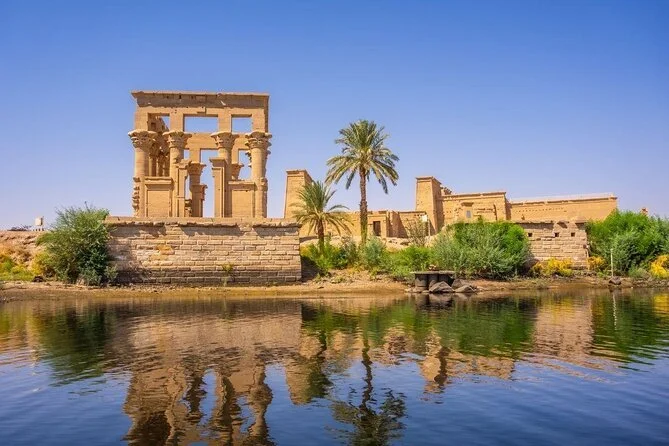
It is said that 30,000 years ago when the priests of the Goddess Aishat decided to build the temple of Philae, they were confronted with a somewhat bizarre problem. Philae is an oasis in the Nile that appears ideal for a big temple surrounded with gardens inside which one could find diverse fruits. The inhabitants of the regions went to work. While the masons and the architects were working on the building, the farmers or the peasants were working to plant as many fruit-bearing trees and flowers as possible. A few years later, the face of the island has changed. The trees and the flowers have grown. One could see mangos, guavas, grenadines, oranges, etc. The smell of the flowers could be sensed from miles away. From far away, one already had the impression that through the scent and colors of the garden, the island was becoming a real world apart. The world that is beautiful enough to attract anything divine.
The masons and the architects worked very passionately. All the trees have grown and are bearing beautiful fruits. Once the temple is finished, the Goddess Aishat will be happy to visit the nome.
But unfortunately, these colors, beautiful scents and fruits also attracted another category of inhabitants of the region: monkeys. Yes, monkeys. This was not normal because normally, there was not enough food growing there, and the island would not sustain the life of the monkeys. But this has changed. These monkeys were sacred and represent the category associated with the Goddess Annu; one could not kill them. These monkeys literally did not allow the workers to come to the islands. One understood quickly that this problem was caused by the fact that the trees in the garden were bearing fruit. The monkeys could now eat and drink: the world of paradise the people were building for their Goddess revealed itself to be attractive not only for humans, but also for monkeys. One also understood that as long as the trees bear fruit, monkeys will not find a reason to leave the island.
These monkeys have organized their invasion of the island very intelligently; they have crossed the river on logs during the night, guided by the sweet aroma of the garden that they could smell miles away.
But the priests very quickly found a plan to force the monkeys out of the island: there was a need to force the monkeys to waste what they are now considering as their life resource. The villagers of the region were asked to come with all sorts of fruits. "How then will we force monkeys to waste the fruits of the islands by bringing them more fruit?" asked the peasants. But the priests simply explained their plan. In the morning, the island of Philae was surrounded by boats full of fruits and the farmers in the boat were shouting loudly while throwing these fruits towards the island. The monkeys quickly thought they were under attack and decided to do the same. They picked the fruit from the trees and threw them toward the villagers. The villagers kept the monkeys excited and soon the monkeys threw everything that looked like a fruit in their direction. The river did its job of carrying the fruit downstream.
When the priests noticed that there was no fruit left on the island, they congratulated the peasants that returned very triumphantly to their houses. A few days later, by daytime, one saw colonies of monkeys on logs of dead trees abandoning the island. The villagers could not stop laughing; but the sad aspect of this story is still the fact that it is the intention of defending the good and their territory that lead the monkeys to destroy the source of their life on the island...
Maybe the forces of evil look at us with the same eyes, using our intentions as ways to lead us to doing the job of destruction.
What destroys is so dynamic...