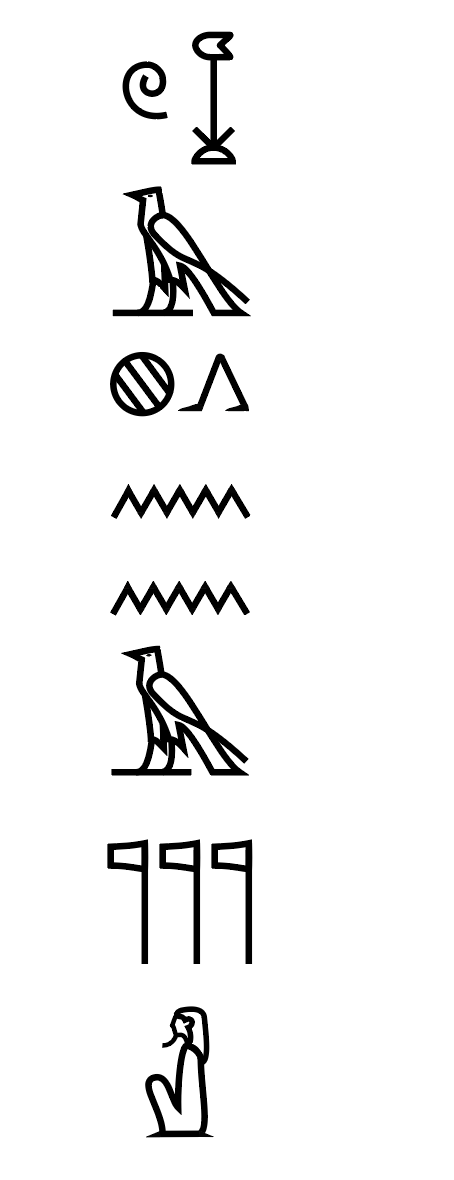
Kemet And Death
In Search of the Gods: Kemet And Death
The subject of death may be difficult to read about, think about or comprehend. Not only are there are varying explanations about death, but also many modern perspectives on life encourage less of a focus on death. Additionally, death can bring emotions and mixed feelings to those who have either had people close to them pass away already or who will soon be passing away. For these reasons, death is seen as mysterious or even scary to many people. We encourage the reader to keep an open mind while reading this article, as death is a concept that has been studied for a very long time and is taken very seriously in the Kemetic traditions.
Death is guaranteed to every single one of us on the planet. Every single person on Earth, at some point, will die: our families, people we meet at the grocery store, the athletes and celebrities on TV, and anyone you have met and spent time with in life. They all will eventually go, no matter how rich, smart, or where they live. Death is guaranteed more than any other dreams or aspirations a human can have. A person can train vigorously in a sport for 10-15 years while aspiring to play professionally and just before they make it they suffer an accident and become handicap, preventing them from attaining the dream they worked so hard to achieve. Not even the dream was guaranteed to them.
Despite this, not everyone lives a life as if they know that death is coming for them one day. Meaning, people dedicate large amounts of energy into living for themselves and their own ambitions. In fact, fewer couples have children today compared to 50 or 100 years ago, for reasons such as putting one’s career first, refusal to “conform with societal norms”, or fear of parenting being too agonising or too much work. These lifestyles should not come as a surprise considering that many people conform to modern philosophies which devalue life. For example, the big bang theory states that the universe and life are the result of an accident or explosion. If life itself is just the result of an accident, then how valuable is it? If one thinks of life in this way then it is not far fetched to focus on the “YOLO” (“you only live once”) lifestyle of seeking pleasure or material items that last a mere few years. But, these don’t last--one can not take either pleasure, material items or a career to the grave. It is in this way that death has great influence over the human being, and Death has not changed for as long as human beings have inhabited the planet. Inevitably, death is coming for you and for me. Hence the reason, in Kemetic culture, we are more focused on death than we are life and why Kemetic culture focuses on what does last.
Human knowledge and wisdom last far longer than one lifetime and are some of our greatest assets. Think of these two examples:
1) A person who spends their life learning a trade and masters it but they don’t teach anyone and the knowledge dies when they die.
2) Person A learns a trade, masters it, then passes it to his/her child (Person B) who then learns and masters it and adds what he knows, who then passes it to his/her child (Person C) who then adds what he knows, and so on and so forth for several generations.
BETWEEN THE TWO, WHICH IS MORE POWERFUL?
There is a Malian kora (a very old African stringed, harp-like instrument made from a calabash) musician by the name of Toumani Diabate. “Toumani Diabate is considered as being one of the most important instrumentalists who has come from Africa. He is considered as one of the best and most well-known African Kora players. He is even considered an ambassador of African music to the rest of the world” (http://www.toumani-diabate. com/a-short-biography-of-toumanidiabate/). Knowledge of the kora has been passed down in Diabate’s family from person to person for 71 generations, so it is no surprise that he is considered a world ambassador for the 2nd largest continent on the planet. 71 generations is roughly 800 years of knowledge, just in one family! Imagine if one generation in that family decided to forsake the kora and dedicate their lives to having a big house and fancy car...
Musical and other types of knowledge run deep in the African traditions. The Diabate family is an example of how Kemetic people know and live life knowing that we die--if we expect to leave a footprint behind we are going to have to prepare for death by passing down what we know. Not only that, we will have to learn and study to understand what happens after we leave this existence. A major aspect of Kemetic culture is understanding what happens in the afterlife. This is why you can go to an Egyptian exhibit at a museum and see how much time, energy and effort Kemetic culture put into understanding the intricacies of the World of the Dead (Imentet) and mummification. Yet, time and again Kemetic culture has been portrayed as an odd culture by Egyptologists because Kem (those who live according to Kemetic cultural values) have focused on that thing that’s inevitably coming for everyone. It’s like sneering at someone for preparing for the next day’s work on the prior evening knowing they have to work in the morning. But, does it make sense to speak of that person with disdain?
Death in Kemetic culture is understood as more than just the heart stopping–it is the transition from the World of the Living to the World of the Dead, which is a long journey consisting of many stages. So, the Kemetic lifestyle explained above and the understand- ing of death have a long history that originate with the life of the Kemetic Neter (God) Wsr...
Wsr (also known as Oozeri, Ausar, and other names) was one of the first beings created by another God as a “Divinity in human form.” Meaning, he is a divine being but he lives his life in a way that human beings can relate to because he has a brother (Set or Seth), a wife (Aishat, Isis or Ishtar), can procreate and have children, and died (to learn more about the life of Wsr listen to The Holy Drama lecture by Prophet Naba Lamoussa Morodenibig). Not all Gods die, for example. Both Wsr and Seth are immortal, but they live out their immortality differently. Unlike his brother Seth who chose to carry out his immortality by not dying, Wsr chose to carry out his by living, dying, and reincarnating. Since Seth does not die, there is no reason for him to have children. He is thus sterile and only needs to think about his own agenda. According to The Holy Drama (the section of the Kemetic creation story that speaks on the life of Wsr), he also made a sacrifice to dedicate his life to traveling the world educating humanity in areas such as agriculture, astronomy, and physical and spiritual cleanliness. These points are important because humans live in the same way Wsr does, so what we consider “good” is that which is in line with Wsr, and what we consider “bad” or “evil” is that which is in line with Seth for the simple fact that Wsr’s lifestyle supports human survival, but Seth’s does not. Wsr is a model for Kem people, so if we have questions about how to live life then we can look to him in order to emulate his actions.
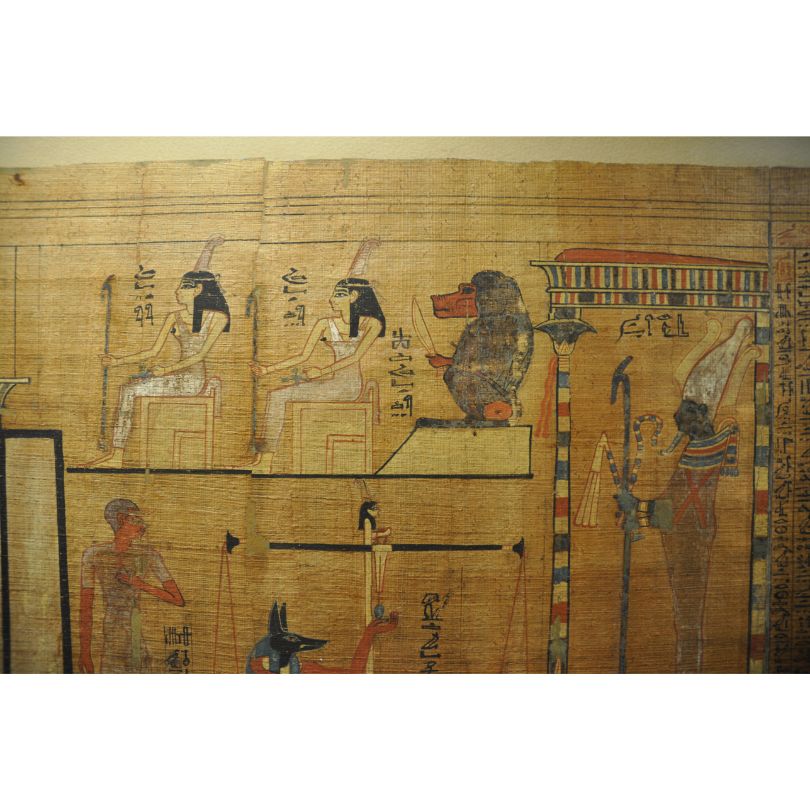
Wsr and Seth were given equal domain over the world, but Seth’s goal is to claim as much of the world as possible, and in an effort to do so He kills His brother Wsr so He can conquer His domain. Wsr was actually the first to experience death even before any human did. This may be difficult to grasp because even human beings have a familiarity with death from experiences such as seeing people around us die. But, no one died before Wsr did. He was the first to travel to that realm. Wsr’s death is also represented in nature, as is observable in the World of the Living. When the trees and plants die then there’s a shift to winter. This is representative of Wsr leaving this world (Wsr is a God of agriculture). Wsr established himself in the World of the Dead and became the sovereign over that world. He then became the one responsible for judging the life of human beings. This is why when humans beings die we are judged, which can be recognised as the origin of the many references in different religions to an afterlife consisting of a judgement process. Kem people take great pride in dying because not only does it offer us an opportunity to once again meet the God who gave us our model of life, but if we worked hard to live a dignified, upright life, then we can show that during our judgement process.
Wsr’s goal created a pride in humanity where every human was just liv- ing life to prepare for death to encounter Wsr. Why?...To see our father, who educated [and] sacrificed for us.
-Kemetic Priest Naba Iritah Shenmira
JUDGEMENT AND REINCARNATION
Human beings are judged by Wsr in the afterlife according to the Divine Code of Human Behaviour (the 77 Commandments). The Code was given by the World of the Gods to serve as a road map for humans to become like Gods. In fact, Wsr was the one who went to each of the Gods and gathered the list of Codes for us, giving us yet another chance at a better life (listen to the Kemetic Cosmogony lecture by Prophet Neb Naba Lamoussa Morodenibig for a more thorough explanation of this story, the 19th of Tehuti). These Codes also come to serve as the human being’s definition of what it means to be “good”. That which is going to assist us in becoming like Gods is “good”. That which does not is “evil”. As you can see, the Codes are not based on one person’s, group’s or society’s definition of “good”, as these are not man-made laws. They are laws coming from the beings who created the world we live in. Who would know better than them?
In the afterlife, these Codes of Human Behaviour are what we are judged by: which did and did not you uphold in your lifetime?
It is important to note that reincarnation is another integral aspect of the human experience. Humans die, are judged, and then come back again into life for another chance to perfect their ability to follow the Code of Human Behaviour. However, the circumstances into which one is reborn is heavily determined by how well one followed the 77 Com- mandments in their previous lifetime. See Cremation in Part II of this article for more details.
WSR & THE GOD CHILD HERU
Wsr prepared his death. He transmitted the responsibility of His destiny to Heru before He left. [He] made sure to check that child to ensure that He was mentally, spiritually, [and] physically ready to take over. Once satisfied, He transmitted everything to Him. This is a tradition...You prepare for your death by empowering your descendants.
-Kemetic Priest Naba Iritah Shenmira
Another important aspect of Wsr’s death is the transfer of knowledge and wisdom. As stated earlier, Wsr and Seth were granted equal domain to the world, but Seth killed Wsr in order to claim His territory. According to the Holy Drama, before Wsr died He met with His son Heru. Since Wsr was going to die, He needed someone to continue His mission of maintaining His kingdom in the World of the Living. Heru, His only son, was His last hope. But, the mission was not passed to Heru without testing Him. Heru, using the knowledge acquired from his Mother and Father, passed the test. At that moment, Wsr passed the torch to Heru and Heru reclaimed the kingdom of His Father. Essentially, Heru was given purpose and meaning to His life; a goal. Plus, He was given the tools needed to achieve that goal.
This concept of empowering one’s descendants can be seen in cultures all around the world. In the Maori culture of New Zealand, Kaumātua are elders responsible for storing tribal knowledge, nurturing the youth, and passing on their knowledge. In the Quechua culture of Peru, women use a wichuna (a llama bone pick) to weave stories of their lives and cultural traditions into fabric. It’s so vital to Quechua culture that children learn to spin yarn as early as three or four years old! By preserving these traditions these cultures have been able to survive as long as they have. Now, compare this to a “You Only Live Once” philosophy where you work to experience as many pleasures as possible before you die. Then what? If you accumulated any sort of knowledge in your lifetime and you do not train someone else to take it over, it all dies with you. No matter how long you live, you always end up submitting to the principles of decay and decomposition that human beings are bound to.
HOW TO HONOUR WSR
Each year, Kem people around the world take time to mourn and hon- our the death of our Ancestral father Wsr. As was stated earlier, each year nature changes in accordance with Wsr leaving this existence (de- parting for the World of the Dead). This is the time of year that Kem acknowledge and honour his death. However, when Kemetic people commemorate Wsr’s death we also commemorate all human beings across the planet that passed away in the respective year because all people are children of Wsr. Even if a person doesn’t live life trying to adhere to Wsr’s principles, death will come knocking at their door one day, ultimately validating that their life is still bound by Wsr’s principles. Thus, any human being can be seen as an extension of Wsr himself. Below are ceremonies and traditions that anyone, Kem or not, are welcome to participate in.
*These are Sidereal Calendar dates
17th day of the month of Ateeri: The Death of Wsr - a very sad and mournful day in which Kem people fast--we don’t eat, drink, smoke, curse, etc. from sunrise to sunset. We spend time for lamentation and prayer before breaking the fast at sunset.
24th day of the month of Kairika: The Embalmment of Wsr - a night of prayers and lamentation.
27th of Kairika to the 6th of Tepia: The Kemetic Fast: Kem people refrain from eating, drinking, smoking, cursing, etc. from sunrise to sunset. This is in an effort to keep our bodies and minds as pure as possible to come close to and accompany Wsr on his journey.
29th day of the month of Kairika: Mourning for Wsr - a day of lamentation and prayer. Each Earth Center temple around the globe also holds a ceremony on this day. Contact your local Earth Center for details.
LANTERN
When Wsr transitions to the Imentet it is an opportunity for Seth and other negative forces to reach humans. Remember, Wsr is gone from this world, meaning that Seth is much more prevalent. This is actually evident around the world. You may notice an increase in turmoil, fighting, misunderstandings, violence, etc. in your neighbourhood, city or in other countries. This can be seen internally with our own mental turmoil, irritability and/or depression. From the Death of Wsr (17th of Ateeri) until the end of the fast (6th of Tepia), every Kem household lights a lantern or light at night. Originally, lanterns are made using animal fat or kerosene for the wax, then braiding 3 pieces of thread for the wick. Elders and youth in the community normally make them and elders make wishes while braiding the wicks. Wishes are normally along the lines of, “We observe your (Wsr’s) death. The destructive forces come to bring sickness and darkness, but by doing this I’m keeping your energy with us so it’s still protecting us.” If Seth and the other Gods or entities see lights burning then they know we are mourning for Wsr, so they do not enter the house. It is not necessary to light the lantern during the day because Ra, the God affiliated with the sun, is reigning during the daytime. The lantern should be left by the front door or in an elevated vestibule. If one does not have a lantern, then a candle is okay.
No matter how long you live, what ambitions you seek and what you acquire, death will greet you one day. Death has its origins in the Kemetic creation story with Wsr, who opened the doorway of death for humans, provided us an opportunity to be judged by our actions in life, and prepared for His own death by empowering His descendant. For humans, as mortals, empowering our descendants is how we survive and acquire great strength and power spanning generations. For this reason, it is no surprise as to why Kemetic culture has always had a major focus on death. Perhaps it’s time for humanity to once again shift the focus to the very thing that’s guaranteed for all of us. As is said in the Kemetic traditions, human beings cannot ignore that “Death is the one to give and take life.”