
Egypt, Sudan & the Kemetic LegacyAn Excerpt from a Lecture in Los Angeles, California, USA
Egypt, Sudan & the Kemetic Legacy
An Excerpt from a Lecture in Los Angeles, California, USA
Egypt, you have heard of the word Egypt? One thing you need to correct [in what you have heard], that will [help you] understand the level of ignorance that has been promoted by this system, is that Egypt has never been a land. It is not a territory... If you realise where in my book, The Initiatic Tales of Hej Ptah, the word Hej-ptah is what became ‘Egypt’. Hej-Ptah means the rise of the consciousness about Gods. That is what it means.
In ancient times, the whole of humanity, you know, there was too much barbarism. If you check European culture, you will see for a very long time [there was this state of barbarism] that is why they don’t have graveyards before the last 2000 years. Because mostly when a neighbour or family member dies, that was a feast for them. And I am not saying this with any type of political or xenophobia, it was like this. The European culture managed to project that onto others calling them cannibals. But in Kemetic culture, we can show graves that are over 20, 30,000 years old. In Europe you don’t do that because at one point the Roman Empire sent an army to correct that. Whenever somebody is dead and he has been eaten, the army had an order to kill them. But the thing is when the army would kill them, others would come and eat them too. So it was continuing...you know...so if you [consider] that aspect, you would understand why we labelled them Gerka, or the spirits in darkness.
Hej-Ptah is when you move from this life-style and you realise the existence of the world of the Gods, it comes with some obligations. Now you become worried about your future after that, you become worried about the set of 77 commandments, you apply them in your life, you understand what is the will of the Gods; how to rise and improve yourself and reach higher and higher. Okay, in Hej-Ptah, we say, oh you have reached Hej-Ptah, rising of the consciousness of Gods has gotten into you. So that may be called the equivalent of a civilisation now.
So the first trick of world domination was to get the new scholar to relate Hej-Ptah with a [physical] territory. So it now takes the value, the meaning of it out, and just now a lot of people speak of it as a place to go. Originally, it is a state of being. Because what they call Hej-Ptah (Egypt) now, is what we call Itoure. Because that is a specific land, that our Ancestors have chosen for the residence of the Great House, the Pharaoh.
There is another interesting thing; that when they say, and make you think that a king is a political position. You kill the last one and you come and the seat is yours. We don’t function like that. Our culture does not exist on usurpation; it evolves on legitimacy. Legitimacy, we have a whole process. That is even why like the word Pharaoh, means the great house....Per Aah...better...the Great House.
Because the kingships in Ta-Mert or Kemet we are divided into houses. And the top house is called Per Aah – Pharaoh. What is seen as the Pharaoh is seen as the Head of the Great House. How is this done?
It is very simple. You notice that on the southern part of what we call modern Egypt, is a territory they call Sudan right? Up to 1962 right before their independence, the territories that we call Mali, after their independence they decided to change their name to Mali because before it was Sudan too. So during the exploration and colonialism time you have the English Sudan which is the one that is still Sudan and you have the French Sudan that is on the other side. Sudan, maybe you will understand, in the Medu, our ancestors said Sudan; that really means ‘kingship’. We say ‘Sutten’, king.
Which means really, if you look by Cairo, by the Nile there. The territories around the Nile there, in reality, for anybody that thinks, it doesn’t have enough resources to sustain a development of a civilisation. Because everything is just around a river. It is because life sprout there is because our ancestors have chosen to make it the House of the Pharaoh, the place the Pharaoh can go live; but they came from inland. They don’t come from what we call Egypt now, they don’t come from there. They don’t come from there.
Now we were saying that there were 2 Sudans even up until 1962; when Mali became Mali instead of the French Sudan. You will notice around the Nile, right around the level of Ethiopia and below that, literally the names of the tribes that you have there can be found in the Western part of the continent too. Because we have a system that we divide...where humanity is divided into what we call 2 lands; upper lands and lower lands.
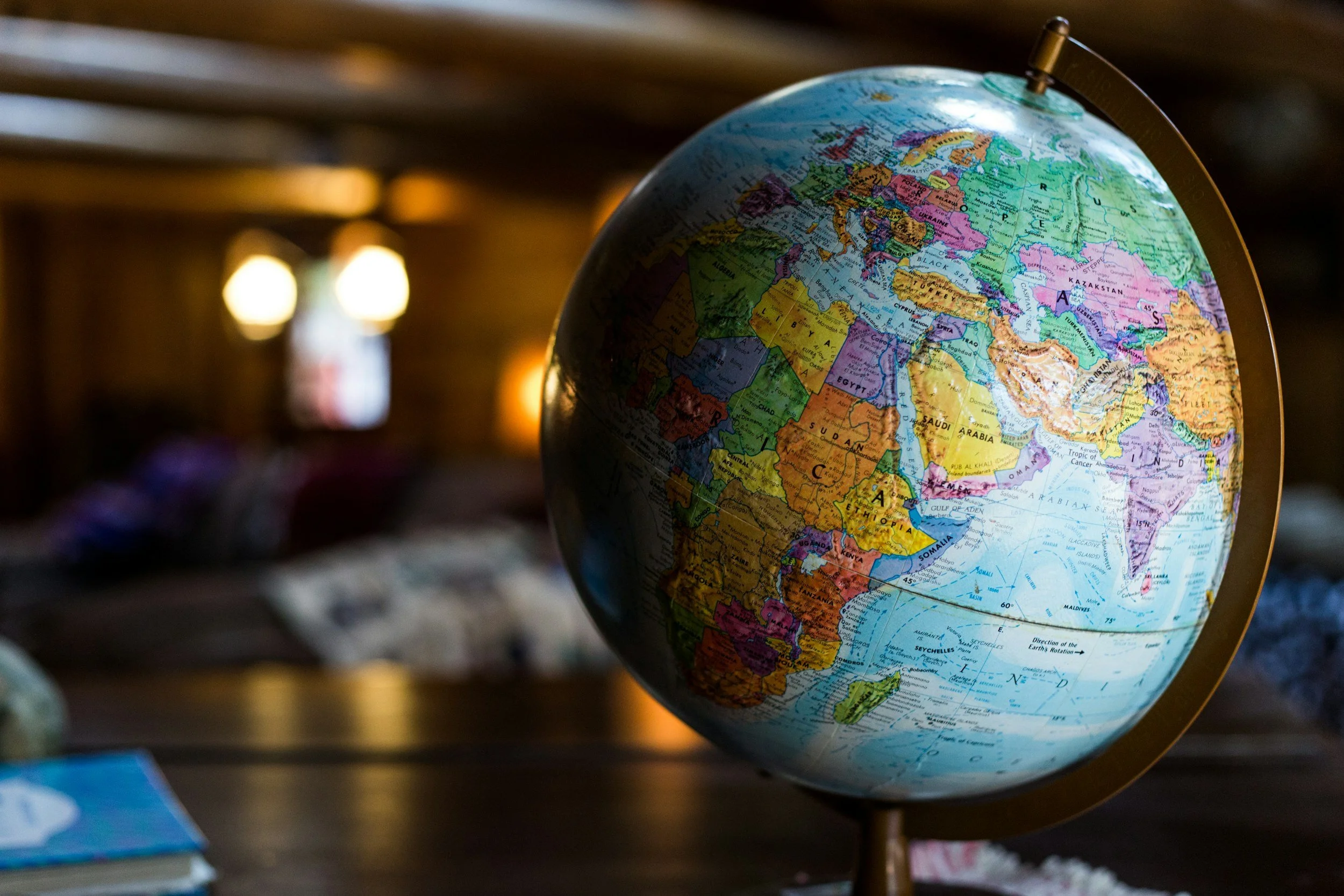
You have heard of that one before? Upper lands and Lower lands. What is the upper lands? The Upper lands are literally are what we call now the Southern Hemisphere, which means that up until ...the Southern Hemisphere is the Upper lands. Now we are talking globally, we are talking the whole of humanity. Why it is upper land, when you look at this planet, you will notice that the southern pole has a territory, a land. Where the northern pole, where there is hole that is filled with water. You cannot fill a hole and have the water on top. No, it is because the position of the universe, it is the South Pole that is up.
Do you understand? That is why when you see on the Firefly, you have the continent drawn with the southern part up and the northern part down. That was changed only very recently. Well ah, white-man says if he wants to rule the world, he doesn’t want his side of the world to be down, so he moved it up. So since we only follow, decided to follow that; but before that, that is the position of the geographic position of this planet.
Now we have the upper lands, which is the southern hemisphere. Then we have the lower lands which is the northern hemisphere....
Now we have 2 Sudan[s]. We have the one side there, and the other side there. Me personally, one of my grandmother’s that I met went to pilgrimage to require MSRRA by the Itoure, when you are going there, one way coloured people would call themselves MSRRA, children of Ra. We are the children of Ra. So people of that time, when you were capable of going to the pilgrimage even by the Nile, or deep inland to the spiritual places, we called you MSRRA; a child of Ra.
So this Sudan would provide a king who was aiming to be the Pharaoh; but after a death of a Pharaoh it takes exactly 1461 days for the next Pharaoh to be on the throne. Now you know every king, our kings don’t die, we kill them. We don’t do that. But whenever a Pharaoh is no longer, we say a Pharaoh slipped, from that moment as part of our traditions the land is looted. We encourage that, because, maybe call it part of our politics because if a new Pharaoh comes and everything he wants to do is there already, well you will feel like he is useless. So during this 1461 days the country is left to looting.
It is part of the traditions, until now it is still happening. Especially in the Tem culture, Tem places. That where we go, if a king dies and people don’t go come to loot the city, we feel like something is wrong. We go and beg them to come and loot the city; it is normal. So mostly all this talking about invaders of the Nile Valley, what the Egyptologist is not telling you is that it always happens during the period of looting. Which is part of our culture even for those who have been part of western part of this continent, the next time you go and you see Tem people there; they are in Benin, Togo, Ghana, Northern part of Ghana...it is part of the tradition, looting we didn’t see it as an evil thing. Because mostly the new Pharaoh comes the invader comes and the Pharaoh is dead, you go and take whatever you can take, but you always make sure that the new one doesn’t come and catch you.
Now because you rely on the same media that is colonial, it doesn’t present to you that we allowed it as part of our traditions. It made it look like, at some point the Pharaoh was powerless. Then they come and then invader comes and takes things. Now. That is why later on, the most famous Pharaohs that you are made aware of, believe it or not most of them are part of what we call the usurpers. Because they don’t belong to the Pharaohship.
They thought as long as they can come and instead of just looting, but coming and having an army trying to stop the newly elected Pharaoh from reaching his palace, they think that it is a political thing; by them occupying the palace makes them the Pharaoh. Now we are talking about a system that covers, not just the continent but the whole world. It rules on legitimacy.
Now you understand why our understanding of the Pharaoh what we call the Great House, because that is the great house that we now are placing between us and the world of the Gods. It is part of our culture to make a Pharaoh responsible for anything that happens to us. He is the one to protect us, he is the one to make us feel good. He is the one that makes the rain fall and the plants grow, and so on and so on. He is the one we complain about. That is what ended up in the bible where everybody was talking about the Pharaoh as the bad guy as like he is a human being...we are talking about the whole of humanity electing somebody...if that doesn’t make him a powerful human being, what else can make them a powerful being?