Soumbala: Locust PodsAge Old Ingredient Prevents & Treats Hypertension
Herbal Healing: Soumbala: Locust Pods
Age Old Ingredient Prevents & Treats Hypertension
If you’ve ever been to West Africa, chances are you have eaten the local fare with an ingredient commonly known as soumbala (or sumbala). And if you haven’t, perhaps by the end of this article you will be interested in finding it and using it in your own kitchen. What is it exactly? Soumbala is a savory seasoning with many medicinal benefits made from the seeds of the African locust bean tree, known as the “néré” tree in Bambara language (botanical name: parkia biglobosa), which is added in soups and sauces for various dishes. Soumbala is also known as dawadawa, iru, netetou, chodi, kainda and many other names depending on the language of the region. I will continue to use the term “soumbala” as it is the most universal.
By the time you see the African locust bean seeds being sold, they have taken on a dark brown color and have been pounded together in various shapes. Sometimes the seeds have been kneaded into small patties, sometimes the seeds are compacted together, rounded into a ball. No matter how it looks though, the one characteristic that stands out is the pungent aroma of the African locust bean seeds. If you’ve ever experienced local trade in West Africa, you now know that characteristic marketplace-smell is in fact soumbala permeating throughout the market.
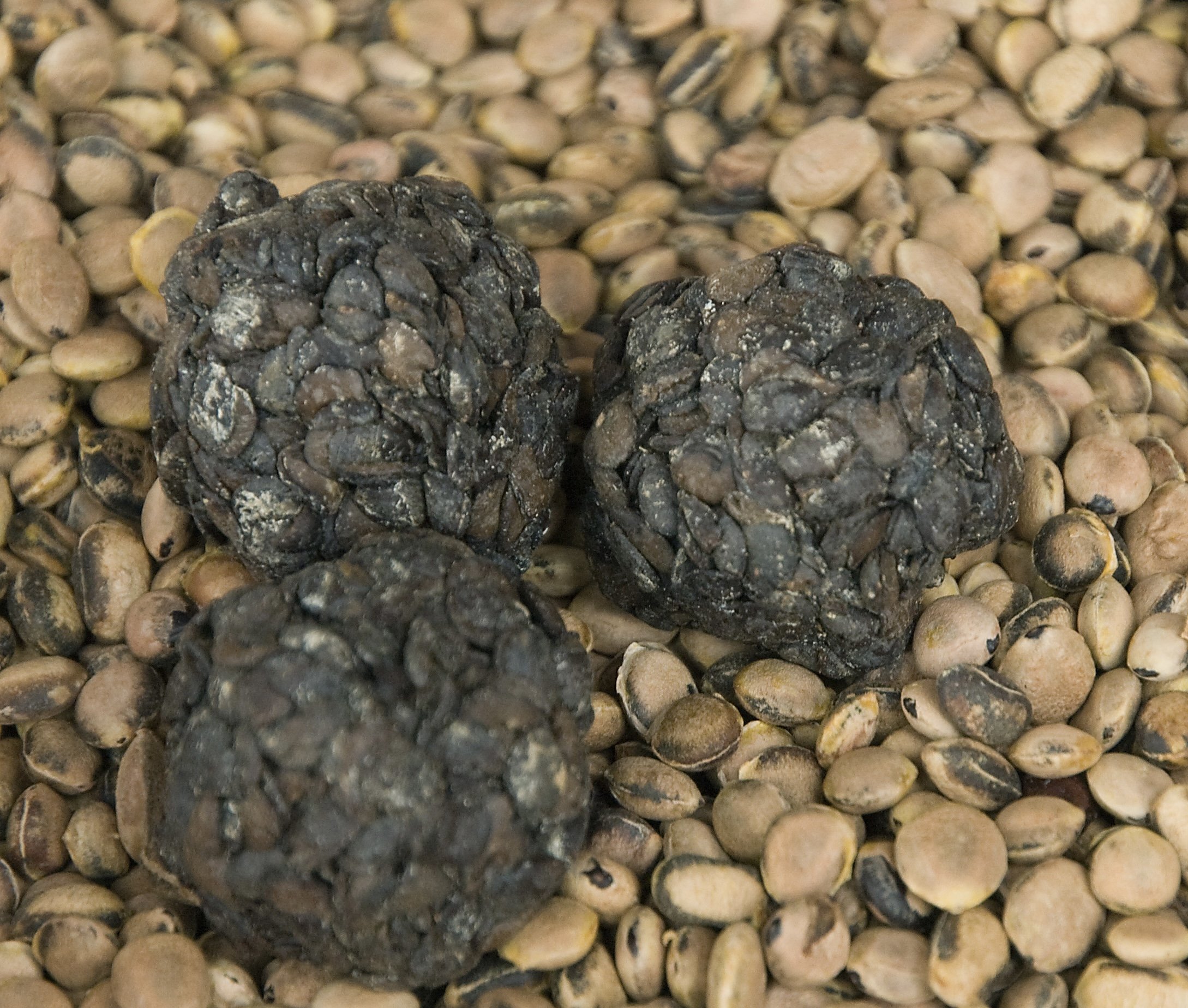
The fermented locust beans have been in use for hundreds of years (the earliest description found as early as the 14th century!) and they are still very popular today. Hundreds of thousands of tonnes of these fermented seeds are consumed annually. A survey in Dakar showed that soumbala is used in almost all the main recipes in Senegalese cuisine. From my personal experience, we use soumbala in all the dishes accompanying motoh (a popu- lar flour-based starch) in Burkina Faso and Togo regions. And in other parts of the Sahel region such as Nigeria, soumbala is made with many rice dishes. Although soumbala is not significant in international trade, you can still find it in the West in specialty stores, African markets, and online retailers.
Why is this condiment so coveted across the continent of Meritah (traditional Africa)? Perhaps it is due to its amazing medicinal and nutritional value. The fermented seeds are about as nutritionally balanced a food as you can find. They are rich in protein, starch, fiber, sugar, fat, as well as vitamins and minerals such as iron and calcium.
However, it is soumbala’s medicinal properties that are most impressive. The most well known benefit soumbala has to offer is the ability to regulate blood pressure (it is one of the highest cited plants used for treating hypertension). This makes for an excellent form of prevention for those at-risk of diabetes, high blood pressure, or similar health condition.
Soumbala also assists in the management of bacterial infections, is found to aid in digestion, and has a positive effect on the intestinal flora (which is very important for the immune system). It helps control cholesterol levels and is also an excellent source of energy.
How is it prepared? Simple. It is usually crumbled or pounded to break apart from its cake-like form that it is sold in. I’ve seen it crushed by mortar and I’ve seen it crumbled by hand. Once it’s broken up, it is added to the soup or sauce. You can add it in early or late in the preparation, it doesn’t matter. One common way to use soumbala is to boil seasoned meat and add a handful (more or less) of soumbala to the water. Add hot peppers to aid with stomach issues or other spices and vegetables for preference. This soup is simple and medicinal, and tasty as well.
Why not try this medicinal condiment in your cuisine and see for yourself why our Ancestors have been preparing our food with soumbala for hundreds of years!