Overcoming Colorectal Cancer
Harmonious Healing: Overcoming Colorectal Cancer
Colorectal Cancer refers to the presence of cancerous cells found in either the colon or the rectum. According to the World Health Organization and the Center for Disease Control, it is the second most common and most deadly form of cancer worldwide. It is extremely widespread in the developed countries of the world. In the USA about 140,000 people are diagnosed each year and, since the turn of the century, the disease has taken more than 50,000 lives a year.
The term “cancer” is an emotionally charged word that brings on terror, panic and activism amongst the general public. Colourful ribbons presented on jacket lapels and bumper stickers all represent the passion of the American public to overcome what seems to be a modern epidemic. However, as with most things that debilitate us with fear, very few of us have a good understanding of what cancer really is.
MODERN MEDICAL SYSTEM
Cancer is a term referring to the presence of abnormal cell growth. The body is made up of cells that carry nutrients around the body and produce or accumulate waste. These cells reproduce into new cells and die when they become overworked or exhausted. According to the American Cancer Society, Cancer starts when cells in the body begin to grow out of control. The rapid reproduction of cells crowds the normal cells and interferes with their function and productivity and can even spread into other parts of the body. According to modern researchers there is not just one type of cancer. The differing definitions of cancer depend on where the point of abnormal cell growth originates. Abnormal cell growth which starts in the lungs and spreads to the liver is still known as lung cancer. Each type of cancer has different characteristics, rates of growth and resilience to medical treatment.
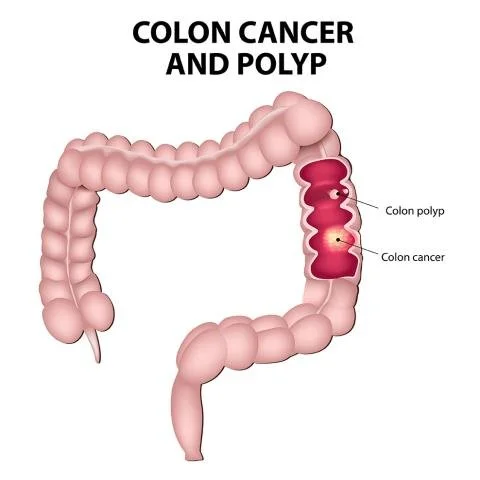
In most cases, colon abnormal cell growth begins from benign growths or masses in the colon walls called adenomatous polyps. Over time these polyps can become cancerous. The medical system makes no certain conclusions as to what leads these intestinal polyps to become cancerous but it has identified some contributing factors.
CONTRIBUTING FACTORS
The risk of getting colorectal cancer increases greatly as one gets older which suggests that the accumulation of waste, wear and tear on the body is one of the biggest factors in developing the disease. Expectantly, intestinal polyps are also more common in people older than 50 years of age, though most are non-cancerous (benign). Men also have a slightly higher risk of developing colorectal cancer than women. Other risk factors include poor or compromised colon health factors, such as
Inflammatory bowel diseases like Crohn’s disease or ulcerative colitis
Family history of colorectal cancer or colorectal polyps
Genetic syndromes such as familial adenomatous polyposis or Lynch syndrome
Other lifestyle factors include:
Lack of regular physical activity
A diet low in fruit and vegetables
A low-fiber and high-fat diet
Overweight and obesity
Alcohol consumption
Tobacco use
Additionally, Black people in America have the highest rates of sporadic (non-hereditary) cases in the United States. Colorectal cancer is a leading cause of cancer-related deaths among black people in the US. Black women are more likely to die from colorectal cancer than any other racial group and black men are even more likely to die from it than black women.
PREVENTION
Though there are no proven ways to prevent colorectal cancer, there have been successes in lowering the number of deaths (though still high) in recent years due to medical screening procedures and treatments starting early enough in the cancer’s progression. Lifestyle preventative measures recommended by modern medical practitioners include,
Normal exercise
Diet rich in fruit and vegetables and low in red meat.
Supplements of calcium and vitamin D
Regular colorectal cancer screenings
Aspirin and other non-steroid anti-inflammatory drugs may reduce the development of polyps, even in people with a family history of intestinal polyps, studies say. However regular use of NSAIDs may cause other major side effects.
SYMPTOMS OF COLORECTAL CANCER
Bowel habits - Constipation, diarrhea, narrowing of stools, incomplete evacuation, and bowel incontinence can be early signs of polyps or colorectal cancer especially when they are reappearing.
Blood in or on stool - This is the most common symptom of colorectal cancer issues. Though it can come from a number of digestive issues like hemorrhoids, anal tears, ulcerative colitis and Crohn’s disease, it often precedes colorectal cancer. However, bleeding cannot always be seen by individuals and is often sporadic and inconsistent so doctors suggest screenings that test fecal matter for the presence of blood.
Unexplained anemia - Anemia is a shortage of red blood cells. Red blood cells carry oxygen and nutrients throughout the body, so when one is anemic, their blood cells are not effective transmitters of nutrients to the body. Symptoms of anemia can be shortness of breath, tiredness, cold hands and feet, and dizziness.
Abdominal pain or bloating - Though this can also be normal fluctuations of digestive chemicals, when reoccurring it can show the presence of issues that can lead to colorectal cancers. Unexplained weight loss - This can also be due to many health issues but can show problems in the colon’s ability to absorb nutrients from digested food.
Vomiting
However, some cases claim not seeing the presence of any of these symptoms before being diagnosed with colorectal cancer so doctors strongly recommend routine screenings to check for the presence of early signs of colorectal cancer.
COLORECTAL CANCER SCREENINGS
The rates of new colorectal cancer cases and deaths among adults aged 50 years or older are decreasing in this country due to an increase in screening and to recent declining rates of smoking in those age groups. Several screening tests have been developed in the past few decades to find colorectal cancer early when it is much more treatable. Some of these tests detect polyps and adenomas and can allow doctors to remove them before they can become cancerous.
According to medical researchers, a large contributing factor to rates of colorectal cancer in black communities is due in large part to the lack of screenings that members of this community have done in relation to the rising screenings that are happening in other communities to have the numbers of deaths and cancer cases decrease. According to the United States Preventative Task Force, individuals should get regular tests between the ages of 50 and 75 years of age, after which determinations to continue screenings will be made by patients and their doctors based on life expectancy.
STAGES & TREATMENTS
Cancers are diagnosed in stages. The stage of a cancer is dependent on how aggressive the cancer cells are reproducing and spreading. In colorectal cancer, the stages depend on the depth of the invasion through the wall of the intestines, the involvement of the lymph nodes and the spread of cancer cells to other organs. The stages at which a patient is diagnosed with will determine the treatment option presented to the patient by his/her physician. The stages are as follows,
Stage 0 - In this stage, the growth or mass is contained and stays within the lining of the colon or rectum. Therefore removal of the cancer is done through colonoscopy or sigmoidoscopy or by surgery if the lesions are too large for these tools.
Stage 1 - Here, colorectal cancers have grown into the wall of the intestines but have not spread beyond the intestines itself. Standard treatment is a colon resection in which the affected part of the colon and its lymph nodes are removed.
Stage 2 - Here, the colorectal cancer has spread beyond the muscular walls of the intestines into surrounding tissues but not yet into the lymph nodes. In this stage, the cancer is treated with a colon resection where the affected portion of the colon or rectum is removed and this surgery is followed by chemotherapy and or radiation.
Stage 3 - This is considered an advanced stage of cancer as the disease has spread to the lymph nodes and therefore threatens the blood system. Here, surgery is usually done first, followed by chemotherapy and radiation.
Stage 4 - This is the most advanced stage of the cancer in which the cancer cells originating in the colon or rectum have spread not only into the lymph system but also to surrounding organs. This process is called metastasising. Treatment will often depend on what organs have been affected and if it is possible to remove the cancer-affected portions of organs or portions thereof. In case they are removed surgically, by destroying portions through heat (radio-frequency ablation) or through freezing (cryotherapy). In the case they are not the patient is given radiation, chemotherapy or both.
SOUNNT KEMETIC HEALING
When trying to understand colon cancer and its prevalence in America and other “developing” countries, one must face that the American diet is one of the most dangerous killers today. The most fatal diseases in the US, heart disease and stroke can be directly linked to the American diet. However, many of the US population and especially the youth of America do not realise that what they are putting in their body directly affects their health. The education given to the American public on the modern food pyramid and “health” products really has more to do with marketability and the profits of those who are wealthy enough to buy an appealing presentation rather than their actual effect on human health. There are so many growing health issues in America that are just from poor diet (see Philosophy Podium article in this issue).
Generally, if people would remember that we are natural beings that belong to the Earth and are therefore fit to consume things that come from the Earth, we would be much better off. Today, processed foods, refined sugars and flours, hydrogenated oils, cash cropping with harmful chemical fertilisers and hormone-injected livestock have presented a natural earthly being with a very unnatural or alien diet. If you can imagine that consuming these things daily from childhood in addition to drugs, tobacco and alcohol abuse, is a norm for more and more people, one should not be alarmed that they are attacking the natural internal environment of their body.
The digestive tract is a very fragile system. Its fragility comes from the balance needed to properly break down foods in the stomach and then absorb their nutrients through the walls of the small and large intestines all the way to the point of proper elimination. Compromising the liver, stomach or pancreas can have harsh effects on the digestive tract and chronic effects from an imbalance of any of these organs. This is now being mystified by the modern medical system and each issue with a different symptom is being given a name and labeled as its own digestive disease or illness. It is like withholding education from the general public that could lead to prevention and better health, while intimidating them with more complicated medical terms, has become the aim.
According to Kemetic Healers, cancer is either not well understood or not well represented by modern science. Cancer is a full-body issue. A body must present an internal environment that will allow for the production of cancer cells. It does not just randomly happen. Sadly, cancer cases are becoming more and more prevalent among the developing countries of the world. The lifestyle and dietary habits that are breaking down the integrity of the body and its natural defence mechanisms are not only not being avoided but are even being encouraged by the same institutions supposedly established for the health and well-being of the individual.
Everyone should be aware that once the internal environment of the human body is compromised enough that cell growth will get out of hand, then the question becomes what part of the body is under the most stress, what part of the body is dealing with the most cell damage and therefore in need of reproduction and proper cell elimination. One cannot really say that there are different forms of cancers but cancer will of course function differently depending on the nature of the cells in the organ or area being affected. The lungs, intestines and the brain are some of the most fragile organs in the human body. Their flesh is very delicate and abnormal cell growth can easily spread through their cell tissue which is some of the least resistant found in the body.
When an individual is educated to listen to the language of their body and not completely surrender the responsibility of their health to medical institutions, there are early signs of a compromised digestive tract. Constipation, excessive gas, stomach discomfort, and straining when defecating can all be early signs of too much acid in the digestive tract that can lead to corrosion of the cells of the lining of the intestines. Also, diets high in processed foods, ice cream and frozen products, alcohol, and animal products can also have detrimental effects on the digestive tract. So, the longer these issues are allowed to fester, the more the integrity of the area is undermined, making it more conducive to abnormal cell growth.
Sadly, many well-intentioned people interested in their health are also being fooled into doing some things that are very harmful to their health. Today, the option of water colonics to help with chronic constipation or cleansing the colon is very dangerous. When issues of constipation are already present, that shows that the digestive tract is already compromised as stated above. Now when water, which can be acidic or alkaline, enters the fragile tissue of the colon, it can easily add to the corrosion found in the intestines. It will inevitably flush out some of the waste at the bottom of the colon but the damage it is doing by further compromising the integrity of the walls of the colon is much more dangerous than the positive effects that result. It is even worse when people use substances that are clearly acidic, like coffee enemas.
In addition, many of the fake meats and vegetarian soy products like cheese, etc. also have a very harmful effect on the colon. In many cases even eating meat may be less harmful than the impact these products are having on the colon. Many people are contracting internal hemorrhoids and colon ulcers from frequent consumption of these products.
It’s important to understand that healing comes from traditions. More than plants or the specific ingredients that are used to heal, effective healing comes from the bank of wisdom that has been kept by one’s society to know what to do in a particular situation of disease or disharmony with our environment. Good health has to do with coming into closer harmony with the Earth that provides our sustenance, not in finding more ways to complicate our lifestyle and diets.