Misunderstanding A Woman’s Value
The Initiate: Misunderstanding A Woman’s Value
Many women in modern society have been brainwashed into misperceiving and having a disdain for the true position and significance that a woman in a traditional society holds. The ideas of fulfilling domestic responsibilities, providing the love, nurturing, and sustenance for the children and family are far less appealing to many women. One is almost guaranteed to be met with anti-servitude protests, and chants of equality, respect, and independence if they were to present these ideas. The colonial society has taught the modern woman to see her power in try- ing to prove that she can do things equally as good as or better than a man. Colonial society encourages women to have a “dualistic” perspective, him vs. her. Let’s face it. We’ve all been bamboozled. In reality, there is no need for competition between men and women. What for? Our ancestors understood and many cultures still understand that men and women are simply different and both roles are necessary for the survival of humanity.
Men and women are two distinct manifestations of the human being. Men have their roles and women the same. The modern society, however, will do everything within its power to keep women from recognizing the value and necessity of the role the existence calls for them to fulfill. All other things being equal, imagine someone trying to walk or even stand without a spine, or backbone. Now, imagine someone doing the same that has a backbone. We can clearly recognize the instability of the individual without a backbone. The same goes for a society that lacks the stability that women provide. Traditional cultures recognize women as being the backbone of the society; the ones who provide stability. There are many examples that our Kemetic traditions provide for us to follow and find ourselves in. In the Perfect Model, inclusive of Wsr, Heru, and Aishat, we see Aishat as a wife, mother, nurturer, and more. We see the commitment that Aishat displayed with her actions to ensure that her husband’s goal, or mission was fulfilled, and the stability that came from that. We also see the sacrifices Aishat and her sisters made to care for, nurture, and raise Heru in the mission of his father Wsr. If there is something we can take pride in, it certainly can be modeling ourselves after a Netert or Goddess.
The stability that comes from women cannot be noted without the sacrifices that they make. This principle is seen in the relentless action they take to provide the care and nurturing for their family, despite their own desires, goals, or plans. Those things are often set to the side for a period of time, or sometimes indefinitely, to devote them- selves nearly completely to giving another life a chance. No matter what, food needs to be prepared, the home and environment needs to be kept clean, and the children need to be nurtured, all very demanding tasks. And this is not even all that she does. Even the modern woman, who may not understand or value the role nature appointed for her, often embodies some of the same characteristics described. We can still observe the care and attention that she does provide to her family. We can observe the sacrifices that she still makes for her family, cooking, cleaning, educating, etc. after she’s done her 9-5 work.
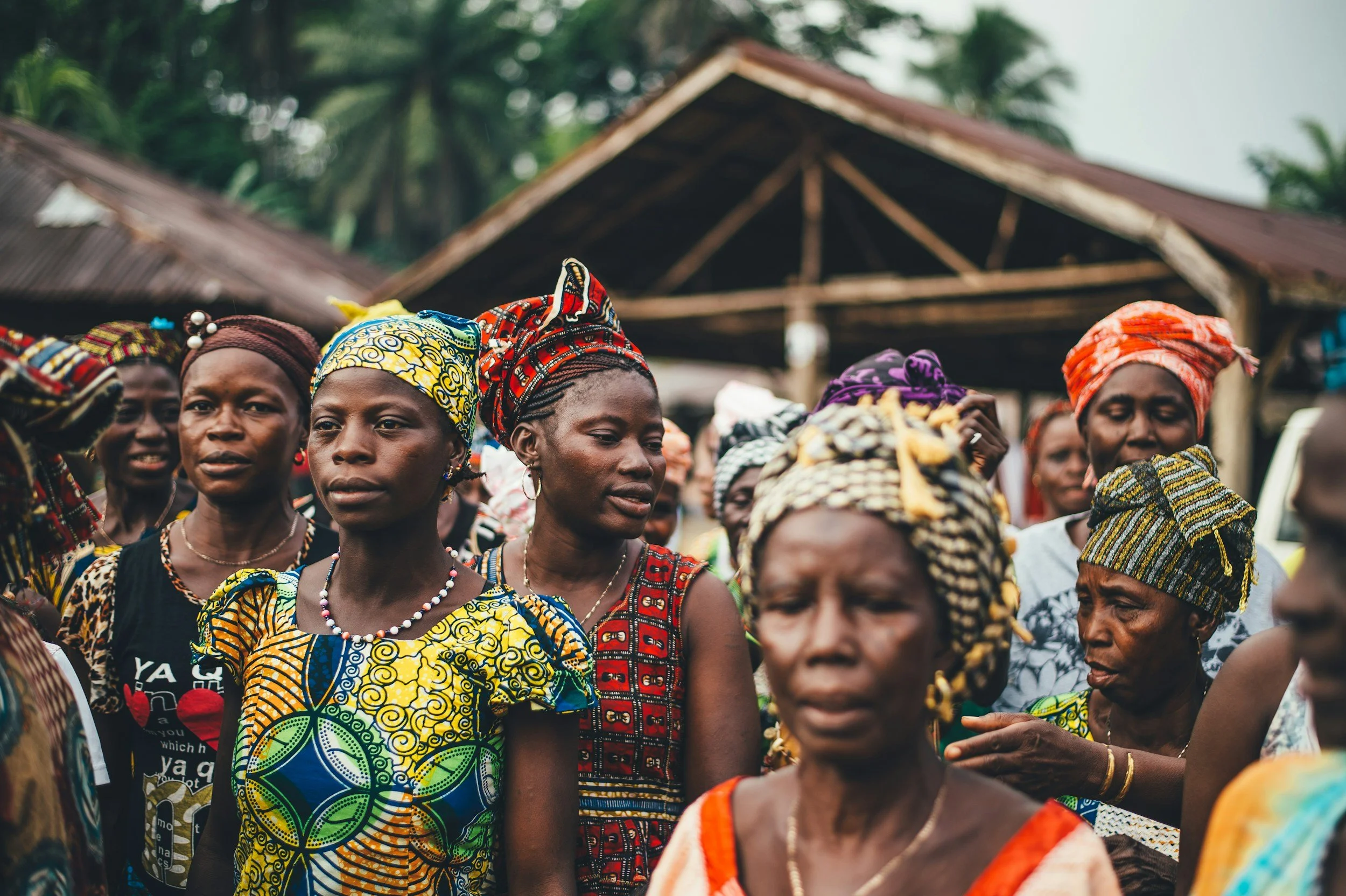
My first example of the sacrifice that women make to stabilize their families came from my mother. I remember growing up and observing my mother, a full time stay at home mom, and her interactions with the family. She somehow juggled and managed a myriad of responsibilities, sacrificing sleep, personal time, and even parts of herself to direct her energies toward carrying out the goals my father set for us as a family. She did this seemingly very seamlessly. I can remember as the children aged, many times we’d have to insist that she did something for herself. If ever we gave her money to spend on herself, we were almost sure that it would go toward someone else or something that the family needed. It is as if the will to sacrifice was built into her nature. I’m still discovering and recognizing the impact that her selflessness had on me, and I’m still developing my ability to embody those characteristics.
Please don’t get me wrong; I, like many, am still a product of this society. Though I had and still have close and personal examples of women in my family who resemble the traditional woman in the way they’ve accepted and fulfilled their responsibilities to their families, I still battle within myself against my opinions about that. I have entered the colonial work- place and tasted the so-called sweetness that comes from that. I have, for many years, indulged in my own desires, and been impressed upon by the political tactics taken against women to encourage them to value their role in the workplace above their role in the family. So, although I can express the logic and value of the role of the traditional woman, it does not eradicate my own struggles against truly fitting into that.
The fortunate part about the situation is that I am surrounded by a community of women who are working to reclaim their womanhood and embrace nature’s design. This gives me more motivation to find that inner strength to accept the same and have pride about it.
People make up a family and families make a society. The woman’s contributions to stabilizing the society begins first with herself, and the pursuit of raising her qualities. From there, it extends into the home and then the results are magnified outwardly into the community. Being a woman and having an opportunity to stabilize generations and generations is extremely honorable. Nature makes no mistakes.