The Origins of Dance
Benben: The Origins of Dance
We can observe throughout our experience in life, the impact music and rhythm have on the human body, mind and spirit. It resonates within the very essence of a human being in an innate way. From the earliest stages of our lives it’s one of the first exposures we encounter or connect with on some level. It would seem as though we can’t help but to be attracted to the rhythms, sounds or melodies that are produced by a wide variety of instruments across the globe. We hear music, we want to listen, we want to participate with or appreciate it somehow. It’s infinite rhythms inspire an array of different movements, even sentiments, that we express through our minds and bodies with appreciation for what it represents for us.
As we dance, we enjoy and find relief in expressing abandonment and freedom with our form; moving the way we are inspired to move and sharing that experience with others. In our communities, we see dance associated within a field of celebration or recognition of something taking place in our environment. It is such a profound aspect of our lives that we can even dedicate ourselves to pursuing the expression of dance as a profession or career in the modern world. Audiences will gladly pay to watch a company of artists perform simply to have something to do on the weekend.
Before we knew/know it, dance has become an artform amid the swarm of capitalistic pursuits. In traversing this path, a dancer often finds themselves riddled with a lifetime of injuries, deformations or complete reconstructions of their physical structure. We somehow forget the innocent, harmonious, liberating experience we were once captivated by and set the goal exclusively for entertainment and physicality. Yet, somehow we’ve managed to turn something that was once our expression of all that is good in the world into a journey of ambition and competition.
Without a fundamental understanding of humanity’s connection to dance, we limit our awareness simply to how we feel or what we like about it. We remove ourselves from truly appreciating its origin and thus have no opportunity to value what it represents in our world. We refer to dance as an art because we associate it with a creative expression, but everything has its origins. Everything has it’s source of inspiration or influence, and within the discussion of the origins of dance we simply cannot bridge over this reality. One can find the origins of dance in the same place they will find the origins of human culture, spirituality and education-- Meritah (Africa).
At the root of human education, traditional Kemetic initiation teaches the fact that what a human being aspires towards in their journey is to become as close to the divine world as possible; to copy or come as close to replicating their world, here on Earth. Therefore, every aspect of the way we express ourselves reflects our honor and reverence of what is pure or holy. If gods are the ones to first expose the concept of dance & music to humanity as a form of spiritual expression and communication it behooves us to regard it as such. All forms of dance and drumming we observe today stem from this reality. In traditional cultures around the world we see the relevance that dance carries as a component to our spiritual growth and development.
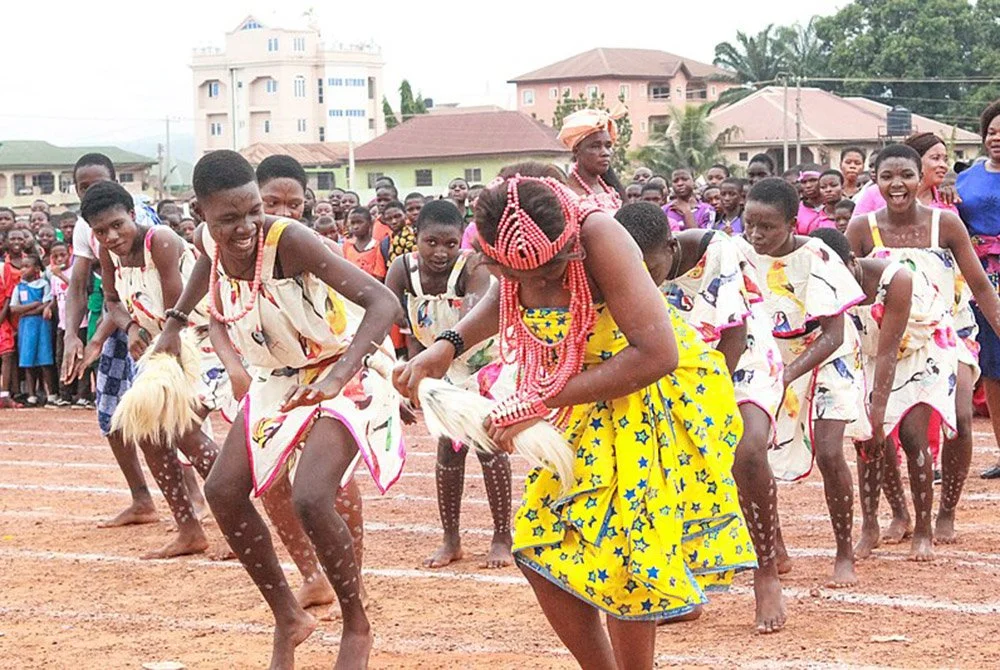
Many aspects of traditional dance and culture have been exposed to American communities throughout the U.S. today. There are a handful of dance companies here in the U.S. that expose various aspects of traditional/cultural dance from West African regions such as Mali, Guinea, Gambia and Senegal, to name a few. The most prominent “African” dance companies in North America are represented by individuals who have travelled to the U.S. from these particular regions to make a living teaching the songs and dances of their tribes. These dances are shared throughout communities in the form of structured classes, where the instructor will teach the movements, timing and sometimes the meaning behind these dances. However, unless these dances are performed in their original context with the instruments to facilitate all the nuances and responses of the dancer, the experience is reduced to the technical aspects of movement. The ones who come from their cultural backgrounds are aware of this as well.
In the American marketplace, people come here simply to make their money and take it back home to provide for their families. It can be observed in companies that are directed by people coming from the traditions, such as Maimouna Keita (artistically directed by Marie Basse Wiles) or Kankouran (artistically directed by Assane Konte), that they still have their principals and cultural regards for one another. Annually, these various companies will host a conference composed of a variety of master dance and drum classes. These conferences are usually a collaboration of these companies/master dancers and/collaborated with instructors from neighboring tribes or companies, lending each other support in the effort to raise money. Performing is a major focus in the African dance community The community or family aspect of traditional culture can be observed in a few of these companies, but most have been swept up in the drive for entertainment and popularity. Some more traditionally rooted companies extend their financial means and opportunities to other artists from Meritah who have come to the US to earn a living doing the same thing.
Just as with any component of traditional culture, there is no aspect that stands apart or disconnected from the whole. Every dance represents the people that it comes from and those people have a language, a structure, a way of life and clear/set values that define their way of surviving. Understanding music and dance begins on the spiritual level, this is why learning dance involves the aspect of initiation or education. Learning and being exposed to dance in this context is the pathway to valuing more than a style or a technique because dances aren’t studied. It is the existential reality and the order of gods and humans that is studied by humanity.
It is important to understand that learning the values of tradition and spirituality reside at the base of any technique we observe especially on/in the African dance scene. Though we can copy the technique, the rhythms and the movements, without the values that come with the dialogue of dance and drum, one doesn’t really learn to dance with purpose. Every expression represents something bigger than the dancer. Attempting to perform or participate in any form of traditional dance here in this society can only be done from an outside perspective because those who teach their native dances know how to protect everything they represent/embody/contain/that comes with it. In traditional societies, dance is not a profession, but an integral part of how a society functions and honors their ancestors and deities.