Ka’at Ibi: My First Steps Toward The Divine World
It’s hard to believe that it's been over a year since I began studying at the Earth Center. When I began my Ka'at Ibi studies, I thought it was going to be a nice refresher course that would enhance what I already knew about African history, culture and civilization. It's safe to say this process has completely changed my life. Compared to what I was exposed to over this past year it has become clear that I didn't know as much about Meritah (Africa) as I thought I did.
Having traveled to two different countries and close to a dozen cities on the continent in the last decade, I considered myself at least a very minor expert on the subject of Africa. On my very first visit to Africa, I went to South Africa with a group of seminary students as one of them. We travelled all around the country, studying the indigenous religion and culture of the people there. Several years later, when I went back to Africa, I went with another group of people on an Eco-tour to Ghana where we worked in villages all over the country and also toured important historical and cultural sites. Both trips were extraordinary and remarkable, for they exposed me to people, places, foods, music, culture and much more that I had not been privy to previously. However, as incredible as those experiences were, they did not begin to scratch the surface as to of the vast and immeasurable history, culture and ancient repository of knowledge, wisdom, philosophy and spirituality that Africa has preserved, as revealed by the Ka'at Ibi course of towards initiation in the M'TAM School.
Before I took this course, you could not have convinced me that I knew absolutely nothing about Africa. I had been to Africa twice, staying almost a month both times, and read many ground breaking and notable books on Africa. Now, after spending over a year studying Meritah (Africa) through the eyes, consciousness and words of an authentic Dogon Priest, I can now say that I know just a little more than nothing.
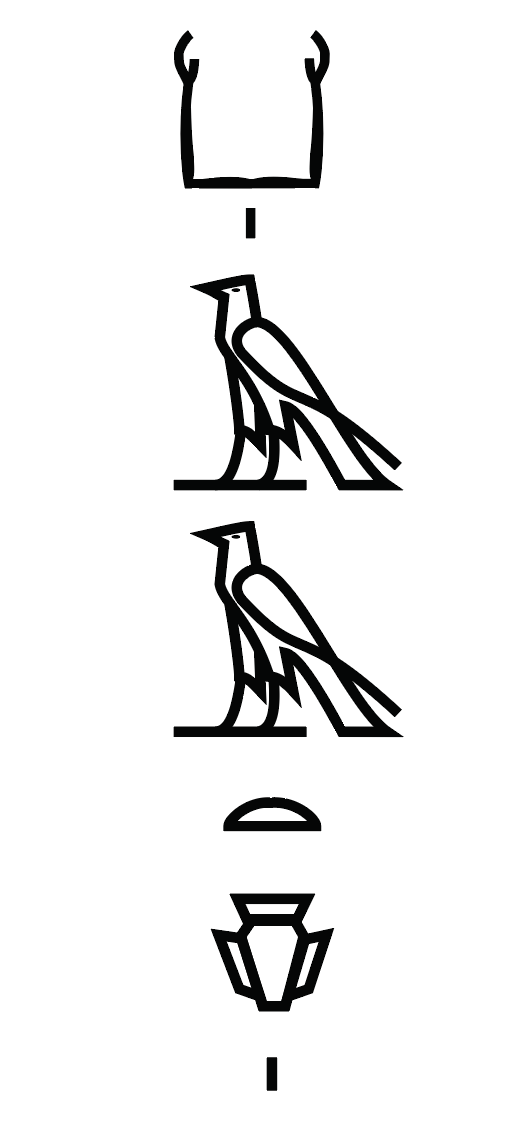
It's hard to totally put into words all that Ka'at Ibi teaches; but it suffices to say that it allows one access to cultural, historical and spiritual information never made available anywhere else and so provides a unique lens through which to explore and compare worldviews. Ka'at Ibi, which loosely translates as "to meditate" in Medu (the ancient language of the Pharaohs and Kemetic civilization), is a one to two-year long initiatory process that puts into a historical, cultural and spiritual context the vastness and greatness of a civilization whose intellectual, philosophical, social and spiritual achievements have never been matched, let alone surpassed.

Ka'at Ibi has two aspects: a philosophical aspect of lectures which delve into the ancient history, culture and spirituality of the Kemetic people; and a technical aspect of spiritual exercises and poses. The lecture portion of the Ka'at Ibi education spans thousands of years of history and culture of Kemetic civilization. The Ka'at Ibi lectures form an intellectual, philosophical and spiritual framework that enables the initiate to examine his/her own mental, emotional, psychological and spiritual self. It is this self examination, through the lens of the Ka'at Ibi education, that tests and challenges the initiate to push beyond the confines of his or her previous perception of reality. As the initiates' perception of reality expands, there begins a struggle to reconcile this new knowledge with the education and worldview of the colonial system.
One of the major reality-expanding concepts in the Ka'at Ibi education is the concept cosmogony. The concept of a cosmogony is fundamental to understanding not just Kemetic civilization but any civilization, that is to say understanding how a civilization functions and why. A cosmogony, as explained in Ka'at Ibi, is the blueprint or DNA of a society. It is the initial seed that, after it is planted, develops its specific society. It is the reason that the society does anything and everything. It is a its society's story of how things came to be. Members in that society reference this story to express their world. Cosmogonies come complete with Gods, the creation of the world, explanations of good and evil, life and death, and much more. Everything in a society flows from its cosmogony: laws, culture, values, education, family life, spirituality, philosophy, etc. It is important also to note that every cosmogony comes with an agenda; and whoever creates the cosmogony also creates the agenda for the society that will use the cosmogony. In fact, an agenda is the reason anyone creates a cosmogony.
There are many cosmogonies in use today. However, the Kemetic culture has the original cosmogony that was created by the Divine World. The reason this is important is that cosmogonies can be created to fulfill all kinds of agendas.
The cosmogony in Kemetic culture starts with the three self-created Neteru (Gods) of the first trinity: Ra, Imin and Ptah. Ra saw that it was cold and dark and wanted to create harmony; so he created divine fire (Nw) and divine matter (Geb). Imin saw that, with just fire and matter, existence would be destroyed; so he created divine air (Shw) and divine water (Tefnwt). The Neter Ptah created the first human couples: Wsr & Aishat and Seth and Nebfst. Wsr and Aishat gave birth to Heru while Seth decided not to have children and so did not procreate with Nebfst.
Included in this cosmogony is the Holy Drama which is an extended story of ancient human events that took place during the beginnings of humanity. This is of course a very simplified version of the Kemetic cosmogony; but it still presents the basic framework and story of how things came to be. It is this cosmogony, coupled with the Holy Drama, that gives Kemetic culture its blueprint for existence, its goals and its destiny as set by the Divine World.
When evaluating Kemetic society, or any society for that matter, one must look at that civilization's cosmogony. What is their story of how things came to be? Who created that story? How do that society's people interface with that story? Does that story encourage and inspire its people to work towards aligning their lives with the Divine World? The answer to these questions will tell you all you need to know about a society.
Over the past year, Ka'at Ibi has challenged me to rethink many of my previous notions about life, death and the story of how things came to be. The year has inspired me to continue reconfiguring my life around Kemetic culture. The Kemetic culture was the first culture to bridge the enormous chasm between the human world and the Divine World. If we want to re-establish this bridge, it is only fitting that we pay all attention to and study this great culture so that we might develop ourselves enough to restore it.