
The Gift of Fire

Hmmmmm... What will I say? Dear reader, look around you and you will see my face.
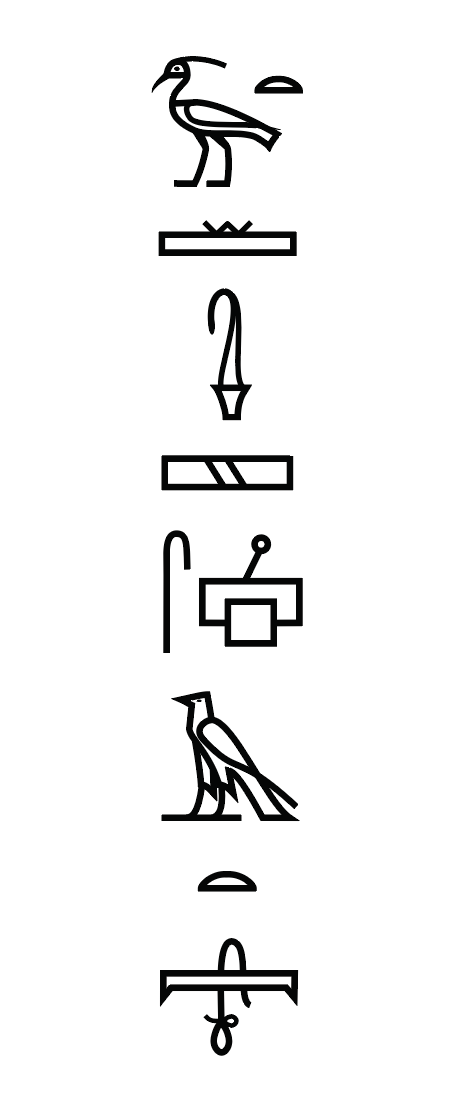
I've always found it difficult to talk about myself. I would like so much to expose myself to who would like to know the hand that is holding this pen; spread myself under the sun like laundry or simply a cloth that just passed through washing in the river. I would like to show my face of the beaten and washed, scrubbed against wood, hands, or rocks in the river to end up finally exposed to the wind and the sun. In reality, I just described every individual on the path towards Gods; the individual that is working hard to find themselves outside of the logic of the crabs in a basket that is represented by the world of today. The world submitted to the logic of self-destruction inside which every individual consciously or not is working to ensure that their neighbor does not experience a fate that is different than theirs.
According to the Kemetic sacred texts, against the forces of good that are represented by Heru, Seth (the representation of the force of evil) possesses the advantage of immortality. Every time Heru threatens to rival the forces of evil, the nature of the essence of the principles of good become a handicap because the eternity for the principle of good includes within itself the notion of death and reincarnation. While the principle of good dies and resurrects, the principles of evil continues its self-preservation.
For the human being, this principle of self-preservation that is found in the evil will be revealed through the difficulty we have in trying to correct the evil we recognize within ourselves; the notion of the mass movements to which we adhere more for the comfort that it brings to us through the idea that we are not alone instead of the moral, intellectual, or spiritual quality of what we are submitting to. The modern society through its politics and religions will make us pay if we refuse to submit to the destiny it has chosen for us. By making every individual a person that believes they know what it takes to make the world, the forces of evil assure the social inertia because in reality that same society has been destroyed and replaced by groups of individuals more preoccupied by the achievements of the pleasures promised by the politicians than the fate of humanity.
If you are looking for anything other than the pleasures of the senses that the colonial society has promised us, allow me to say that you are like me...a cloth that has passed through the hands of a laundryman in the river; wait for the sun and the wind to arrive and dry you out, and then you will know what is left of you, my friend.
Listen, then, to this story. The value of fire does not have any equal except that of the other original elements. According to the Kemetic cosmogony, for the creation of life to be possible, there has first been the need for the creation of the original elements as matter used in the accomplishment of the work of the Gods. In the first trinity, the first two Gods have created the four elements: fire, air, water, and matter. It is the third God of this trinity that has created life on Earth. Fire is simply pure. It is a purifying entity. It burns the corruption from matter and frees the ka of the burned entity so that this ka can join the great flow of the existential energies that are becoming.
The mystery of fire starts first in the fact that we can observe: every time fire burns, it behaves a bit like the process of digestion or even phagocytosis. The entity is first engulfed in flame with an emission of heat and diverse elements. At the end, the fire extinguishes and leaves behind a pile of ash or elements that have not been digested.
Fire, for the human being, presents so much of an enigma and so much possibility that the human thought found itself divided in two great currents of logic in our approach to the world of the Gods. For example, if Gods are invisible and outside of the matter and the corruption it carries, how do we expect our dead to approach the divine world if we just go ahead and bury them instead of burning them? On the other side, if we accept that the human body has negotiated with intelligences that produce matter so that they will make every physical aspect of him in his journey on Earth, the human being should then respect the body and the physical entity. It is mentioned in the Holy Drama that the Goddess Aishat traveled throughout the world in search of the pieces of the body of Wsr and at one point she presented herself as the servant to a royal family because the coffin which encased Wsr's body was in the trunk of a tree that was cut for the roof in their palace. While being a servant, she took care of the royal infant until the day the queen surprised her, sitting by the infant whose body was burning.
When the queen saw that, she shouted and the Goddess jumped and stopped the flame that was coming out of the infant. This is before she revealed herself as a Goddess and told the queen that she was simply trying to burn the corruption and sickness inside the infant. The sacred texts say that if she had not been interrupted, the human being would not have had that much corruption and would have been capable of living for a very long time.
There are many categories of fire, but the one that interests us is not like others. We call it the fire of fires, the purificator of purificators: the fire of Itoure, the fire of Abtou. Abtou is the holiest city on Earth. It can be found on the shore of the Nile River. It is the sanctuary of the God Wsr. Abtou, before the invasion of the forces that are colonizing humanity, was known throughout the world as a place of pilgrimage for anyone sincerely interested in the transcendental aspect of life. The Greeks called it Abydos.
In the center of the city of Abou there was an alter that represented the navel of the world. This alter is considered the central point of the Earth energies. It was called Kaaba. The most used term was Kaaba Neth Mesra, meaning the vestibule or point of unification of the children of Ra. In the middle of the alter of Kaaba Neth Mesa was burning the most sacred fire. People were coming from all over the world to walk in circles around this sacred fire and always returned home blessed.
It is said that during the periods of trouble the notables of the royal court of the pharaoh sent diverse messengers throughout Tamert (Africa) so that every kingship would come to Abtou and take away the most important valuables to the places that are inaccessible to the invaders.
In response to this news, the kingships of the buckle of the Niger River sent two ambassadors throughout Itoure. They were supposed to go separately and each one of them was told they must improvise the best way to bring back the sacred fire. The trajectory took them through the Sahara, savannah, mountains, and even the forest. The two ambassadors did not waste time going towards Itoure. The first one built a great quantity of torches and filled his chariot that was pulled by a group of horses. When the second ambassador met him, he started laughing and mocked him. He just said,
"This is a mission of a few metherus (weeks of ten days), not years!" The first ambassador said nothing. He observed that the second ambassador only had his horse and a few torches. He has the attitude of a messenger; for a messenger, it is important never to waste time. To be light and fast is what is an attitude one expects from a messenger; but never before had one been sent to go this far and bring back a holy fire. It is known that the two ambassadors would have to face wind, dust, rain, and who knows what else. It is simply difficult even for an observer to imagine how it is possible to carry a torch of fire riding a horse for thousands of miles.
The joumey towards Itoure happened with no problems. At the entrance of the saint city of Abtou, the two travelers split with a promise lo only meet when they were back home in their kingdom.
The first ambassador lit a torch after he has done his prayers, zemzem, and asked for blessings. He quickly took the path back home.
Every time he reached a village, he stopped and in the temples, he offered them the sacred fire. He did this even to the villages. The villagers, in a sign of gratitude, always organized feasts in his honor. This was taking time, but the ambassador knew that his mission was to bring back the sacred fire to the kingdom. He said to himself that he would accomplish this mission regardless of the time it would take. All the villages around the path did not understand why the second ambassador never stopped.
The first ambassador tumed every village of the cities he crossed into his friends and every time he was leaving them, they covered him with gifts and always invited him to come back any time he would like.
Months passed. The first ambassador finally arrived in the kingdom. To his surprise, the big feast was organized in honor of him and the final arrival of the sacred fire in the kingdom. He did not understand why it is now that the sacred fire arrived because the second ambassador did not waste time with the people on his path. The enigma of the disappearance of the second ambassador became heavier and heavier with every day that was passing. What could have happened to an ambassador that never got off his horse for more than a few hours, just to eat or even change the horse? His absence at the arrival of the first ambassador tarnished the atmosphere of the feast. Could he have fallen from his horse? It is simply difficult to imagine why he did not arrive. The notables of the kingship gathered to decide what they needed to do. Before choosing those who should follow the path taken by the missing ambassador, one of them suggested to try to find the difference between the methods used by these two to accomplish their mission. "To know what the loser did not do, let's try to find out what the winner did." The first ambassador was asked to talk about his journey and his techniques. While the wise men of the kingship were attentively listening, he revealed his strategy. "I first made a lot of torches of hay and grass..." "And why?!" cut in one of the wise men. The ambassador said that if he had to carry a flame for thousands of miles, it appeared for him very important that he had enough torches. The ambassador continued, "I offered the sacred fire to the temples of the villages and the villagers..." "Gesture of goodwill and generosity?!" asked another wise man. "No!" answered the ambassador before he continued, "My mission was not a mission of generosity. If I must carry a flame for thousands of miles, it is important that I create relays; places where I could find the same flame without having to retum to the source if my torch got extinguished." The ambassador observed the surprised face of the notable before he continued, "every time my torch was extinguished by accident, I only have to return to the last village that I just left to relight it." To these words, the notable decided to send people directly to Abtou.
A few months passed and people returned to the kingdom. They announced that the second ambassador was fine in the sacred city of Abtou. It is said that he was in prayers days and nights on the side of the sacred fire asking for Gods to show him how it is possible to carry a flame for thousands of miles without risking its extinguishing.
Wisdom, as is said by the Gourmantche people, it is like a fire. One cannot invent it but one receives it. The sharing of the sacred fire brings the assurance that there will always exist that fire somewhere on this planet to continue its work of purification despite the quantity of the evil on Earth.
Later on when Roman and Persian invaders destroyed the temple of Wsr, all of them returned home with the firm conviction that they had destroyed the fire of the fires. A bit like the battle between Seth and Heru, Heru as a representative of a principle of life possesses his quality of resurrection against the forces of destruction that affect the world.
우