The Mechanics and Effects of Modality Part 2
Root Tones: The Mechanics and Effects of Modality Part 2
In the last installment of Root Tones™ we began the exploration of modal music by explaining that a mode consists of a limited family of notes that are adhered to in a compositional or improvisational context. We learned that the Western scale system utilizes seven major scale tones and five accidental tones to comprise a twelve-tone chromatic system. The ancients would have considered this to be too many notes as their systems were limited to a five-note pentatonic scale system. The sound of Oriental music is the best example of how this system sounds.
We began to touch upon the effect of these systems with the story of jazz composer/big band leader Sun Ra, whose dissonant music (which utilized the chromatic twelve-tone system) caused An entire stadium audience in West Africa to walk out of his performance, apparently unable to resonate with the inharmonic tonality of the music. This response to dissonant music was not simply a matter of taste or esthetics but rather a conscious choice to avoid vibration or sound that was thought to be out of harmony with nature and perhaps even dangerous to the body and spirit. At the opposite of such a musical spectrum must be sound that could be considered to be completely in harmony with nature and good for the human body and spirit. What would be the nature of such sound?
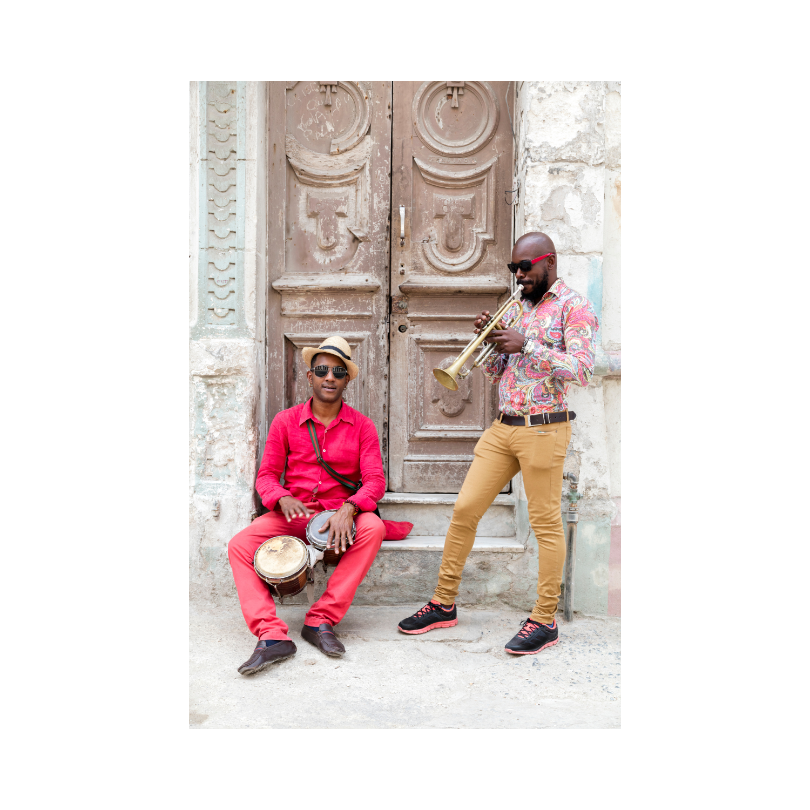
I recently was fortunate enough to hear the music of master multi-instrumentalist, Kelan Phil Cohran played live at his home. Some of the music had been pre-recorded by Cohran. He played; alternately, harp, zither, and francophone (his own invention which is similar to the kalimba) live with the track. The music resonated with me so much that it was as if he were playing my own soul history. Musicians of every age have been in search of the legendary and elusive golden note. The music of Cohran comes very close to this. He is a staunch proponent of adherence to the pentatonic scale system because of its purity and congruence with nature. He had been a trumpet player with the Sun Ra Arkestra during the time of the event in Senegal. Africans need their music to be happy or to have a specific purpose, stated Cohran.
We have discussed in earlier installments of this column the various utilitarian purposes for which the Ancients used music (healing, ritual, weddings, funerals, and communication). Were these compositions created based on some needed specific formulae or were they created spontaneously based on intention? We know that the Dogons used a specific healing rhythm that has been passed down through the ages. This particular rhythm was transmitted by Dogon Master Naba Lamoussa Morodenibig on the opening track of the CD, HEZU EM MEDU REY KEMET? (SONGS IN THE LANGUAGE OF KEMET) performed by one of my groups, The African Arts Ensemble. The song entitled, Hezu Suunu, which is "song (of) healing"? in the Ancient Kemetic language, is completely improvised by the musicians and vocalists over a continuous loop of the two-bar healing rhythm foundation. Traditionally the rhythm itself is played by four drummers on drums used specifically for healing rituals. Two drummers play high tones while two play bass tones. The rhythms create a unique binary system of interlocking rhythms as seen in the transcription. While the tonality of the drums is an important property of the healing rhythm, the precision of the tones is not as important as the relativity between the notes. The tonal relationships create parallel fourth intervals which when inverted up or down, create suspended chords that are completely multi-functional. These chords can coexist in a large variety of modes. When we hear the sound of the overall polyrhythm, the cohesiveness of the four drums sounds: like two drummers playing a tight rhythm. In fact, if you look at rhythms 1 and 2 together and 3 and 4 together there are no overlapping rhythms meaning that they could be played by one drummer each. If we group the two high rhythms and the two low rhythms (transcription 2) and create parallel line graphs (with slightly expanded emphasis on the interval relationships) of the groups we get a diagram which, if viewed from a vertical position, strongly resembles a side view of the human body. A picture is music we can see and music is a picture we can hear.
Is the fact that a rhythm used for healing the human body literally looks like the human body? Japanese scientist, Masaru Emoto, shows in his first book that enlarged photographs of water crystals in China formed the actual shape of the Chinese character for the word water. There is no evidence that the Dogons used graphical analysis to create music or that the Chinese had the technology to view enlargements of water crystals when creating their language symbols. It seems that these Ancient people acted in complete congruency with nature. Many composers have, either consciously or unconsciously, created music that contains a symmetrical "sweet-spot" that conforms to the golden mean or pi ratio found throughout nature. We will explore this and the implications of the so-called Fibonacci ratios in the next installment as we get to the Root. Until then, B natural and C# (see sharp).