Paradigm Disturbances Caused by African Adventure
The Initiate: Paradigm Disturbances Caused by African Adventure
My thirty-eight day pilgrimage to Africa with The Earth Center began months before we actually left. We were busy collecting supplies required for "roughing it" in Africa as well as gifts for the brothers and sisters in the Motherland.
While I was excited to be going to West Africa, the "stomping grounds" of our Spiritual Master and teacher, Master Naba, hardly anyone outside of The Earth Center was excited for us! We left Chicago amid warnings and prayers from scared, worried friends and relatives who had heard and recounted news stories of AIDS, social unrest, rampant crime, deplorable economic conditions, poor medical facilities and constant political upheaval (among other problems) in Africa. There were those who had read and seen a number of network and PBS "specials" who have used vignettes from the media lies created to incite a fear of Africa in Africans and others in America. So thorough was the programming, that any attempts to convince them otherwise were for naught. I could hardly believe that the Western media had done such a good job of controlling thoughts. So, it's no wonder that the excitement didn't begin to really build until we left the nay-sayers and were all together at Gate 19 ready for take-off from Chicago to Paris, France.
Flying all night, we arrived in Paris early morning. It was a beautiful and sunny day. We were to have an eight hour layover before we were to leave for Ouagadougou, Burkina Faso. The Air France flight to Burkina was very different from the one that took us to Paris, as the flight attendants were African, and only a handful of Caucasians were on board. Most passengers had changed from their Western attire to their native clothes. We finally arrived in Burkina Faso to a very tropical and balmy 77 degrees, with a mild breeze blowing.
Customs was a breeze until I got up to the final officer. Raising the officer's curiosity were the two big sealed aluminum pouches in my suitcase. "What is this?" he asked me in French.
"Salmon," I said proudly. He looked puzzled, and said, , "Sa men?" I shook my head. "Sa men?" he said again, still looking puzzled. "Oui, fish!" I said, while making eating gestures.
"Feeeesh?" By then, Master Naba had arrived, and the officer questioned him about the contents of the pouches. Master Naba asked me what was in the bag. "A salmon," I replied. Master Naba wrinkled his forehead and, with a strange look on his face, verified with me, "A salmon?"
"Salmon!" I said. Master Naba told the customs officer "saumon" "Hmmmm, saumon. Ha, ha, ha, ha, ha, saumon!" the officer laughed. I must have heard the words "salmon" and "saumon" repeated by natives and tourists in line a dozen more times. Puzzled, everyone started to ask why I had brought the salmon. Exasperated, I rolled my eyes and exclaimed tersely, "to eat!"
One Burkinabe came over to tell me: "Don't be scared (just like Wanda on the show In Living Color), we have plenty of food here!"
-Initiate #1
Africa was a place I had never been interested in visiting. Allowing my sister to convince me to go to a place that didn't interest me was puzzling, and I could not muster up the expected excitement over the trip. My excitement came only when I looked around the airplane as we were flying to Burkina Faso and saw only six or seven Caucasians on the plane.
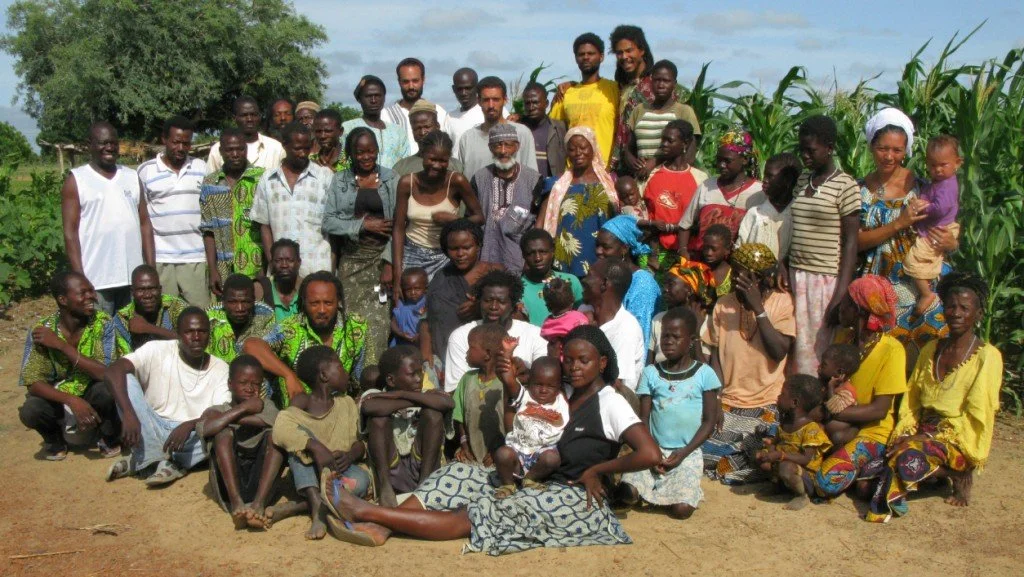
When we arrived in Ouagadougou, the people were happy to see us, and we were welcomed warmly. People stopped to speak everywhere we went, and smiles were abundant. The people seemed at peace, and you never saw anyone upset. Crime was virtually nonexistent, and in some areas, the police officers don't even carry guns. People take their naps on benches outside of their shops, and they don't worry about time (most people don't wear a watch). Africa reminds me of growing up in Mississippi. It was not just the red dirt, but also many cultural similarities, such as the fact that the heaviest meal is eaten at noon. Everyone speaks, and they all help to look out for the children. The markets sell items made by one of the craftsmen in the area, and they are very proud of their wares. Merchants have no problem with letting you know that if they don't have what you are looking for, they can make it for you! All are willing to bargain with you on a price. Some will come to your hotel and bring items to sell to you. If you want the item but don't have the cash on hand, they will leave it with you until the next day so you can go to the bank. We ate at many different restaurants. The food was very good and very plentiful. One thing we learned about eating in Africa is patience. When you arrive at the restaurant, be prepared to wait at least one hour for the preparation of your food. After afew days, you will not be able to eat as much food as you are accustomed to because the food and water in Africa contains much more vitamins and minerals. People do not need to overeat, because unlike most Americans, their bodies do not crave vitamins and minerals.
The modes of transportation in the cities are cars and mopeds. Mopeds are the cheapest, and they are fun. Women wearing skirts and dresses ride them without a problem; many have their babies with them.
We spent ten days in the village, where there are no comforts of home. There is no running water, toilets or electricity. We slept under the stars, breathing the fresh air, without fear or worry. Villagers share the responsibilities of maintaining the village, farming, raising children and preparing food. They shared the gifts we brought with those who were in need. They tried to teach us their language, and we tried to teach them ours. Older children looked after the young children, and they spent their days playing and watching to see what these strange looking visitors were going to do next. Sometimes they visited with us under the baobab trees while we played cards or relaxed. This is where they experienced crackers, peanut butter and jelly sandwiches and tuna. You knew by the look on their faces that tuna was not something they liked, but they would not disrespect you by not faking it. The women of the village spent a great deal of time at the well, getting water for their families, bathing and washing clothes. Going to the well became a favorite past-time for the women of the group. At the well, we talked with the women, washed clothes and played with babies.
When we left the village, we went to Togo. We spent a day at a waterfall, had clothes made and visited a mental illness healer who was 115 years old. We also saw traditional spiritual and cultural ceremonies and events, and had time to mingle with the locals and develop friendships.
We also visited Ghana, an English- speaking country. There are a lot of vehicles in Ghana, and many are late models. What surprised me about Ghana were the constant advertisements for condoms and the unbelievable traffic jams. While in Accra, we went to several art galleries, museums and libraries. We also visited the Elmina and Cape Coast slave castles, where we were told that there were Ghanians that were sold into slavery; those who were made slaves came from inland villages in countries such as Mali and Burkina Faso.
I have traveled all over the world, and there is no place where I have gone that has left this kind of impression on me. I still find myself daydreaming of Africa, and I can honestly say that I miss my African family and friends, the stress-free life, the sense of belonging, and the feeling of being completely satisfied in the mind, body and spirit.
-Initiate #2
If you haven't been to Africa or if you have only been as a tourist, then allow me to encourage you to get information on The Earth Center's pilgrimage to the Motherland. I cannot stress enough the benefits of going on a spiritual pilgrimage as op- posed to going as a tourist. By taking the pilgrimage, you will learn so much more about the people, the land and yourself. You will travel and live with a group of individuals that you will later recognize as family, and you will learn through your struggles the things that will tear a family apart and the things that will keep a family together. You will learn the benefits and value of order. Your eyes will be open to not only the realities of African life and the lies that have been told to us about Africans, but also the lies told to them about us. You will establish relationships that will last the rest of your life. You will see clearly that you have a future, and your future is in Africa.
There are many things that left a strong impression on me. One that stands out is the land - it is expansive and beautiful. It was the rainy season, so the land is rich and enchanting. Usually when we are shown images from home, we see the dry season when the land appears dead and barren - the lies that have flooded my consciousness were dispelled.
Another thing that stays with me is the food. We were given an opportunity to experience simple village food as well as food prepared in some of the finer restaurants. Most of us ate a vegetarian diet but included things like crab and fish. Everything was delicious. The food was fresh and high in nutrition. There was no need for vitamins. The experience of sitting on the front porch looking up at the brilliant and distinctive array of stars, and eating fufu with a nice spicy tomato-based sauce is immeasurable.
I was impressed with the people of Africa - kind, down to earth, honest people with values and principles that seem lost in America. They are cooperative and helpful, and everyone greets you with kindness and respect. Help is automatic. The work ethic is high and everyone has an entrepreneurial spirit. Babies are alert and have a direct and focused gaze. Children play an integral role in the community and take on responsibilities that one would have difficulty giving to a teenager in the USA.
One of the difficulties experienced by the pilgrims is adjusting to the clear male and female roles in society. There is no guessing - the roles are clearly defined and incorporated into the society. A man is a man and a woman is a woman, and there is no gender confusion. The men are the head of the household and the women and children respect this reality. Grandparents, uncles, aunts, elders, etc all play an honored role in the family. Families are close, harmonic and happy.
As enriching as my experiences were and as taken aback as I was by the land, food and people, I was also saddened by the grip that the outside religions have on our home. Africa is our home. We must make a choice to reclaim it.
-Initiate #3