Bottle Water Conspiracy
Earth Talk: Bottle Water Conspiracy
We were a group of Americans who were participating in The Earth Center's annual spiritual pilgrimage to Africa. Most of the people in the group had never before been to the Motherland and were worried about parasites and digestive trouble that often occurs when one's system is not adapted to the local water. For the first week or so, everybody relied on bottled water for their drinking needs, as the water in the secured and nicely packaged bottles seemed like a safer option. However, our spiritual leader and "tour guide" Master Naba, recommended that we slowly begin to drink the local tap or well water, helping our bodies to adjust to it, instead of relying on the bottled type, which was very expensive and not By Bouneith Inejnema Naba always available. Master Naba ex- plained that the tap/well water was safe, but that it may contain organisms that our bodies had not built a resistance against; it was better for us to risk a mild illness in order to strengthen our immune system and avoid relying on bottled water that we may not be able to purchase. Most of the group followed Master Naba's advice, but one mother and her daughter refused and would not drink anything that was not purchased, pre-packaged, from a store or from their filtering Water-bottle. During our trip, we visited an incredible waterfall spring in the heart of Togo. The waterfall was beautiful, and the neighboring town relied on its water for their daily needs. After a long trek through the bush to the waterfall, we welcomed the idea of having a refreshing drink of the natural spring water. We all drank the water until our bellies swished when we walked - all except for the stubborn mother and her daughter. This natural spring water was, by far, absolutely the best water I have ever consumed. Its taste has no equal, and its purity is undeniable. I laughed to myself at the irony - the woman and her daughter refused this water for the bottled kind, which is sometimes taken directly from sources such as this one and sent to market without chemical treatment!
Bottled water is the fastest growing segment of the beverage industry and soon will (if it hasn't already) surpass coffee and milk, coming in second to soda pop in sales. Recent analysis has shown that sales of bottled water have tripled in the last decade - in 1986, the average American consumed about 4.5 gallons per year, while in 1997 the average was 12.7. Meanwhile, in the UK, the average Briton consumes 7.4 gallons a year, while the French and Italians drink a whopping 36.8 gallons, on average, of bottled water every year. Globally, bottled water markets are increasing, and the industry is worth over $14 billion in sales each year. Consumers choose bottled water over tap water for many reasons, such as concern about tap water safety, the desire to avoid fluoride, convenience, and taste. Recent independent studies have shown, however, that consumers may not be getting what they think they are when it comes to packaged water.
"You drink tap water? Wow. I only drink bottled water," This is an increasing trend. From water coolers filled with "designer water" and endless bottles of Evian, Aquafina and others, the majority of Americans use bottled water at least occasionally, and over 1/3 drink it regularly. In 1992, over 700 brands of bottled water were being produced in the USA alone, which has since expanded with the rise in demand. While the industry was temporarily knocked down in 1990 due to benzene contamination in the very posh Perrier mineral water that caused a worldwide recall, sales have since mushroomed, growing at an estimated 10% per year, which is two times the growth rate of other drinks, including soda pop.
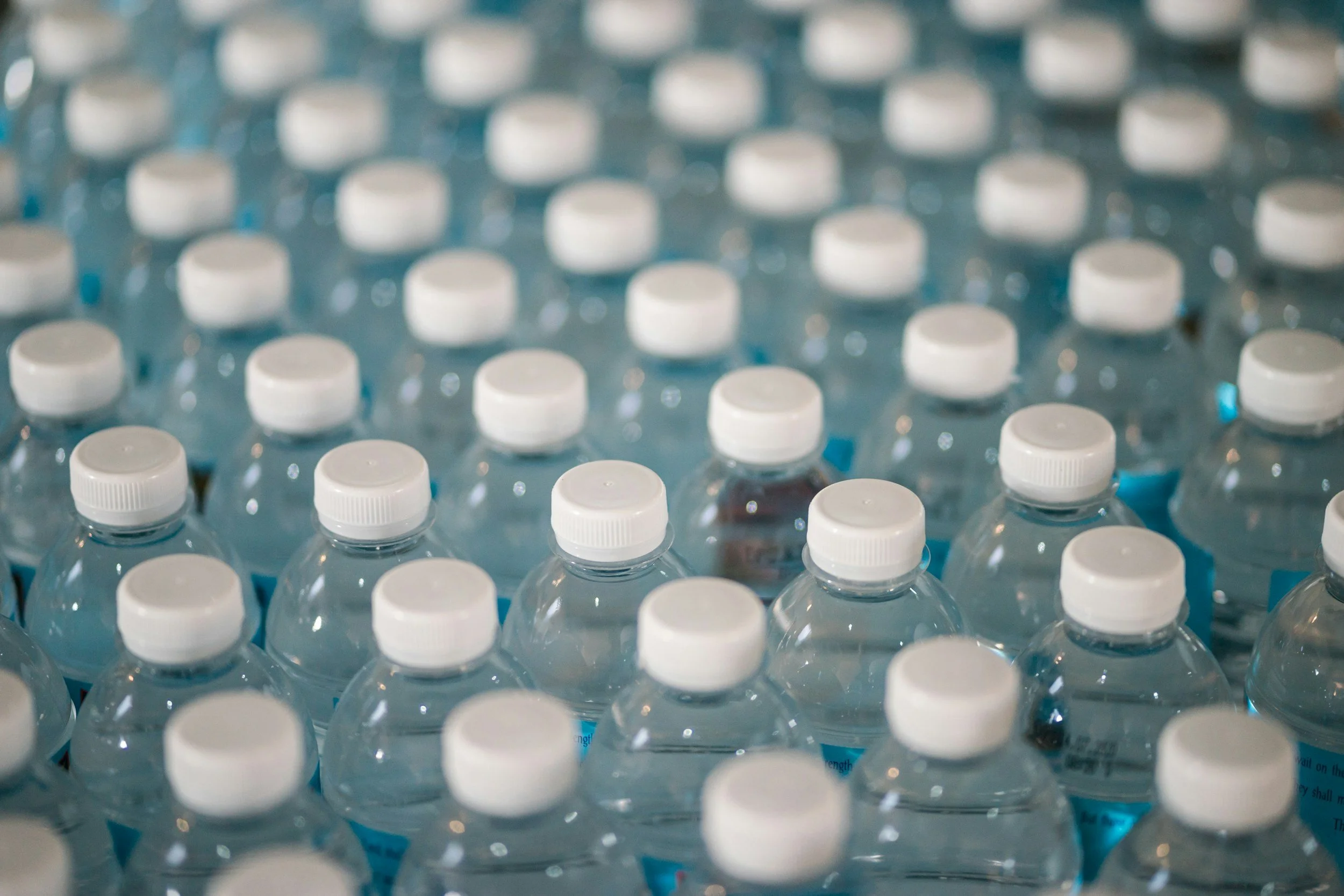
Bottled water has become somewhat of a status symbol. Expensive bottled waters sell at a premium price... are you getting what you pay for? Critics aren't so sure. Bottled water producers claim that bottled water is extremely safe, pure and very regulated. Images of beautiful mountain scenes are often featured on bottles. The product is marketed as a refreshing and healthy alternative to the less- trendy, unsophisticated tap water. Because it is packaged and sold in stores, convenience stores and vending machines, the public assumes that it is pure, safe and free from contaminants. People register in their minds that the water comes from a natural stream (like the one previously mentioned in Togo) simply because of the graphic shown on the label, but rarely do they bother to call the company and inquire about the water source. Many people would be surprised to know that an estimated 40- 50% of all bottled water is nothing but tap water that may or may not be additionally treated. Most will be surprised to learn that bottled water is actually less regulated than tap water, and that contamination standards for bottled water are much inferior to those of tap water. Most can not imagine that their favorite brand of water may have come from a source that is near a toxic waste dump or underneath an industrial parking lot.
BOTTLED WATER CONTAMINANTS
The public assumes that, because bottled water is packaged and sold in stores, it is safer than tap water. People assume that it has less bacteria, chemicals and harmful substances, and that it is heavily regulated by the government. This is simply not the case. The Natural Resources Defense Council (NRDC) conducted a four year study of bottled water, investigating the industry, its regulation, and the water quality. Their results may be surprising.
NRDC tested over 1000 bottles of water, which included 103 brands. Their tests found that 25% of the brands contained chemical contaminants at levels that are above the bottled water industry code or enforceable state limits (state laws very widely and will be discussed later). Despite this, the vary weak federal standards for bottled water were generally not violated. NRDC summarizes their study by stating that most bottled water that was tested were of relatively good quality and were quite comparable to tap water. However, the samples that were contaminated were highly tainted; some samples had coliform bacteria, arsenic, trihalomethanes (cancer- causing byproducts of water chlorination), and man- made chemicals such as those contained in gasoline. It should be noted that the NRDC tested only for specific contaminants and were unable, due to cost, to test for many things, such as some kinds of bacteria, parasites, radioactivity and toxic chemicals.
Trihalomethane (THMs) are a family of chemicals that are created when chlorine is used to disinfect water. People and animals exposed to THMs have been found to be at a higher risk for cancer, spontaneous abortions and birth defects. Many people who buy bottled water do so to avoid chlorine, its taste, and its byproducts. Ironically, the NRDC's study shows that bottled water is not guaranteed to be free from these things. Chloroform is the most common THM found in both bottled and tap water. Of the bottled water purchased in California (one of the states with the strictest bottled water regulations), 12% had violated state and industry standards.
Heterotrophic-plate-count (HPC) bacteria is a measure of the general level of bacteria in water. HPC bacteria are not necessarily harmful, but their levels can indicate the possible levels of other pathogens and are generally used as an indicator of the cleanliness of the bottler. Almost 20% of the bottles tested exceeded the unenforceable purity guidelines adopted by some states.
BOTTLED WATER REGULATION
Despite what people believe, bottled water rules are generally less strict than tap water rules. Tap water is more thoroughly regulated than bottled water, and the enforcement of tap water standards reigns high above its bottled water counterpart. While it is true that there are flaws in tap water regulation, there are many more in the regulation of bottled water.
The bottled water industry does not have one standard regulating body. The FDA is responsible for only 30-40% of the bottled water sold in the USA, as water packaged and sold within the same state are exempt from FDA rule. These products are regulated by the state in which they are packaged and sold. State regulation is largely ineffective, as only 40 states claim to regulate bottled water, but most have neither the manpower nor the funds to enforce their rules; realistically, it is safe to estimate that one in five states do not regulate bottled water. The FDA also 10 exempts certain categories of bottled "carbonated water" "seltzer" "dis- infected water" "filtered water", "soda water" "sparkling water" and "water" simply • Thus, the FDA regulates only water products labeled as "spring water" "mineral water" "drinking water", "bottled water", "purified water", "distilled water" and a few others.
Under the Federal Food, Drug and Cosmetic Act (FFDCA), the FDA was supposed to adopt and apply all EPA tap water standards to bottled water within 180 days after the EPA issued those standards. It took the FDA four years to set standards for 8 organic chemicals that were regulated by the EPA in 1989. It took the FDA until 1994 to apply the EPA standards for 35 contaminants that were issued in 1991. Why is the FDA so slow to act? The FDA's head bottle regulator estimates that the FDA has only one-half of a person per year who is dedicated to the issue. Obviously, bottled water is a low priority for the FDA. The waters that the FDA do regulate are not required to meet the same strict treatment, contamination or testing standards as tap water. Despite industry claims that bottled water is safer and more heavily regulated than tap water, this is water from regulation, such as actually quite false.
• Tap water cannot contain E. coli or fecal coliform bacteria. Instead of ensuring these organisms are not present in bottled water, the FDA sets a maximum amount of total coliform bacteria in bottled water. Further, no mention is made of specific limits of E. coli and fecal coliform bacteria.
• A public water supply, especially in a big city, must test its water over 100 times per month for coliform bacteria, which means they must test several times each day. A bottling plant that processes millions of bottles each year must be tested only once a week, according to the FDA standards.
• Cities using surface water must disinfect and filter it to remove bacteria, viruses and protozoa. There are no specific FDA rules that require bottled water to remove or kill bacteria and parasites. There are no rules requiring bottlers to test for Cryptosporidium or Giardia, while tap water producers must test for and remove these unwanted organisms.
• Bottled water has weaker standards for chemicals. The FDA has not set standards or treatment techniques for many chemicals often found in water, such as asbestos, acrylamide, di(2-ethylhexyl)phthalate (DEHP) and epichlorohydrin. These are all regulated closely in tap water. DEHP is of special concern because it is an agent produced in the manufacturing of plastics and is a probable carcinogen and endocrine system disrupter. It migrates into water from the plastic bottles that store the water! Bottled water manufacturers also enjoy weaker testing laws for chemicals, and only need to test for chemicals once a year. Tap water must be tested at least once per quarter.
• Bottlers do not have to use certified labs to test their water. Unlike tap water, who may only use certified labs, the bottled water industry self-tests their water, and manufacturers are free to choose whichever lab they desire to do their testing • Bottled water system operators are not necessarily trained or certified. Meanwhile, tap water system operators must receive training and be certified by EPA-approved authorities.
• Tap water suppliers must report test results and retain records of bacteria testing for five years and chemical tests for ten years. If a tap water supplier finds a serious violation, it must be reported to the EPA within 48 hours. Meanwhile, bottlers are not required to notify the FDA of serious violations, test results, or contamination issues. Bottlers must keep their records for only two years.
• Bottlers do not have to test water after storage. Bottlers are also not required to put a bottling date on the bottles or suggest that people refrigerate the water after opening to help stop growth of bacteria. Microbes, algae, HPC bacteria and other organisms that may be present at undetectable levels during bottling can grow exponentially after bottling. Plastic byproducts can also leach into the water during long-term storage.
The only area of regulation that the bottled water industry faces more strict regulation than tap water is where lead, copper and fluoride are concerned. The industry advocated for stricter rules on these three things, and this is why the industry claims that their water is more regulated and safer than tap water. It is interesting to note that lead and copper are not an issue for bottlers anyway; lead and copper leach from pipes or faucets of the treatment plant and consumer, not from the environment of source water. Fluoride is added to tap water in most areas of the country, and is sometimes found in bottled water as well (remember that a large percentage of bottled water originates as tap water).
Amazingly, bottled water manufacturers, under FDA regulations, are actually allowed to violate FDA standards if the label notes that the water "contains excessive chemicals" or "contains excessive bacteria"!
STATE WATER REGULATION
Because the majority of bottled water is regulated by the states, state regulation of bottled water becomes important, States are under no legal obligation to adopt the FDA's loose bottled water standards. The FDA does not keep track of state laws, and the states do not have to report testing results. Some states, such as California, Vermont and New Jersey have strong bottled water programs, while other states, such Illinois, Montana and North Dakota have very faulty programs. Resources are a major problem for states, as many simply do not have the funds or manpower available. Only seven states have two or more full time staff people for the bottled water program; most states have less than one full time person. Overall, state bottled water regulation is inferior even to FDA regulation. A few examples of faulty state programs include the following:
• Arizona reported to the NRDC, during the study, that "the State of Arizona does not currently regulate the bottled water industry."
• Indiana does not have a separate state code for bottling. They also do not have a program for licensing or permits.
• A Kansas official reported to the NRDC that it "has no statutory authority to issue permits, licenses or certificates for bottled water processors, plants or distributors.
• 35% (18 states) regulate seltzer, carbonated water and flavored waters. These waters are not regulated as bottled water by the FDA.
• Only 14 states require source listing on bottled water labels.
Some states have taken a more progressive approach to their bottled water regulation. For example, California has adopted stricter regulations than the FDA and has created a law requiring those doing business in the state to provide a clear warning if they or their products expose people to toxic chemicals. Louisiana tests samples of the end-product every three months (but unfortunately does not publish the results for the public). Maryland requires bottlers to conduct an EPA analysis on the source of its water. Vermont requires the source, name and address of the bottler and finished product levels of arsenic, lead, sodium and nitrates to be listed on the label!
States fall more easily to political pressure and lobbying from the industry. Most states do not have the necessary funding or manpower to ensure even the slightest regulation is enforced. This is an extremely important issue, as 60-70% of all bottled water is regulated by the states rather than by the FDA or EPA!
BOTTLED WATER MARKETING
The bottled water industry has spent an obscene amount of money on its marketing and public image. An estimated 90% of the cost paid for a bottle of water goes to things other than the water itself, such as marketing. The huge amounts of money dedicated to creating an image for bottled water coupled with confusing marketing terms regulation allow the industry to promote their product in deceptive ways.
Descriptive terms are usually incorporated into the water bottle label, and they are accompanied by an image of a mountain scene, stream or other "clean and pure" images. One brand featured mountains and a lake on the label and was called "spring water" *. The water itself was from a well in an industrial parking lot next to a hazardous waste site in Massachusetts. The water was contaminated with industrial chemicals.
The source of Alasika will surprise almost all bottled- water drinkers. "Alasika™ - Alaska Premium Glacier Drinking Water: Pure Glacier Water From The Last Unpolluted Frontier, Bacteria Free" is actually tap water from Alaska. When confronted with their misleading label, they were required to drop "bacteria free" and "glacier" from their label. Given the lack of funds and manpower dedicated to regulating the industry, this brand is sure to be one of many who are using deceptive practices illegally.
Common descriptive words used in the bottled water industry are pure, purity, pristine, glacial, natural, nature, premium, mountain water, clean, healthy and naturally purified. These terms, in reality, mean very little and should not be considered when determining the quality of the water. Luckily for the industry, the average consumer is uneducated in these matters, and their intended effects of these words are working.
The cost of bottled water is astronomical, both for the environment and for our pocketbooks. Co-op America comments that "By far the cheapest - and often the safest - option is to drink water from a tap. It's also the most environmentally friendly option." Friends of the Earth says, "We might as well drink water from the tap and save all this waste."
As more and more people buy bottled water, more and more bottles end up in the trash and along roadsides. Pat Franklin of the Container Recycling Institutes says that nine out of ten plastic water bottles end up as garbage or litter at a rate of 30 million per day! When the bottles are buried in landfills, they take up space and pose a risk of leaking toxins such as phthalates into the groundwater and environment. When burned, toxic cholorine is released in the air and heavy metals are found in the ash.
"We will only know the worth of water when the well is dry"
- Benjamin Franklin
Bottlers are also hogging water resources, threatening local wells, streams and wetlands. Pumping up to 500 gallons a minute and running 24 hours a day, bottlers can quickly suck a source dry. These practices have ignited a public outcry in Florida, Pennsylvania, Michigan, Texas, Wisconsin and New Hampshire, as residents depend on groundwater for residential and agricultural use. Nestle Waters North America taps about 75 different spring sites in the USA! Florida Springs is in danger thanks to Nestle, Dannon and other manufacturers. A once pristine, sparkling 12 foot deep spring full of fish and wildlife is now dirty and contaminated.
Meanwhile, bottled water affects our personal finances. While we moan and complain about rising gas prices, we think nothing of spending $1.50 for a 9 oz bottle of Evian. Consumers do not realize that, by buying such expensive water, they are actually paying $21.19 per gallon!
Bottled water is expensive. It costs from 240-10,000 times more per gallon to buy bottled water than it does to buy a gallon of tap water! A five year supply of bottled water, assuming one is drinking eight glasses a day, will cast more than $1000; drinking the same amount of tap water will run you about $165 Interestingly, Black, Asian and Hispanic households are reported to be more likely than whites to use bottled water, even though these groups are more likely to have lower-than-average income levels.
Whatever reason one gives for buying bottled water, the decision deserves a second look. Bottled water is not guaranteed to be any better than tap water, and when one looks at the regulations for both options, tap water comes out as a more quality product (in general) most of the time.
The number one and number two top-selling brands of bottled water in the USA, Aquafina (a Pepsi product) and Dasani (a Coca-Coal product), are both purified water. Translation: tap water that may or may not be further treated (remember that the FDA's regulations for bottled water are much less strict than the EPA's regulations for tap water)! The US News & World Report tells us that Aquafina is municipal water from places like to tap pare t Wichita, Kansas, and Dasani is taken from tap water from Queens, New York and Jacksonville, Florida, among other places.
Why do we prefer bottled water to the water that is piped into our homes? Perhaps the success of the industry's marketing campaign is the key reason. Interestingly, when Good Morning America did a taste test of bottled and tap water, the common New York City tap water was chosen as the favorite over 02, Poland Spring and Evian! And, given that many people are seen refilling their empty bottled water container with tap water, one must wonder what the fuss is about.