Fibroids
Harmonious Healing: Fibroids
According to a recent study, more than 80% of Black women and 70% of White women had developed uterine fibroid tumors by their late 40's. While the fibroid tumors are almost always non-cancerous, they result in over 200,000 hysterectomies each year in the United States alone. Black women were shown to have a higher incidence of fibroid tumors in general, and were also more likely to have larger and more tumors than other ethnic groups.
Uterine fibroid tumors, commonly called "fibroids", are becoming more common. Some fibroids do not cause symptoms (and thus go largely unnoticed), but others can cause troublesome symptoms. The medical system can sometimes diagnose fibroids during a pelvic exam, but ultrasound examinations are commonly performed so that an accurate diagnosis can be assured. Hospitals categorize fibroids depending on their location, and fibroids can cause different symptoms, depending on where they are in the body.
Many women live with fibroids and are able to maintain a normal lifestyle, but some experience intense pain, bleeding and pressure that affect quality of life. Common symptoms of fibroids include:
Very heavy and prolonged monthly menstruation, sometimes with clots: This is the most common symptom of fibroids. Excessive bleeding can lead to anemia and fatigue.
Pelvic pain or pressure: As fibroids grow, they can put pressure on surrounding organs, which may cause pain or discomfort. Sometimes fibroids are accompanied by other illnesses (such as adenomyosis or endometriosis, which cause additional pain and complications.
Pressure on the bladder and frequent urination: Again, as fibroids grow, abnormal pressure can bladder: This will lead to excessive urination or even incontinence.
Other symptoms of fibroids include pain in the back of the legs, an enlarged abdomen (sometimes being mistaken for pregnancy or weight gain), and pain during sex.
Hospitals do not necessarily treat all cases of fibroids. Their guidelines state that treatment is necessary for fibroids that grow large enough to cause pressure on other organs, grow rapidly, cause abnormal bleeding or cause problems with fertility. The medical system has multiple ways to treat fibroid tumors, but many women find themselves undergoing surgery.
Medicines - While the modern medical system currently does not have drugs to permanently shrink or cure fibroids, excessive bleeding often results in the prescription of birth control pills. Sometimes, a temporary chemical menopause is induced using medications, resulting in the temporary reduction of fibroid size. Unfortunately, after medication is discontinued, the fibroids usually return to their pre- treatment size very rapidly. Medicines are also commonly prescribed for pain relief.
Hysteroscopic Resection - Fibroids that are located inside the cavity of the uterus and some that are located on the wall of the uterus can be removed using a resectoscope. A resectoscope is a telescope with a built-in loop that can cut through tissue. The fibroid is carefully removed, usually in an outpatient setting.
Myomectomy - Myomectomy, or the removal of the fibroid(s), involves making an incision into the uterus and removing the fibroid(s). The uterus is generally repaired with sutures.
Generally, myomectomy involves reaching the uterus through the abdomen.
Myolysis - This procedure works to destroy the myoma (fibroid) by destroying its blood supply. A laser fiber or an electrical device is placed into the fibroid and is used to cut off blood supply to the growth. The dead tissue is replaced with scar tissue This procedure often comes with complications, such as adhesions (other organs sticking to the uterus).
Uterine Artery Embolization - This is the medical system's newest treatment for fibroids and involves placing a catheter into an artery in the groin and directing it to the blood supply of the fibroids. This causes the fibroids to shrink.
Hysterectomy - The removal of the uterus guarantees that there will be no more bleeding and that the fibroids will not return. Many women have a hysterectomy due to fibroids.
CHINESE MEDICINE
The traditional Chinese knowledge classifies uterine fibroids as "Zheng Xia", or "masses in the uterus with a feeling of pain, swelling, or fullness, and with bleeding in severe cases." There are three patterns of fibroids according to Chinese medicine:
Chi Stagnation and Blood Stasis: Symptoms include regular cycles with heavy bleeding or scanty but long-lasting bleeding, abdominal pain or swelling, a dark-red tongue with purple dots, breast distention, an abnormal pulse and a pulling sensation in the anus. Tumors are felt as masses that are either non-moving or moveable on palpation. Emotional stress or physical trauma are seen as the most common causes of Chi stagnation, while blood stasis can be caused by excessive sexual activity, heavy bleeding with menses, and blood loss due to childbirth. Common recommendations for treatment include Cnidium (Chuan Qiong), angelica (Dang Gui), red pony root (Chi Shao), corydalis (Yan Hu Suo) and Shao Fu Zhu Tu Tang-
Yin Deficiency and Empty-Fire Blazing: Symptoms include early periods with heavy or scanty, long-lasting bleeding, itching in the breast, a hot sensation in the chest or abdomen, a red
tongue that is dry or with a yellow coating, an abnormal pulse, specific discharge after periods and a feeling of sharp or distending pain in the breast. Deficiency of kidney energy or chronic illness is seen as the origin of this pattern. Common recommendations for treatment include anemarrhena (Zhi Mu), phellodendron (Huang Bai) and Zhi Bai Di Huang Wan.
Liver Chi Stagnation and Spleen Deficiency: Symptoms include regular or late periods with heavy bleeding, loose bowels, a pale tongue or a thin-white coating on the tongue, an abnormal pulse, and a pulling sensation in the lower abdomen. The tumor is felt as a soft mass. Deficiency of spleen energy is seen as the cause of this pattern. Common recommendations for treatment include buplerum (Chai Hu), peony (Bai Shao) and Xiao Yao San.
STRESS MANAGEMENT
While stress management techniques will not cure the fibroids, they can help a woman cope with excess bleeding and pain associated with them. Many women report that bleeding and cramping are worse when they are upset, and so stress management and relaxation helps them with these symptoms. There are many techniques that are used for this purpose, including meditation, progressive muscle relaxation, affirmations, Hydrotherapy, music/sound therapy, biofeedback and visualizations.
DIET AND LIFESTYLE
Some holistic practitioners believe a poor diet and a sedentary lifestyle can cause a build-up of toxins, contributing to fibroid tumors. Limiting intake of refined foods, dairy products and caffiene are recommended first steps in helping your body heal and shrinking fibroids naturally.
Other suggestions include applying castor-oil wraps the the lower abdomen with a heating pad to clear congestion of lymph nodes, acupuncture treatments, and a diet free of meat and milk products.
AFRICAN HEALING
According to Traditional African Healing, fibroid tumors are nothing but benign tumors and can occur anywhere in the body. Traditional African Healing defines a benign tumor as a growth that
the body still recognizes as part of the functioning of the system, while a cancerous tumor is seen by the body as a foreign object. Fibroids tend to occur in the female reproductive system more often than in other areas due to the physical nature of the female body and the sexual activities a woman may have.
According to African healing knowledge, fibroids in a woman are the result of sexual activities that her body is not designed for. Specifically, a woman who has multiple sexual partners places herself at risk for fibroids. It takes at least ten to eleven months for a woman to process a man's sperm (per sexual encounter), When a woman has more than one sexual partner at a time, or changes partners without allowing her body to purify itself (meaning, without having sexual relations with a man for eleven months after her last sexual encounter with her previous partner), the mixing of sperm from different men causes her body problems. As Traditional African Healer Master Naba Lamoussa Morodenibig of Ankhkasta Natural Healing puts it, "If a woman is sexually active with multiple partners, there is a period of time where the bloodlines overlap. This is why fibroids are more common in the woman's sexual organs. This is due to the way a woman's body processes sperm, which takes quite a long time to do."
Other factors that play a role in the development of fibroids are body density and eating animal products. "A person who starts off with a thin body structure and who gains weight rapidly will end up with a diluted body density. This creates areas with hard 'cores', which end up developing into fibroids. The same is true of a bigger woman who loses weight too rapidly - it is the abrupt changes in body density that also leads to fibroids," explained Master Naba. Eating animal products are another risk factor for fibroids, especially if the consumption of meat and animal products is combined with a change in body density (like in the Atkins diet). "A woman who eats animal products and who is losing or gaining weight quickly is almost guaranteed to develop fibroids!" says Master Naba.
It is possible to transmit fibroids from one woman to the next. This happens when a man has sex with a woman who has fibroids and does not shower or clean himself before having sex with another woman. The bodily fluids of the first woman get transmitted to the second woman, and she could develop fibroids this way,
What about a woman who develops fibroids that has only been with the same partner for an extended period of time? "In these cases, we say that the man's blood and her blood don't match," says Master Naba. Traditionally, there are bloodlines that are not compatible with other bloodlines, and if these incompatible families try to unite, problems such as fibroids and fertility problems arise. The man's sperm, in this case, 'cause' fibroids for the woman",
According to Traditional African Healing, a woman's body is no longer ready for sexual activities after she reaches menopause. In traditional societies where people have sex more for the production of children rather than for pleasure, a woman generally will stop most sexual activities at this stage of her life. Her body's processing changes, and her body will no longer recognize sperm as linked to sex, and thus a reduction of fibroids is often seen.
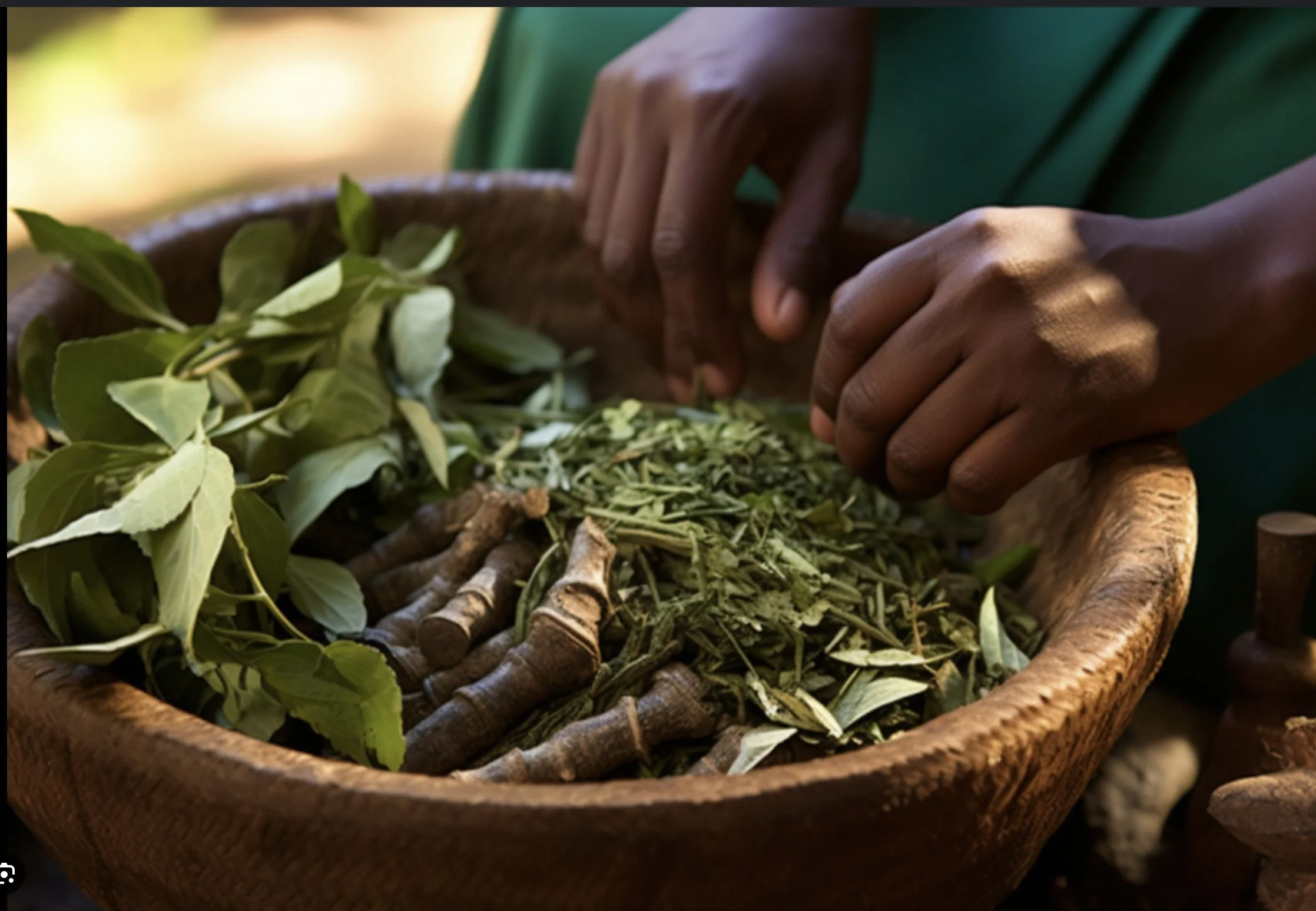
If left untreated, fibroids lead to infertility in 60% of the cases. Fortunately, there are many African remedies for fibroids that do not involve invasive procedures, surgery or the removal of the uterus. A combination of plants, a good diet and a change in sexual behavior will correct the functions of the body, which will cure the fibroids. "You cannot cure fibroids by acting directly on them, because they will always come back. They start off very small, and it is only the large ones that the medical system will treat. For a woman using hospital procedures, this means that the fibroids will always come back unless she has a hysterectomy. The plant products we use in Africa aid in the harmonization of the body density, which will naturally rid the body of fibroids,' " explained Master Naba. In average cases, after just one month of herbal treatment, an increase in fertility and a reduction in the fibroids is seen. Severe cases may need treatment for five months.
Fibroids are becoming more and more common in today's modern world. Many women undergo hysterectomies to resolve their issues, but this drastic procedure is not necessary. Natural remedies for fibroids exist that will enable a woman to live a healthy and fibroid-free life. Call your local Chinese Medicine practitioner or Ankhkasta Natural Healing (African Healing) at 737- 201-1213.