The Origins of Human Culture
Temple Culture: The Origins of Human Culture
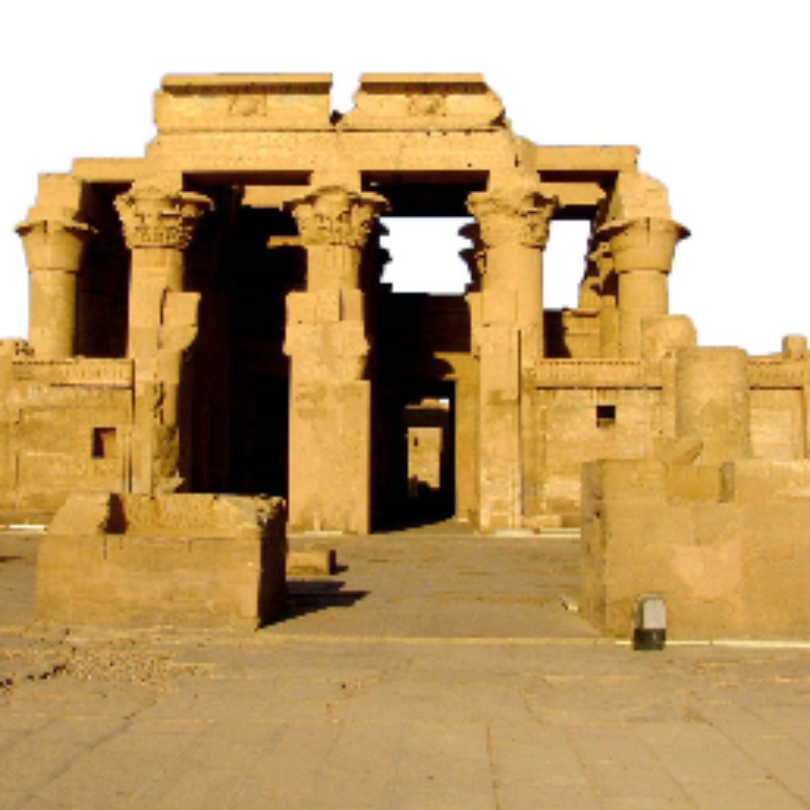
It is frightening to think of how fast the world is changing. To consider that many things our Ancestors depended on, today mean very little to us, should make us really question the direction in which we are going. If something our Ancestors saw as valuable enough to spend their time and focus on today means little to us, what has happened to us and is this change for better or worse? For example, just fifty years ago, no one spent so much time looking at a phone. Now a large part of our day is spent staring into a smart phone. Screens may not be new to us in the modern world but if we go back just one hundred years into a human history that spans over 100,000 years they were virtually unheard of before the invention of the television.
Now consider how much our Ancestors farmed, raised animals, fished, hunted, and looked at the stars. We may think that because we no longer have to, that is an improvement in the order of society, but many city dwellers don’t really know or even understand where the food on their plate comes from or the process it took to reach their tables. Even still, there are some stark differences in what captures our awareness and attention today and what our Ancestors perceived to be their very survival.
When we trace the history of what we call human civilisation, social order or even human enlightenment, we find that on every continent, human refinement can be traced back to spiritual culture. It is an awareness of the spiritual world that inspired human beings to strive in our behaviour and move beyond the animals with which we live on Earth. There is no society that started from an atheistic or purely “scientific” (meaning void of spirituality) approach. Yet, the notion of a temple is becoming a forgotten concept regardless of how integral it has been to the organisation of humanity. The notion of the temple has been replaced by religious houses of worship: churches, mosques, and synagogues. So what then is the purpose and function of a temple and why is it such a fundamental part of being human and maintaining a refined society and culture?
A temple represented a place that connects human beings to the purity, order, wisdom, and power of the spiritual world that we craved to emulate. In all of the ancient civilisations that we look to for guidance and the commencement of human genius, temples were always an integral part of each community, grounding a society in its spiritual roots, principles and providing guidance.
Temples throughout history provided a human being with more than a place to worship. It was a place to pay respects and give offerings to one’s Ancestors, Divinities and the powerful spirits of one’s natural environment, however, they were even more than that. They were places where individuals devoted themselves to spiritual professionalism in order to secure the harmony and protection of a society and its evolution. The temple, therefore, was like a navel to the society through which unseen energies fed and protected the entire community. Any individual of the society could approach a temple for help with life’s challenges and the temple would, through spiritual research, assist the individual. It is a misunderstanding to think that an individual approaches a temple for prayer because prayer in temple culture is based on researching the power of pure speech and its effect on nature rather than the notion of religious prayers in today’s modern religious texts.
Before the invasion of political forces took place on every continent to destroy the legacy of humanity’s temple cultures, temples also housed spiritual texts as they were kept and created by priests and scribes in their spiritual research. A temple is a house of a living spiritual culture so the words of Gods are continuously presented and recorded as spiritual texts. It was important to hide this reality in order to make way for monotheistic Gods who were believed to have no real presence in the world until the coming reckoning. It is only with a belief such as this that people would follow one book presented by one group of people representing the word of God for the entire world, a book that could not be verified as right or wrong without the presence or evidence of an unseen God. This is much different than temples that represent humanity’s connection to the spiritual world. It is important to point out that this spiritual connection could be achievable anywhere on Earth by initiation into and adherence thereafter to the spiritual principles defined by nature and the universe.
Our acceptance of universal principles that connect us with a higher order of existence, rather than national or local politics that subdue us to more powerful groups of people, is the difference between spirituality and religion. The temple gives humanity an escape from the trap of the corruption of power. In a temple, because of the existence of the spiritual dimension, temple caretakers who fall out of the principles demanded by the entities housed in the temple are exposed and/or pushed out of their position in the temple by those spiritual entities. This is why many descendants of temple culture have run towards an easier religious lifestyle.
This can be seen more clearly in a historic Kemetic stronghold, recently affected by religious conversions. In the city of Sokode, Togo that lies in the traditional area of Tchaoudjo, Tem youth recall a time, not long ago, when you only heard of elders dying in the city. There were no accidents, no deaths of young people or young adults, and no killings. One would never hear that a woman died in pregnancy or childbirth. The city was well established by the principles of nature and its submission to nature. by Its spiritual professionals and royal court supplied the city with a power that was shown in the Divine protection that the city witnessed.
Unfortunately, things have quickly changed with the onslaught of Islam carried in by the Moorish sects of West Africa. Growing conversions to Islam provide younger generations with an easier life. They have taken the chance to avoid the lifestyle of their predecessors: a life of continued learning and harmonising with the spiritual dimension. Consequently, things have drastically changed in the city.
Less than five years ago, the sacred forest that stood in the centre of the Koma region and served as a natural altar to the Kemetic Goddess Sekhmet was completely cut down to profit from its lumber. Today, the city is the site of the greatest chaos and violence in the political turmoil and protests calling for the longstanding Togolese president Gnassingbe Faure to step down from office.
Recently, in Sokode schools children have begun being possessed in class. In a show of dissatisfaction, Spirits of Ancestors and Divinities have taken over their bodies. The spiritual entities of the environment, that once provided a spiritual foundation to the people of the city have reacted in disapproval of the current behaviour and direction. Many people in the city are being forced to recognise that what they thought was a choice to abandon following their Ancestors, was in reality, not a choice at all. If they lose the pursuit of Divine qualities and order that their Ancestors left them, what will be left of their lives? It is similar to the temporary satisfaction every human being feels when we chase a material desire to its fruition, it only opens the door to our next yearning. The Ancestral spirit has already concluded that this insatiable search is not worth sacrificing our lives for and yet many of us are having to relearn this lesson as we watch the decadence of human society around us.
The human being is deep. The human heart is deeper than the darkness. The same way you cannot see the bottom of the darkness is the same way you cannot see the bottom of the human heart. But a human being is unpredictable, wishy-washy. He/she must walk like someone who has Ancestors, Divinities and principles.
- Tem Elders
Today, The Earth Center as a unique non-profit organisation represents an institution sent out by the living Kemetic temples to the people of the modern world. Similar to how groups of Moorish Islamic missionaries were sent into cities throughout West Africa and Southern Europe to bring the religion of Islam, The Earth Center, which represents the mission of humanity’s oldest spiritual culture and education, is being brought to the heart of the territories that have become known as the strongholds of the modern philosophies.
Throughout Earth Center locales, temples are being re-established to assist those interested in reconnecting with a legacy of learning and fitting the principles of Earth and the universe. The first cultural movement towards human refinement and assimilating spiritual education was known as the movement of the Kem. Kem meant to fit, to behave correctly, to follow the Original Code of Human Behaviour as acquired by our Ancestral Spirit from the Divine World. For anyone who lives near an Earth Center location, visit your temple and rejoin the ranks of a legacy that worked tirelessly for the survival of human beings and life on Earth.