An Unlikely Enemy
Earth Talk: An Unlikely Enemy
It is a well known fact that indigenous communities around the world are disappearing at an alarming rate. In place of traditional culture, urbanisation and modernisation are consuming the globe. Most of us are very familiar with the stories of colonisation by brute force that have taken place across the globe in places like Australia, the Americas, Hawaii, and the African continent. History shows us that the societies that are in power today used tactics like stealing, genocide and slavery to get where they are today. However, what if I told you that the tactics that they are using today are much more stealthy and covert? What if I told you that it is happening right under your nose and in fact many of us who would consider ourselves to be anti-colonialism might be doing the work of the oppressor without even knowing it.
It’s through the unlikely faces of humanitarian work that religious institutions act as the hands of the modern system to destroy the traditions that many indigenous communities have maintained for generations. Through exploitation of the people who have left their ancestral lands and exploitation of the land itself, the capitalistic system is able to thrive and grow at a steady pace. The interesting thing about this recurring situation is that this whole process usually takes place in an incredibly swift manner. The people that are affected do not even see it coming until they find themselves living paycheck to paycheck and stripped from their original lands and self-sufficiency.
The coloniser has created many ways for the indigenous communities to be stripped of their values and their livelihood. One way of achieving this is by brute force. The use of violence to subdue people is found throughout history. A prime example is the colonisation of the people of North America. Colonisers were responsible for the genocide of approximately 90% of the indigenous population in the Americas. In other situations, entire groups of people are forced to drop their cultures and forced to assimilate to the conditions, ideas and values of the coloniser through the use of politics. Politicians often create laws that favour big companies and destroy communities. Indigenous territories and resources are claimed by big companies and the people are forced out with nothing to sustain themselves.
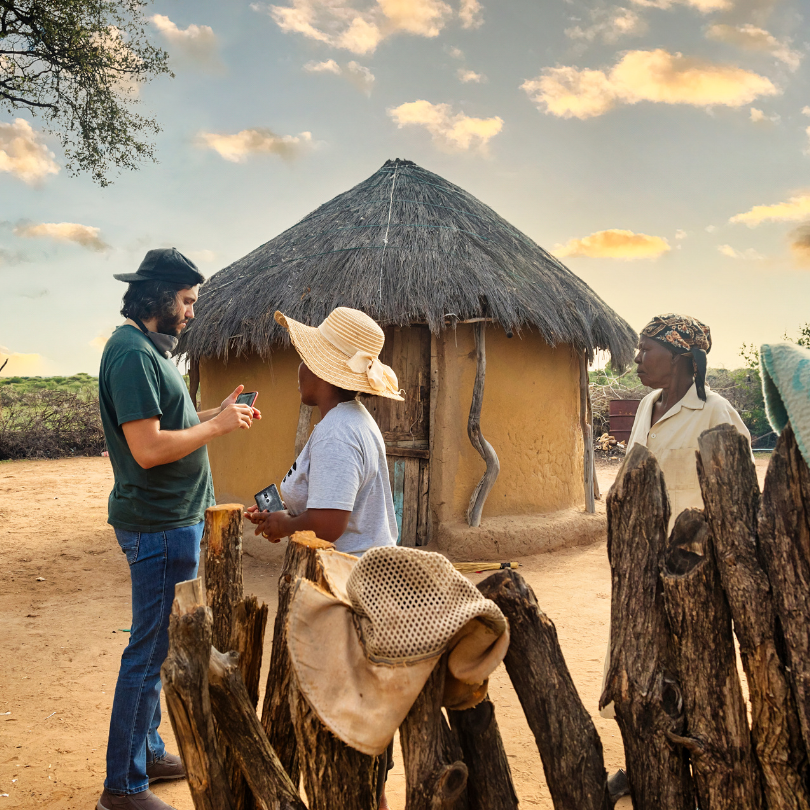
A more covert way of accomplishing this goal is through organisations that disguise themselves as charitable. Rather than using blatant force, the colonisers have discovered ways to colonise in a more clandestine manner. By wearing the guise of a humanitarian agenda, many charitable organisations are able to infiltrate communities that have been preserved for many generations and clear the way for colonisation to begin.
Many organisations claim to want to help “developing nations”. That is as if to say, “The way you live and your Ancestors lived, that’s not the right way to do it. Let me show you how it’s done”. Privileged teenagers and young adults then feel entitled to travel to someone else’s home land to teach them how to live. The ironic part is that these “volunteers” do not even understand the habitats that they are in, nor could they survive on their own if they were to depend on nature. The volunteers find parts of the existing culture which they may not agree with and begin to attack that part of the culture. Some travel because they claim they want to empower women, others claim they want to give children a better education, while others claim to be spreading salvation through religion.
For example, the Peace Corps is a well-known and well-respected volunteer program run by the United States government. The goal of the Peace Corps includes providing technical assistance, helping people outside the United States to understand American culture, and helping Americans to understand the cultures of other countries. Volunteers typically focus on work related to social and economic development.
Religious organisations work in a similar fashion. The goal is to assist developing countries through missionary work while at the same time spreading their religion to regions who may not yet have been exposed.
Although both of these sound honourable, there is a very dark agenda hidden behind the facade. These organisations pose a very big threat to the survival of traditional cultures. They come in and spread propaganda to a vulnerable and important part of the community, the youth. These religious institutions are prophesying to youths who are susceptible to being swayed. They sell big dreams, ideas of a foreign God, and wild dreams in foreign land. Indoctrination through religion and education is the outcome. They lead the youth to abandon their traditions and land and leave their communities crippled.These institutions impose stigmas on traditional roles in the hopes of helping people become more modern.
For individuals who identify themselves as humanitarians or who have a drive to change the world, it is necessary to remain vigilant and assess the effect of our actions. Based on the Kemetic culture, there is a God named Seth. He has dominion over the Earth with other Gods and his brother Wsr is among them. Seth is about conquering over all for himself and he stops at nothing to get it done. He is very dynamic in his means. Seth is also a master in disguise. These are principles that rule the world and reside in the heart of men. If you are not vigilant in your investigation of what is going on around you, it can lead you to become a hand of the oppressor. You can become the very problem you intended to fix. Modern society has created the illusion of having an easy way to feel good about yourself. You can lead a life of destruction and then redeem yourself through good deeds. It’s as if you can give yourself a spiritual face-lift. Instead of imposing foreign values on other cultures, one can do much more good for this world by striving to conquer the evil within themselves. Learning, preserving, and respecting the traditions of indigenous communities that struggle to maintain their identity, is another way we can re-learn the traditions of our ancestors in order to live a more harmonious life.