Our Family is Our Autonomy
Our Mother’s Light: Our Family is Our Autonomy
The Kemetic family structure is an extremely important monument to our Ancestral culture because it is where one first learns their cultural values. Our first education comes from our parents, whether it is from our mothers and fathers or grandparents. People who uphold their traditions are aware of the specialty within their bloodline, a responsibility that one inherits, that contributes to the stability of entire communities and even the world. A child’s education is steered towards those responsibilities, however, there are fundamental principles of spirituality, language, agriculture, family values and respect for the natural order of this existence that are taught to all children very early in their lives. The strength of any family unit is determined by these principles and the education of the family structure has always been an essential component to our survival. Understanding family structure is necessary because it is what determines the obligations we have to our parents, siblings, uncles, aunts, spouses, and children. Our obligations extend further than just our families, even to our communities and our Ancestral lines. Colonial invaders were aware that our family values are the roots of our strength. They needed to sever our connection to these roots in order to achieve mental domination and submit us to a foreign value system (colonialism).
The influences of modernization have been spreading like a plague all over the world. This new system has come to power by destroying our original methods of survival. To modernize the world, traditional families had to be separated, whether that meant separating the wife from husband or the parents from the children. Since, traditionally, women are the ones who spend the most time with the children, they play an instrumental role in their education. The colonizer used this role to reach the children.
Everyone in the traditional family structure plays a significant role. Men are the providers and the leaders of the family. It is the father who provides the bloodline identity to his children and each bloodline dictates the responsibilities that one must carry on Earth. In some traditions, wives must go and greet their husbands each morning. In this greeting the wife learns of her husband’s plans for the day, his expectations for the family and even something as simple as what he would like to eat for breakfast. The wife also communicates her plans and takes the opportunity to ask her husband if she can travel away from the house. It is the man who has a greater awareness of the environments away from the home. He is the protector and considers the safety of his family and makes the determination if it is wise for his wife to travel outside of the surrounding community. This daily communication between a husband and wife can be considered a necessary ritual because both of their daily activities affect their children.
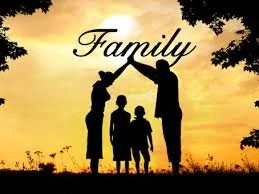
Although it took a long time to break the connection between traditional women and their Ancestral values, the colonizer became successful in convincing women that this family order equates to our oppression. We have been educated to think that it is bad that men are the authorities over their households and that it is wrong for women to be, “cooped up in the house barefooted and pregnant” - that they were mere slaves to the agendas of men. Hence, a woman’s emotions were targeted and, over time, women “felt” devalued. Women then had the idea that they could either raise their children alone, playing the role of both mother and father. Colonial women started working outside of the home beside men. This left the children to be raised by the modern education system. The energies that women put towards supporting men were redirected to supporting foreign values. We began to hate men who valued traditions and began to depend on those who hated us. Those who colonized us claimed to care so much for us that they gave us a way out of the obligations our mothers and fathers defined. Now, instead of serving our traditional roles, we were afforded opportunities to work outside the home, becoming servants to a new structure; a government built by modern agendas. What is interesting about this circumstance is that whether it is the men within traditional societies or this modern society, either way, we women serve and support one of these societies. The irony is that the influence of colonizers supposedly came to save us from the oppression of our men, while “they” themselves oppress us! We have now adopted the mentality of those oppressors and have become the agents who help destroy our own value system. Stirring up debates between women and men was just the first step in separating and weakening families, households, and communities. The system would not be satisfied until this fundamental union was severed beyond repair.
To erase all autonomy from the people, the colonizer had to remove any need for the role of husband and father. Institutions were created to not only allow the government to fill the role of family leader but also of family provider. By supplanting the cultural monument of family and the resource that it can be within traditional communities, they were able to infect women with this materialistic thinking. To gain some independence from their position with men and enter a new value system, women had to give all of their submission to the colonial structure; a third party that could provide them resources while guaranteeing their equality.
The United States Welfare System, also known as Public Relief, became a “saving grace” to women who wanted to become independent from their traditional roles. The U.S. welfare system, established in 1935, was influenced by European ideology, namely, by way of a British system from the early 1600’s known as the Poor Law. This law was established for the poor and it was accompanied by a set of rules. People who were poor or homeless were provided food and shelter or “workhouses” in exchange for labor. The Poor Law is known to have played a part in the Industrial Revolution, as the “workhouse masters” would send workers (like slaves) long distances to serve factories in order to help build a new world.
This same methodology for serving the modern world is exhibited right here in the U.S.. Through the welfare system, the government relieved women who were single parents from some of their financial worries. The modern world opened the way for women to work towards perpetuating a new value system, while leaving their age old legacy behind them. It is as if women were being compensated for slave labor. Their task was ultimately to breed and become wet nurse slaves or become new members of the workforce.
According to recent statistics provided by the U.S. Department of Health and Human Services, U.S. Department of Commerce, and the CATO Institute, approximately 132 trillion dollars have been spent on welfare services within the past 12 months. Over 110 million people in the U.S. alone (35.4% of the population) depend on some aspect of the welfare system, while the majority (at approximately 40%) are classified as black people.
The U.S. welfare system has grown into many subdivisions and continues to endure passionate debates about the influence it has had on modern society. Recent debates include taxpayers’ complaints about the unemployed working harder to get a job and welfare enabling teenage pregnancies. One of the biggest issues surrounding welfare is the concern of state penalties for those who decide to marry. Welfare has had a major influence on unmarried people, specifically women, because they are usually the ones raising the children.
The welfare structure intended to leave no reason for women to depend on the men in their communities for any part in their survival. For example, beginning in the early 1900’s, the Aid to Families of Dependent Children (AFDC), a branch of the welfare system, made a regulation known as “Man-In-The-House Rule” which is described as follows -
Under the man-in-the-house rule, a child who otherwise qualified for welfare benefits was denied those benefits if the child's mother was living with, or having relations with, any single or married able-bodied male. The man was considered a substitute father, even if the man was not supporting the child.
During this time social workers were sent to visit homes and perform “a house check” for evidence of a man in the home. Although today, these “house checks” are no longer happening, the impact of this policy can still be observed today. The government knew that their assistance was necessary for the survival of many single mothers and their children, even when the mother was employed. This is an example of the strategies used to keep women and men separated as much as possible. The welfare system gained a reputation for discouraging marriages as women became trapped into a dependency on the government, instead of the men within their communities. Married couples are more likely to be denied benefits than unmarried couples with similar incomes and circumstances. The consequence of turning our backs on our traditions have left women and their children in an extremely isolated and vulnerable position. For example, in 2014, a woman was nervous about the fact that she’d recently married and was concerned as to what would happen to her apartment and food stamps used to feed her 3 children -
Now, he has no income...but the lady from Welfare said that she doesn't need his papers because he should pay my "Welfare" and if he has no income, the person who sustains him must pay my "Welfare".... and, after this...she told me " why did you get married with somebody who has no income?" and then she kicked me out.
The strength of a united people can only be weakened if they are separated. When separated, those people become easy targets for domination through manipulation. Today’s woman has been taught that her independence is the trophy to her success. We have been fed the idea, “I can do bad by myself” and admire songs like “Independent Women, Part 1” by Destiny’s Child, for example. Let us consider the impact of messages like these on children subjected to colonialism, especially young girls. These types of songs and ideologies suggest that a man is not a necessity in every household and promotes the separation of men and women. It is true that nobody in this world can survive alone. There is an aspect of dependency that all human beings carry. We can even see the dependency that we all have to the colonial forces, including the welfare system.
However, traditional cultures never have to face these dilemmas. Our only way out of depending on a system that thrives on destroying the sacredness of the original family structure is to value our own traditions. Traditional peoples heavily depend on their communities and thrive when individuals accept and fulfill their responsibilities. One gender alone cannot do the job of two people.
There are women all over the world who have proven that traditional culture has yet to fail the test of survival. These women are insistent in preserving and protecting their Ancestral values and hold sacred knowledge pertaining to herbal recipes, agriculture, temple keeping, geomancy astronomy, mathematics, storytelling, beadweaving, and the list goes on. From the hundreds of tribes in Meritah (Africa), like the Gulmu, Mossi,Tem and Himba, to the tribes in Maanu (the Americas), like the Pataxo, Kamayura, Chumash people, etc., they continue to fight to preserve the original values of their Ancestors. Reportedly, there are approximately over 5,000 traditional communities that are fighting to hold onto their Ancestral identity that are spread throughout 90 different countries.
It is said that a community is measured by the strength of its women. Meritah (Africa) is known as the cradle of civilization and people all over the world are still amazed at the level of intelligence and endurance of the traditional communities there. The women of the Tem tribe (in Western Meritah), who are named after the Neter (God) Tem, hold highly important positions like temple keepers and Deity dancers. Tem people are also known for their age old herbal recipes, like Ninika, a popular blood cleanser. The Himba women are known for their great beauty. They live in a desert climate, so to protect themselves from the sun, they make a red herbal paste that they put all over their bodies including their hair. Himba women carry the responsibilities of milking goats and cows, leather jewelry making and are the ones who build their houses. They support big families and raise their children while the men hunt and farm. The women of the Chumash tribe are known for their advanced knowledge in basketry. They are so advanced with this skill that they were able to weave baskets tight enough to hold water and cook meals with them over hot rocks. They also made skirts of deer skin and plant fiber. Due to the fact that they lived near the ocean, they had the advantage of both land and ocean, so this tribe is also known for their expertise in building canoes. In the Kamayura tribe, it is said that the boys are raised to do men’s work at the age of 11 or 12 by modeling after their fathers. The girls learn domestic responsibilities as well as work to perfect their tribal dance. This education is considered a rites of passages into adulthood for the boys and girls. The wealth of knowledge and education children within traditional families have access to guarantees his or her survival in this world. This goal cannot be accomplished without every woman and man playing an important role in passing down the traditions of their Ancestors.
Traditional societies have been tremendously threatened by colonialists and have even been demonized because of their refusal to submit to new ideologies. The evil influence of modernization is something that cannot be overlooked or even underestimated. Colonialism is nothing but an attempt to rid the world of traditional knowledge. It gains momentum, little by little, with every step we take away from the path of preserving our Ancestral ways. Colonialism has not only disrupted the family unit but also the skills that are associated with caring for a family and community. We must realize that there is nothing weak about a woman submitting to her natural roles. Our roles are just as important, necessary and valuable as the man’s role within the family. The idea of competing with or replacing the man’s roles was introduced by foreign ideologies. This new concept pushes the idea that being able to do what a man does makes us equal and to do what a woman does makes us inferior. It is insulting to know that the original roles of our grandmothers and great-grandmothers are considered low quality. Isn’t it? It is insulting to know that the government thinks that a family man/father can be replaced by the so-called benefits of the welfare system. Isn’t it? This is why our education coming from our Ancestral lines is so extremely valuable. Clearly, we first must define what strength really means. Is strength then measured by our ability to be independent or does our strength come from how well we can work together? Our strength can be found in the values we uphold. There is a great strength that lies in every man, woman and child. That strength can only really be recognized when everyone is doing their part for the common goal of survival, which begins with following the traditions of our Ancestors.