Postnatal Care Part II: Charms for Newborns
Harmonious Healing: Postnatal Care Part II: Charms for Newborns
This article is part two of the postpartum care series, which covers the time following childbirth from the perspective of the Kemetic traditions. See Rising Firefly Volume 69 for Part One of this series: “Healing the Mother” which gives an extensive look at my personal healing experience in West Meritah (West Africa) after I gave birth to my daughter in Burkina Faso.
For this installment of the postpartum series I have focused on presenting information about caring for a newborn baby, and specifically I have singled out some of the things I observed that a person from the West may never encounter and the modern medical system can’t seem to explain. Using my unique experience, I will discuss the Kemetic tradition of naming, the umbilical cord stump, healing baths, medicinal incisions, and the talisman jewellery adorned on children.
Adopting the Traditions - Discovering the Spiritual Side of Healing
Last time, I explained why I chose to give birth in Meritah (and therefore receive the entirety of my postpartum care from Kem people). This time I will explain how the decision came to be. My husband, who is from a bush village in Burkina Faso called Tambiga, asked me where I would like our child to be born. There were three options, all on different continents. The choices were America, the UK, or Meritah (Burkina Faso). I’m not sure how it is for other women, but for me I wasn’t worried about census statistics and hospital data. For me it was simply a question of: To which land does my child belong? Even myself, an American born... Nothing about my ancestry is from that land. So after a moment of thought I said quite easily, “Meritah.” And that was the moment that sealed the events in order for me to impart my experiences to you in these two articles.
When my first article on postpartum care was published, I received (and am still receiving) a lot of questions about the “spiritual” side of caring for a baby - the tricks that work every time but without explanation. Every time a woman came to me asking for more insight, I could hear myself thinking, “That’s a very good question,” so I sought to find the answers. Well, I’ve seen many things I didn’t understand, and asked a lot of questions (to which the answers opened more doors to even more questions). I have done my best to uncover and present here the spiritual mysteries of newborn care, but even though I’ve immersed myself into Kemetic culture, there are still many aspects of Kemetic healing that I will always be trying to understand. For that reason, I encourage those who are interested in further investigating the following information to attend an annual pilgrimage hosted by The Earth Center, or become an initiate with the M’TAM School.
Receiving a Name - The Power of Your Calling
My family and friends back in America asked me many times, “what’s the baby’s name?” or “does the baby have a name yet?” In western cultures, naming the baby happens even before the baby arrives, and usually by the time they have left the hospital. But in Kemetic customs, there is no rush for this. In fact, my daughter was without a name for several weeks, and this is normal. So for the beginning of my baby’s life, we used the name “Tene,” which means “girl born on a the temple day of Ptah-Tenen (a Kemetic Deity), which when adapted to the Gregorian calendar would fall on Monday. This is how many cultures call their child for the first weeks of their life. Even now when we return to some villages, she is still called “Tene” there.
Believe it or not, one’s name has a profound impact on one’s life. In traditions, we know that words have power, and not just written words, but the spoken word, specifically. Every word we utter is a spell. Humanity has a language called “Medu” (commonly known as the Egyptian hieroglyphs) which was given by the Divine World. This is our original language and is perfectly harmonised with our brain. It conveys concepts rather than mere singular words. All “languages” existing today derive from Medu, they just don’t convey the concepts as clearly. Even in the English, the act of writing words is called “spelling” and when we say words that are meant to hurt others, it is called “cursing.” This is a remnant in the English language of the true nature of the power of speech. In our society today, we are not educated of the reality behind our words or even the language we use. But having a name based on the meanings of words - in humanity’s language - will help empower one’s destiny. It could change everything about your life. Suffice it to say, naming my daughter in the Medu language was a given from the beginning. It is something I want people to use when they think of her, refer to her, or call her.
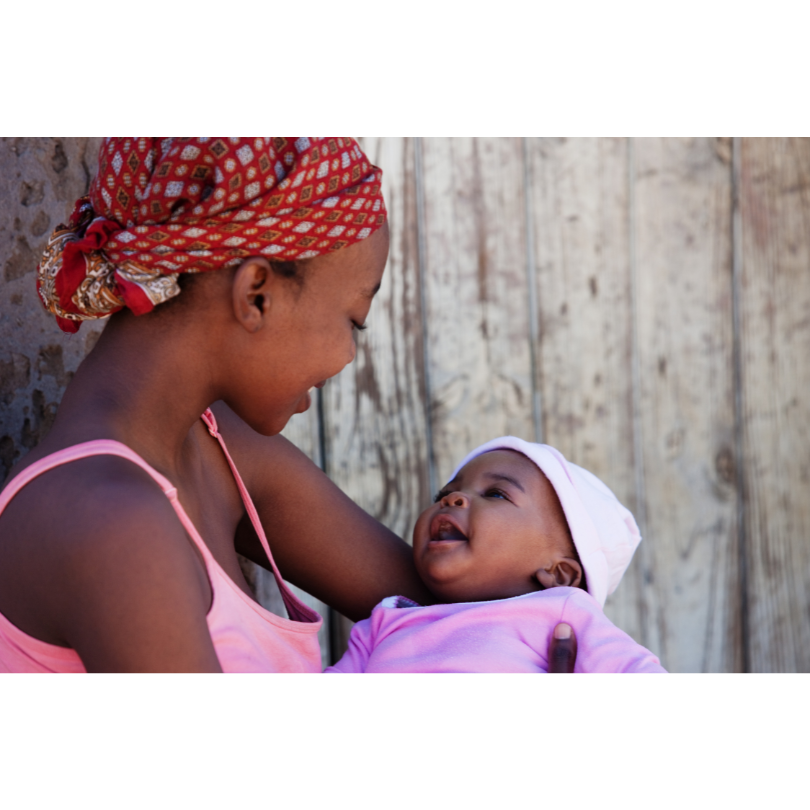
In Kemetic customs, a human being’s name is given by the Earth based on a divination (for more information on divinations look for the next installment of this series). The naming process takes longer than other divinations because it requires more than one sitting. The Earth interprets the baby’s identity. It’s different from reading a child’s personality. Rather, it is identifying what energies the person is born with and what role or purpose they will fulfill in this lifetime. This is how a human being is traditionally named, so that every time they are called upon, the words in the name itself are invoking the destiny of that child. This is something that an adult can go through later in life should they decide to become initiated into the culture that does the divination. For examples on destinies and names, see other Firefly Productions publications featuring Kem graduations.
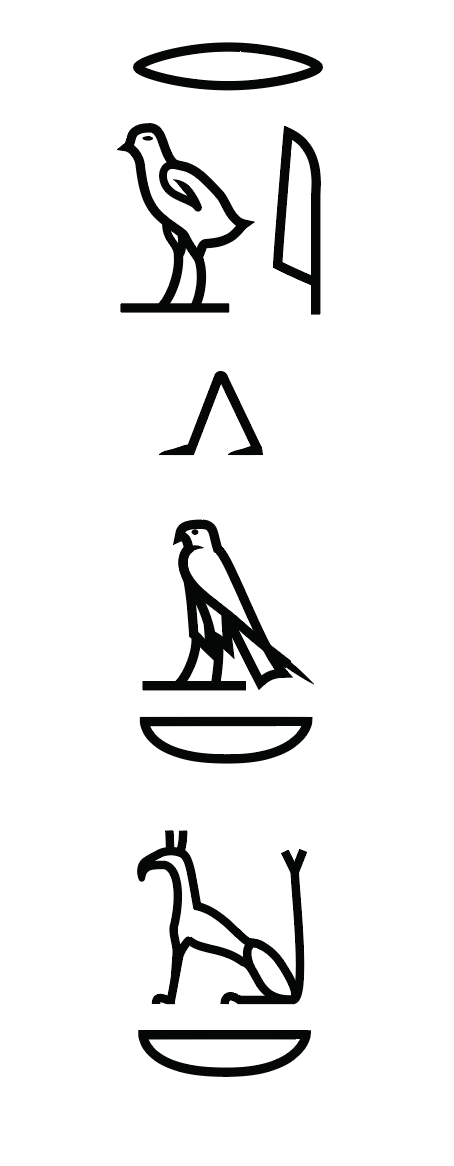
My daughter’s name is Khefira, which is actually two words in Medu: Khefi and Ra. Khefi is a verb that expresses the concept of “watching over.” Ra is a principal figure for Kem. In the Kemetic Cosmogony (origin story), Ra is the very first to express His identity out of the primordial waters and He contributed creations to the existence that demand a strict harmony in nature. The name “Khefira” is expressing the concept of “Ra watches over.” This name serves as a mission for my daughter to be the expression of this concept. With the help of the invocation of this spell (her name), it becomes her lifelong goal to live up to this destiny.
It used to be that names were given based on some kind of spiritual context. In fact, many names that we are familiar with in the West have a spiritual meaning at their origin. For example, my Christian name is Danielle. Danielle is from two Hebrew words meaning “God is my judge.” So therefore every time somebody calls me “Danielle” they are invoking this energy behind my destiny that enforces the concept that the Christian God is judging me. Imagine how that can affect a person’s entire life, especially if they are not Christian. Now imagine if my name was Apple and what that would do to my destiny...
Generally, it’s my observation that most parents in the West do not consider the meaning behind the names of their children, nor the language from which the name derives. Many people in the West don’t even know what a name really does for their destiny. Nowadays names are chosen based on their aesthetic appeal, or if they are trendy. This gives no rhyme or reason as to how a person’s entire life could play out - for better or for worse. To demonstrate this tendency of haphazardly naming babies, the top ten meanings of baby names in 2015 in the United States are: helmet, bird, olive, whole, warm, bitter, light, rest, wisdom, and god is gracious. Perhaps if parents knew the impact of language and the significance of destiny, they would take better consideration when naming their children. If you are interested in receiving a Medu name for your child, enquire about a name reading through The Earth Center.
Healing Baths - The Essential Ritual for Every Human
The first time my daughter received her healing bath she was 3 days old. I hadn’t remembered to bring everything my mother-in-law needed: a loofa, a wash cloth, soap, a calabash, the shea butter, the tchiro (a medicine for the eyes in the Tem tradition), the powder, perfume, change of clothes, etc. She kept sending me back to my room asking for other things that I hadn’t thought of. I felt the need to be quick - run up the stairs, run down the stairs - but every time I came down, she was still doing the same thing for the baby: directing a steady stream of hot water directly onto my baby’s anus. I had seen this before, so it wasn’t a surprise to me. My daughter was so quiet during all that time I went up and down the stairs, so I could tell she liked it and there was no need to rush at all. Grandma continued directing that stream of water for several minutes, taking time with her granddaughter. The same is done to her sex, her belly button, and even her upper chest.
All children (in the traditions) receive their special baths. And as I said in my previous article, all women love to bathe a baby. But as you may have guessed, the reasons for bathing a baby are not just for cleanliness or the pleasure of bonding with your newborn. Believe it or not, there are physical and spiritual benefits a baby receives from each bath. This is why these bathing rituals are called “healing baths,” and there is a routine technical process that happens twice a day every day - although the exact method of bathing will evolve as the child grows older and bigger.
Obviously, a baby is sedentary most of the time until she grows strong enough to sit up and crawl. One function of the healing bath is to stimulate the nerves and muscles, which helps the baby get used to her body. It is a ritual that is done with much care and expertise - not to be trusted with novices, especially during the newborn phase of infancy. Unlike baths in the modern societies, the newborn will not be submerged in a tub of water to soak. Rather, water will be poured over different parts of the baby, fresh water each time, and she will be carefully and systematically scrubbed with soap head to toe. If necessary, the grandmother will correct the baby’s muscles, bones, and joints that may be slightly deformed. These are a few techniques her grandmother employs during the healing bath, but there are many others. If you are interested in knowing more about the specific techniques of this ritual, look to the Earth Center website blog for future posts about healing baths.
The main part of the healing bath is the herbs that the baby is bathed in. The herbs are what separate a child from Meritah and a child from the west. There are many different herbs that do many different things. For example, there are herbs for intelligence or herbs for strength, etc. Oftentimes different herbs will be mixed in the same “batch” and are used together when bathing the baby. This is the only time my mother-in-law submerged my daughter in water of any kind, and she assisted by splashing the herb-water all over the baby and even assisted her in drinking some.
There’s a station-like setup around the grandmother that is arranged ahead of time by the mother or perhaps a young girl in the house who is helping, and it is the mother who is responsible for disposing of the discarded water at the end of the bath. There is a special way of doing this, because you don’t want to throw the baby water, you must gently let it out. This is because the water that bathed the baby has the baby’s essence on it, and you therefore do not want it to be handled in a violent way. It can make the baby tired or sick. Forcing out the water will bring that violence back on the baby, so instead you let it go slowly.
After I cleared the station and put everything away, I usually returned to the room in time to see my mother-in-law carefully apply tchiro to my daughter’s eyes. Tchiro looks like eyeliner on a baby when it’s done nicely. In fact, someone once described a baby wearing tchiro as looking like “a little pharaoh.” I had seen babies and adults wearing tchiro before. It turns out there are many types of tchiro for many purposes. For babies it is used to clean the eyes and make the eyesight strong. It comes in a slender container filled with charcoal-like powder with a stick. I was very impressed the first time I saw my mother-in-law take the stick and stroke it in my daughter’s closed eye. The effect looked perfect and our baby didn’t cry. I thought, “How am I ever going to do that?” I tried it on myself very unsuccessfully even with a mirror.
Years ago, I learned that it is not good to bathe at night - specifically after dark - for either a child or an adult. I had been told this in Meritah on an annual pilgrimage, but never understood the reasoning behind it. Later I learned that there is a specific Deity, which Kemetic people know of that travels to different waters through rainbows. This Deity is in the form of a snake whom can make you fall down or cause other serious accidents, even deformity. The real stipulation is not about water, it’s about soap, because it’s the soap bubbles that create a rainbow effect in the night. And using soap at night is like summoning such an entity to come disturb you. After one divination I was warned not to let my daughter be bathed at night, but was told that it is ok to rinse her with warm water.
Umbilical Cord Stump - Removing Negative Energies
After a few days, the umbilical cord stump that is still attached to the baby’s belly button will fall off naturally. It came off during one of my daughter’s regular baths. My mother-in-law handed it to me and told me to give it to my husband. I looked at it. It was almost dried up, turning a blackish tint. I looked back at her and decided it was best to not ask questions. When I went upstairs and showed it to my husband, he said I would need to keep it in a very safe place where I would always know where it was. Not three weeks later, my daughter was crying more than usual and I was asked to bring it to my mother-in-law. She told me to find some warm water and to place the piece of umbilical cord into the warm water and let it set for a minute. My daughter had been crying a lot and not sleeping well at night. For a baby, there are a lot of reasons for unexplained crying, but it had gone on long enough for my mother-in-law to no longer tolerate. “Wait.” She said. “Watch. You’ll see.” After her healing bath, my mother-in-law gave some of that warm water to my daughter to drink. I took the stump out of the water and put it back in a safe place, but we kept the water for the next day. That night she fell asleep easily without crying.
The umbilical stump is called “woolay” (in phonetic Tem) and you don’t throw it away. It is used when the baby has any illness in her belly which is indicated when they cry. The woolay is typically used until the child can walk, because once they are old enough to take medicine they probably won’t use the woolay any more. But most mothers will keep it for her child for the day when he or she is refusing to eat and is crying without apparent reason. I still have my daughter’s woolay and keep it with me everywhere we travel.
I found out later that there is another technique mothers use to relieve a baby’s crying due to problems in the belly. My sister-in-law showed me how to hold my tiny daughter and press our belly buttons together. She said it “takes the illness” away from the baby. And where does it go? The mother takes it. The first time I tried this she was crying after her bath, which was unusual. Her grandmother was trying to take it, and that’s when my sister-in-law explained what she was doing and told me to try. That night I had stomach pains followed by diarrhea. But my daughter was able to stop crying and fall asleep. I highly recommend mothers of newborns try this technique out next time their baby is inconsolable.
Medicinal Incisions - Warding Off Bad Spirits
At two months old, we traveled to Togo and my daughter was taken to one of my husband’s uncles - meaning someone from his mother’s side - for a very important rite of passage. I knew she would be getting “cuts” on her skin, I just didn’t know when. I was minding my own business one day when I walked out into the courtyard of the compound and saw a group gathered around my daughter. Her head, with very little hair, was already almost completely shaved. I wanted to get my camera, but I didn’t want to miss any more, so I stayed and watched. I learned that normally when a newborn is receiving the medicines through his or her cuts, part of the ceremony includes calling the baby “stranger” because at that point she does not yet have her name. With a small razor, he made three incisions on each of her temples, three incisions on the backs of her hands, and three incisions on the tops of her feet. There was a soot-like substance that he carried with him, which he smeared on each area where he made those openings.
I had learned that medicines that look like ground charcoal are usually charmed, meaning there is a specific power associated with it. The incisions are different from the jewellery (see below in Talismans) in that this medicine goes straight into the blood. This particular medicine is charged with protecting children from an illness known in the Tem language as “cinka,” which can cause death in an infant. When I first heard about cinka it sounded to me like SIDS (Sudden Infant Death Syndrome). SIDS occurs in 2,500 cases in the United States each year in children under the age of one, and the cause is unknown to the modern medical system. If a baby is sleeping with his or her eyes rolled back, this indicates cinka. It is said that sorcery or bad spirits “take” the baby. The baby may be fast asleep when they violently wake in a fit of crying, but only the whites of the eyes will show. This is why all babies get their incisions very early in life because then this won’t be a problem.
Talismans - Protection Against Dangers
One day, the grandmothers (my husband’s mother and her sister) came into the room with a small sachet of jewellery: A white necklace, two bracelets with black and white beads, and three waistlets that were each different colours. They were too big for our newborn, so I watched as the grandmas removed some beads and adjusted the sizes for our baby, adorning each piece carefully in its place on their granddaughter. I have seen all the children in Meritah donning the jewellery, so I was happy when my daughter was wearing hers.
A baby is especially vulnerable to energies of both material and nonmaterial phenomena. These items adorned on children are not purely for aesthetic reasons. Rather, they are talismans -- protective charms against danger. In fact, this is where the charm bracelet gets its name. Each item is charged for a specific purpose, with what we call “juju,” for protection. As time goes on the child will outgrow the jewellery, it will fall off, or break on its own, indicating that the child is no longer in need of it. New talismans will replace the old ones, that fit the child better, and will have different purposes.
The necklace for the infant is purposed for the teeth. When the teeth arrive they will come in properly, without obstructing the path of other teeth. All parents know that there is always sickness that accompanies teething, and the necklace ensures the baby will be strong and able to handle the physical adjustment during that time. Teething is such a traumatic affair that there is also a waistlet that is purposed for that, too.
The bracelets on each wrist protect against “the bad mouth” or what’s known in other cultures as “the evil eye.” This is a particular manner in which a person will approach a child that may be intended to be positive but actually emits negativities. If the energies are very strong - perhaps the person is too excited or is staring at the child while imagining something - the baby can suffer from just that person’s zeal. Without these bracelets, even people in the baby’s family can make the baby sick or have accidents.
I had the chance to witness the construction of one of my daughter’s waistlets by a priest in Togo. There are many different things the waistlets can protect against, usually against some kind of danger or impure energy. As I said, there’s a waistlet that ensures good health during teething, which subdues diarrhea, vomiting, and other problems for the baby. Another waistlet protects against the negativities of people who have had intercourse but didn’t bathe themselves. If that person interacts with a child, that child will have dirtiness around them, won’t be strong, and might fall ill. Having the waistlets will prevent many types of dangers, although it is interesting to note that it is oftentimes more powerful if you do not know what they are purposed for. If you are interested in acquiring such talismans, enquire about a naming reading for your baby through The Earth Center.
Revealing the Source of Maternal Knowledge Continues
There is a story in the Kemetic Cosmogony that tells of a Goddess named Aishat (Isis) who is known for Her abilities with enchantments. In fact, there is a special day in Her name dedicated to sorcery known as the “Charm of Aishat.” Aishat protects Her child Heru (Horus) from the evils of the world until he is old enough - and strong enough - to battle the evils Himself. She uses Her magical powers to transform into different beings, find impossible objects, and restore limbs. Without Her and Her magic it would not have been possible for Her son Heru to survive.
All of the above techniques that are implemented for newborn babies are emulating the power of the Divine world. The amazing thing to me is that everything required can be found in nature. My journey into motherhood has demanded I become more in tune with nature myself (that many of us in the west are so disconnected from) and I realise that my journey is very unique to that of the average western woman. I have since given birth to another baby girl, and as a mother of two now, I’m very grateful and proud that my daughters and future children will benefit from this model of newborn care.
It is my wish for the reader to have a mind open to discovering the enigmatic realities of nature - that which cannot be explained. I am very grateful to all the Kem who helped provide the information presented above, and it is my pleasure to share my journey here from which, hopefully, you have gained. Look for the next installment of this series in future issues of the Rising Firefly Magazine.