
Hard Lessons: An Initiate's Pilgrimage to Awareness
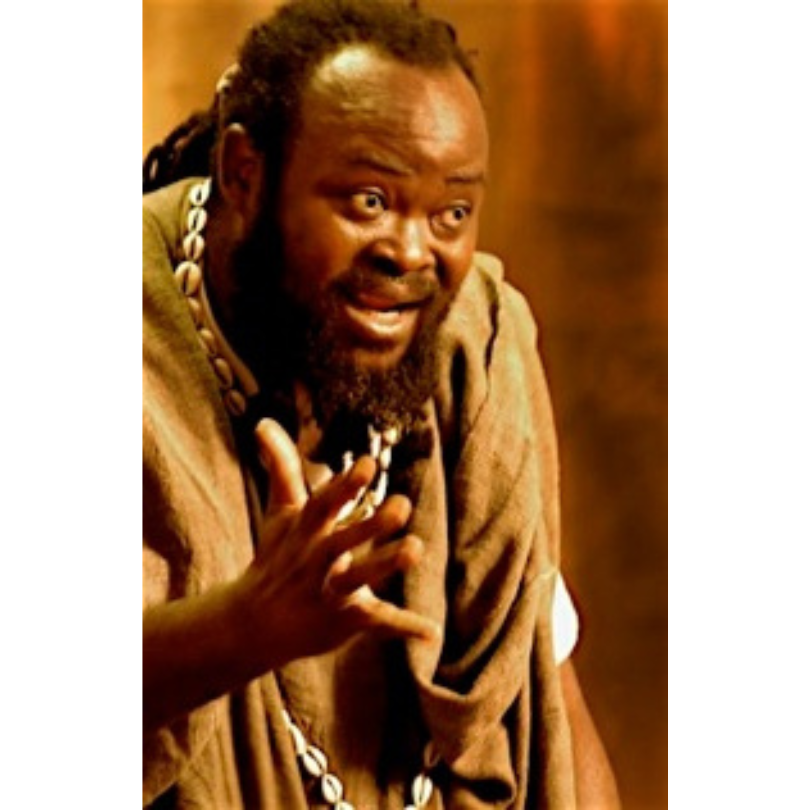
Throughout my life, I've had a lot of questions, nagging questions that bit at me like a swarm of mosquitoes at dusk. Questions like "Why am I even alive?" and, "Who figured out that you could make glass out of sand and how?" These and so many others regarding the reality of my existence and the history of mankind left me itching in places I couldn't scratch. Pretty much all the answers I sought were absent from the modern education system. Trying to find useful knowledge in the colonial schools was like sifting through sand at the bottom of a river, looking for gold that had long since been removed. As I grew into a teen and then a young adult, I gradually gave in to the mentality that my questions would probably never be answered. This society had nothing for me and I knew it. At the same time I was stuck in it, a product of it. Actually, more like a by-product of it, an anomaly, a misfit...
As I grew up, I was afraid to mature. There was so much in this society that I rejected that I didn't know what a man was supposed to be. In many ways, I became more and more like a boy in a man's body. I was very uncomfortable, but I didn't submit myself to the same paradigms as my peers and my elders to gain their acceptance. So it was that I became like an airborne cottonwood seed hoping the wind would carry me to fertile ground. It was with this uncertainty and lack of maturity that I came to Master Naba.
My first exposure to Master Naba and The Earth Center took place in the winter of 401 (2001 - 2002) through the Firefly Magazine. I was at a point in my life where my search for the truth was starting to yield results. I immersed myself in information, finding so much of what I had been missing in school. Topics like health, African history, conspiracy theories and metaphysics became major areas of interest for me. Amidst all of this, The Earth Center stood out to me, but I wasn't of the mind to commit to anything at that time.
A year or two later, after meeting a couple of the first generation students who would become the Herpws, I decided to join the Medu class. I was interested in learning the original language of mankind. There was another elder who I began to study Medu with at that time. He would teach the Medu straight out of a textbook. In contrast, Master Naba never taught from a book or even from his own notes. We were learning the oral traditions passed down through the millennia. There was no comparison!
On one occasion, I asked about the character that makes the "nuh" sound, "Isn't that supposed to represent water?" Master Naba snapped on me. He asked if I learned that from him and told me not to get what we're learning from him confused with what I read in some book. After that, I stopped taking the other class. That incident is characteristic of what I valued most about Maakheru (Master Naba): his willingness to get his point across, even if it meant hurting your feelings. He was never one to tiptoe around an issue.
Even with this being the case, I didn't apply much of what I learned from Master Naba. Instead, I analyzed and I judged and I compared Yes, he was a Master, but I did not make him my Master. I hesitated and procrastinated to take my education seriously. I just knew that I had all the time in the world to get it right, to move at my own pace, to the beat of my own drum. Little did I know that this was not to be the case...
Because I made no real effort to move in harmony with the group, because I made no real contribution to the group, because I judged others rather than look within myself to do battle with the evil I carried, I left the Center after my Medu class dissolved. I returned a few years later, but without being prepared to make my contribution. Finally, in the winter of 406, I joined the class that I would eventually graduate with. By this time, Master Naba had returned home for good.
When the pilgrimage was scheduled for the fall/winter of 407, I vowed that I would make it, and through many struggles, and with a great deal of help from my community, I did. By this time, I had worked hard to apply the lessons I had learned from Maakheru and the elder initiates who continue to hold the school together even after Master Naba's transition. His teachings have a way of creeping on me, small reminders and sometimes big ones that I can do better and how. New insights would reveal themselves in the face of new challenges, but the real challenge would be in allowing myself to grow through these insights. For me, the key has been the perspective I've gained from what I've learned that has become the foundation that I can continue to build from.
Having squandered the wealth of opportunities I had to be by my Master's side while he was here, I was very eager to spend two months in his presence. I didn't know what to expect, except that I would face' many challenges and learn a great deal. To say I was right on both accounts would be an understatement. When I went, I was puffed full of my usual childish American arrogance and burdened with a great depression that I've carried probably since childhood, a certain stagnation in growth but with a definite wadj (motivation) to improve.
It was with this that I walked into Master Naba's open arms at the airport in Bamako, Mali. "Welcome home," he told me as we hugged. I was home. It is my home because it is his home. So great was his compassion for humanity that he opened his doors even to those like myself who have been trained to be monsters rather than men. I was yet to find out what a monster I had become, but I was in the presence of the one man I knew who would put the mirror up to my face. All I had to do was open my eyes. Sometimes, seeing one's self as one is can be a terrifying experience, but I had nothing to lose. I had traveled halfway across the world to see this mirror.
I rode in the car with Maakheru on the way from the airport. As I recall, he put me in the front because of my long legs and he sat behind me. During the ride, he let out several coughs, nasty coughs. I was surprised because I'd never known him to ever show the slightest sign of illness. I offered to make him some tea when we got to our apartment. I would later learn that he had pneumonia and malaria at the same time. Still, there he was to greet us at the airport.
We spent the first two weeks of our pilgrimage traveling through Mali. Although we were on a somewhat major tourist route, the Djoliba (Niger) River, Master Naba's knowledge transformed an experience that would have been empty of meaning into a rich insight into history and a profound challenge of our survival skills. We learned about Segou Koro, where the "first mosque" in that area was built, according to our tour guide, before there were any Muslims. Maakheru pointed out the obvious contradiction and further explained that the temples in that area had originally been erected for the God Touba, a sun God, and that's why they face East instead of North-East towards Mecca.
We then visited a local Chief. Maakheru confronted him about being a Muslim and engaged in a heated dialog with him for a good half hour until he finally admitted to practicing his traditions privately. This is the state of the culture in Merita. People with roots as deep as the Nile valley itself are practicing their traditions in secret out of fear. How long can this go on before their descendants grow up with no knowledge of their true culture, language, crafts and spirituality?
All through Mali, Master Naba blessed us with his knowledge of history, but even when he wasn't teaching, he was teaching. His strength and endurance to accompany us on the trip in his condition was inspiring by itself. He walked with us for miles under the blazing sun. He slept with us on the rooftops of hotels on cold desert nights. He rode with us in jam packed bush taxis for thousands of miles. He watched over us and protected us in an unknown land where most of the people we talked to were only interested in getting our money.
There were times when he lectured, there were times he was quiet, he even made times for jokes and laughter, often at my expense, but always there was a precision in his timing, a certainty in his choice of words, a confidence in his tone of voice. Everyone knew that the lessons were not just in what he told us, but in observing his behavior, his interactions with others, the places he took us and even the gaps he left us to investigate for ourselves.
The greatest difficulty for me, however, was not in comprehending the lessons or even enduring the sometimes almost unbearable travel conditions and a week long bout of diarrhea, but rather presenting myself to Maakheru daily and not make myself the subject of ridicule. I have to say, with all honesty, that I failed at this most days. Like clockwork, I would do or say something stupid and he would tear into me, often for several minutes and often he would continue to remind me and the rest of the group days or weeks later.
The day we were to embark on our 3 day boat trip, we all bought turbans in Mopti. Before we checked out of our hotel, we were engaged in a serious conversation. At one point there was a lull and, out of nowhere, I said "Ever since I can remember, I've been poppin my turban, pop-poppin my turban..." I thought I was being funny and the others laughed too. Maakheru pounced. He said that what I said became a distraction from the topic we were discussing. He told me not to make myself appear to be less than I am. He told the others that, by laughing, they were encouraging my behavior.
One incident that he never let me live down was one of the nights that we camped out on the river. We had just gotten off of our boat and I had to pee. Of all the places to pee, I chose the river itself. At The Earth Center, we have a commandment: Thou Shall Not Cloud Drinking Water. What made it worse was that a group of local villagers had come to greet us and they almost saw me do it which could have brought us much trouble. Master Naba made me very aware that, not only had I broken a commandment and dirtied the water that the people who live there bathe in and drink from, l endangered the whole group because I disrespected the inhabitants in their faces. So every day, usually more than once, I would hear, "Respect the land! Respect the people! Oh, I think I'll pee in the river!" And everyone would laugh.
Days later, in Toumbouctou (Timbuktu), Master Naba confronted me about a particular issue. Without getting into details, I'll just say I was argumentative. After making a particular point, he asked me to repeat myself, probably to give me a chance to correct myself. I said the same thing. He said that I probably didn't mean to be insulting, so if I have anything I need to say to him for the next week, I should find someone to translate for me so he won't get the wrong idea.
Growing up, the concept of respecting elders was not stressed, so I argued with my parents, grandparents, teachers, whomever. Maakheru wouldn't have it and he was uncompromising. I was used to doing and saying what I wanted, Master Naba was the one to really let me know how much of a detriment that was to myself and the community. As any of his students can tell you, he was never one to accept mediocrity. This is something that many Americans are unable to handle. We are raised here to be very defensive against any criticism. Ironically, if we have food in our teeth, we expect our friends to tell us, but when it comes to character flaws, we choose the "take it or leave it" approach of, "You should accept me for who I am." People will get mad never speak to you again for pointing out the wrong thing. Master Naba was not afraid of this and I think that is what makes the Earth Center strong. What good would his knowledge have been if he was afraid to share it?
At The Earth Center, we are united by our commitment to do better and help each other to do better. When we have problems, we don't sweep them under a rug, we deal with them constructively, collectively and we learn from our mistakes as individuals and as an organization. This is what Master Naba taught us. When I was criticized, the group understood to look within themselves for the same errors. Even though I was the focus of attention many times, we all learned the same lessons. The bruising of my ego was a small price to pay for this. I've had more than one person tell me I had grown when I returned. I am continually grateful for this final exposure to our Master. Now the mirror he held before me, my brothers and sisters hold it still and I do the same for them.
After we left Mali, we mostly stayed with Maakheru's family in Burkina Faso and Togo. We stayed at The Earth Center in Ouagadougou, in his family's villages, Tambiga and Morodeni and in The Earth Center's Tem house in Sokode, Togo. He opened up his family to us. His daughters cooked for us, his sons were our guides, his brothers made sacrifices for us. His family became our family and, especially now, our destinies are forever intertwined. He built the bridge across cultures for us and, as he told us in the bush, when we all came together from the colonized lands of Maanu (America) and Africa into the bush of Merita, we made history because, for the first time, we became one people.
There was more than one time when he told us, "Even if I was to die today, I would be satisfied with what I have accomplished in my life." He told us that he has given us all the tools we need to establish ourselves as a culture. He must have known that it wouldn't be long.
Still we stand strong as we fly the flags of the Neteru
Guided by the words and the deeds of our Master
In uncertain times we struggle to bring forth the truth
Heeding the signs of impending disaster
Our Destinies are set within the cusp of the becoming
The endless battle between Heru & Set wages on
The trap that's laid for us our lessons are revealing
Our spirits live on when our bodies are gone
So there is no earthly suffering to fear
Rest In Peace Maakheru
Duau for all that you have done and continue to do.