
Jhator II - The History of Buddhist Funerary Practices

In the last issue of the Rising Firefly we explored the Tibetan funerary practice of Jhator, the practice of feeding bodies of the deceased to vultures as a final act of kindness within the context of Tibetan Buddhism. Towards the end of that article we began to discuss the relationship between Jhator and other funerary practices in Buddhism: the practices of cremation and of entombment. We exposed that the practice of entombment is reserved for the very highest spiritual figures. In this article we explore the traditions, histories and the goals that characterize these different funerary practices, both in Buddhism and in Ancient Kemet.
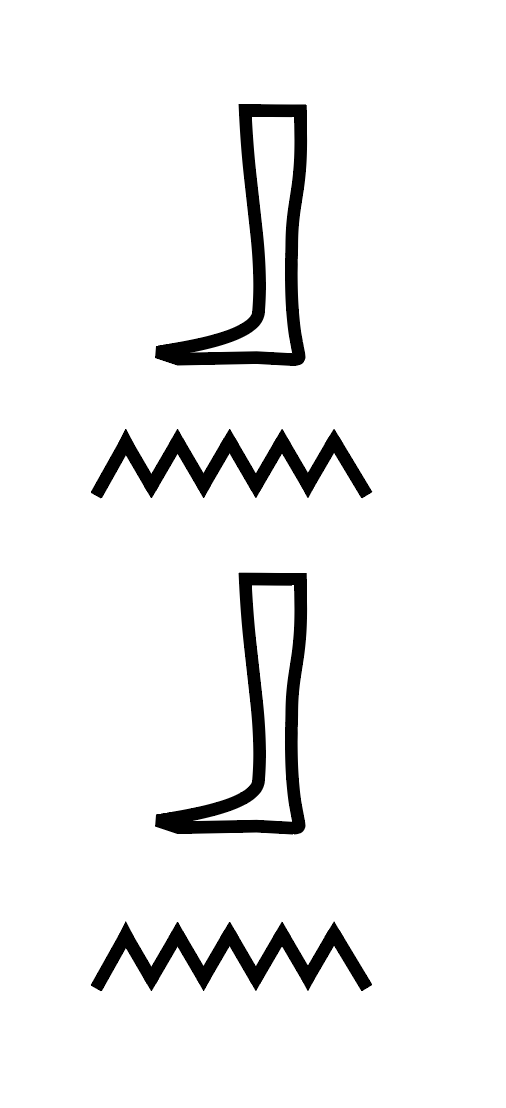
To understand the different traditions surrounding death in Buddhism, and the goals that they clearly or symbolically represent, it is necessary to go back much further and look at the spiritual culture of Kemet. The Kemetic spiritual culture is the oldest in the world, and can provide much insight into the spiritual traditions that evolved out of it around the world. It may sound bold to claim that Buddhism evolved directly from the Kemetic spiritual system; and I will ask the reader to keep a calm heart and an open mind in reading this article through to the end.
According to the cosmogony of Uast (Thebes) as recorded in the holy papyrus, the self created Gods Ra, Imin, and Ptah came into being from the primordial waters and then created the Divine elements and the first Gods with human characteristics: Wsr, Seth, Aishat, and Nebfst (for more on the Kemetic Cosmogony and The Holy Drama, call The Earth Center and ask for lectures on CD). Each of these Gods with human conditions was left an equal share of the Earth and of the world we see. The God Wsr chose to live out His immortality through death and resurrection or reincarnation. He chose to live forever through His descendants; so we humans can thank Him for our existence. He is the God who made existence (life) available to us through His choice. His brother Seth also chose immortality but decided that He did not want to die, and to live out his immortality just as He was, without ever aging or changing. He chose to keep His share of existence for Himself just as He was. These two deities made very different choices, and although in the modern world some choose to see these choices as good and bad, positive and negative, we understand that these are both deities, both Gods whom we have no place judging as human beings. The priesthoods throughout Itoure, (the Nile Valley) have understood that all deities are necessary to the existence. This has led to the dedication of different nomes to different deities. One nome might dedicate themselves to honoring Wsr and developing His qualities and following His lifestyle, while others might honor Seth, or another deity.
Those nomes who followed the lifestyle of Wsr, such as the temples of Thebes, Hebtaka and Bursa, taught the importance of reincarnation, the becoming, and the path of evolving spiritually through the cycle of reincarnation, through death and the World of the Gods. They preached the path of using each resurrection, coming closer and closer through each lifetime to lifetime as an beings on a daily basis. The message about escaping opportunity to • face every challenge to become a person of higher and higher spiritual quality. This was a natural teaching for human beings because the literal existence of human beings was due to Wsr's decision live eternally through reincarnation.
Those of the nomes who were dedicated to Seth taught about the life of Seth who never reincarnated, whose entire existence is spent in this lifetime. This presented a problem in Itoure because the nomes that worship Seth could not advise people to think beyond life here and now. Seth has rejected death; His followers can only see life and death as a cycle of suffering and look for a way to stop it or reduce it. So these priests preached of the suffering of life, how life really was suffering.
Before 3000 years ago the educational structure of the nomes of Itoure required the priests to spend a certain amount of time travelling to different parts of the world bringing the knowledge of the temples to those in far away places. Around 650 BC a group of priests left Itoure and headed east. They first preached so the first Kemetic teachings in the east were those of the nomes reincarnation as a way to rise higher towards the Neteru (Gods), that worshiped Wsr. But in Itoure there was already a problem because the priests who worshiped Seth--because they could not teach about anything but the physical life, the life that Seth has chosen--began to split from those who taught the path of reincarnation as a method of spiritual elevation. However, as many priests of the nomes who worshiped Seth also traveled east to teach people and preach the teachings of their temples, they found that their message was well received by those in the eastern territories. The message they were teaching was emotionally, very easy for people to identify with. It was easy to see life as suffering, especially when one looked around at the physical existence and the problems of survival that faced human reincarnation was introduced by these priests who had only the life of Seth to teach about, He who never dies. If life is seen as suffering why would one want to come back? This message validates a lot of emotions people can relate to. Slowly, this became the more popular message in the eastern territories and was favored over the teachings of Wsr.
When one looks into the teachings of Buddhism one can easily see the message of escaping the cycle of births and deaths in the context of escaping the suffering of life. For instance, in Tibetan Buddhism, it is believed that as soon as the death of the body has taken place, the personality goes into a state of trance for four days. During this time the person does not yet know they are dead. This period is called the First Bardo and during it lamas (monks) saying special verses can affect the deceased person. It is believed that towards the end of those four days, the dead person will see a brilliant light. If the radiance of the clear light does not terrify them, and they can welcome it, then the person will not be reborn, thus escaping the cycle of birth and death. But most flee from the light, which then fades. They then go through the Second and Third Bardos which result in being reborn into the next lifetime.
In the traditions of the Kemetic spiritual system, when a person dies, they are normally buried, or they may be mummified and entombed. These practices are not random and have everything to do with affecting the spiritual life of that person based on the spiritual reality that is of major importance in the Kemetic life. Within the priesthoods of the Kemetic spiritual system it is the life work and business of the priests to study and understand existence to the highest level possible. It is understood that, based on the cosmogony of Uast (Thebes), the goal of humanity is to come closer to the World of the Gods by using the cycle of reincarnation. So everything that can be done to ensure a favourable reincarnation for the next lifetime will be affected.
It is understood that the physical body is made up of groups of intelligences called Ikhets, and that these intelligences will testify about how they were used in the physical body during the lifetime. Whether the Ikhets and the body were used in ways that followed or defied the 77 commandments will affect the next incarnation of that person. A person must negotiate for the tools needed to come back to the physical world before they can initiate their reincarnation and so this will affect the negotiation for Ikhets, and thus body parts that would be needed for the next reincarnation. (To learn more about reincarnation see Rising Firefly volumes 46 and 51 and contact The Earth Center for Initiation classes) The destruction or preservation of the body then becomes important even in the situation of death and the subsequent funerary rites. Choosing to destroy the body after death would not been seen as favorable towards the possibility of reincarnating. Burial however, will be seen as favorable towards reincarnation. In fact the process of mummification will be seen as even more favorable towards reincarnation.
On the topic of mummification in a recent interview, Master Naba said, "Mummification is in reality what we call a spiritual luxury. It has a lot of benefit for the dead and his relatives or whoever calls on him. Mummification turns the dead into an ancestor and because the body is still here, his Ka is maintained here and can play an active role in the spirituality of his relatives or whoever calls for him. The dialectical relation between the dead and his relatives is a lot stronger with a mummification--especially if the table of offerings to the dead is garnished." Master Naba also said that a mummification can effect a much quicker reincarnation than one might normally experience.
So based on understanding these spiritual realities, we can take a closer look at some other funerary rites to more clearly understand their origins. In Buddhism, generally, cremation is the favored funerary rite although in Tibetan Buddhism, Jhator or sky burial is favored. Both rites include disposing of the body all together, in cremation by burning, and in Jhator by feeding the body to vultures. We can see how this would fit in with the teaching of escaping the cycle of births and deaths and ending the cycle of reincarnation, because by destroying the Ikhets and the body one would be lessening one's chance of being able to negotiate another reincarnation. Interestingly though, some acknowledgement of these spiritual realities still exists within the traditions of Buddhism, possibly having been incorporated from the beginning when the priests of the nomes who worshiped Wisr were still preaching in the eastern territories.
For instance, in Thailand, where cremation is the standard funerary rite, the funeral and cremation usually take place within one week of a person's death, except in the case of persons of high social standing. In these cases the body is often preserved and kept in the temple for a full year before cremation, during which time benevolent acts are carried out on behalf of that person, often spending the money that the person left after death to publish Buddhist educational materials. Also in Thailand, food offerings are given in the name of a dead person after their death. These food offerings are called matakabhata, stemming from mataka, meaning dead person. Anyone who is familiar with the initiatic language of Medu might translate this word as maata ka, which would mean balance or justice for the soul. We can easily see that for one who follows the teachings of Wist, death is the natural balance for life, the other side of existence.
What becomes even more interesting is that in Tibetan Buddhism, where Jhator is practiced among lay people, and cremation is practiced among Lamas and other important figures, a different funerary rite is reserved for the two highest spiritual figures, the Dalai Lama and the Panchen Lama. Both the Dalai Lama and the Panchen Lama are mummified and entombed within chorten or stupa. Chorten architecture developed from the pre-Buddhist Indian grave-mound. Under these mounds the ascetic or sadhus (ironically another spiritual culture prescribing the philosophy of life as suffering) were buried; their bodies were seated on the ground and covered with earth. These dome-shaped graves were regarded as holy places, and were destinations for pilgrimage for the devotional and places of meditation. The basic structure of a chorten consists of a square foundation symbolizing the earth, a dome symbolizing water, and thirteen tapering steps of enlightenment symbolizing the element of fire. These steps lead to a stylized parasol, the symbol of wind, which is topped by the 'twin-symbol' uniting sun and moon, which forms the crown of the chorten.
Both the Dalai Lama and the Panchen Lama are known in Buddhism to be manifestations of deities that have chosen to continually reincarnate in order to help humanity in its spiritual growth. They usually reincarnate very quickly, within one to ten years. They are recognized in their new incarnations through spiritual readings and dreams.
That these high spiritual figures are mummified and entombed rather than cremated, thus affecting their ability to continually return to Earth in such a timely manner, is quite phenomenal within a spiritual practice that promotes the escape from the cycle of births and deaths. Whether the original reasons for these choices are known and intentional or whether these choices are merely a function of knowledge that has been preserved through tradition is speculation, but what is easily seen is the function of spiritual reality throughout the world within the higher levels of the world's spiritual communities. Spiritual reality is the same no matter where you go. These traditions that have withstood the test of time prove the authority of the Kemetic spiritual system as the original spiritual system of humanity. In these modern times, When humanity is struggling with a fragmented image of itself, it is a relief to find that the history of the evolution of the world's spiritual systems is preserved intact within the initiation schools. If we humans around the world are able to keep an open heart and humble ourselves to our origins, this intact history will provide us with the path needed to re-establish the spiritual unity that humanity once enjoyed.