
MAMMOGRAMS - PREVENTING OR CAUSING CANCER?
Earth Talk: MAMMOGRAMS - PREVENTING OR CAUSING CANCER?
The modern medical system is known for its conspiracies. Whether it is testing a new drug unsuspecting on homeless people or the poor or telling us eggs are bad for us and changing their minds a few years later, the majority of the public is at its mercy without even realizing it. The medical system and its cronies play on our fears and insecurities, and they can make us dance to any tune they wish.
Women across the country are afraid, no, make that terrified. Every time the "walk for breast cancer" comes around, women feel guilty for not participating in the walk-a-thon designed to raise money for finding a cure for breast cancer, and so they buy the little pink ribbons that are supposed to signify support for the cause. Virtually every woman in the modern society knows someone who has been affected by breast cancer, whether it be a family member, friend, or family member of a friend. Women are terrified for the well-being of their breasts, the symbols of their femininity, and the provider of milk for their children, and feel lucky every year they dodge being diagnosed with the "big C" in their feminine assets.
Breast cancer is the second leading cause of cancer deaths in women today (after lung cancer) and is the most common cancer among women (after nonmelanoma skin cancers). A woman has a 1 in 7 chance (13.4%) of developing invasive breast cancer during her lifetime. According to the modern medical system and the American Cancer Society (ACS), regular mammograms help detect cancer in the breasts very early in their formation, providing an opportunity for early treatment and thus higher survival rates. The promotion of mammograms has been heavy, and virtually every woman or girl of puberty age knows what they are and why they are needed. Mammograms save lives, at least according to those who perform them and to the ACS. Mammograms are necessary for early detection, and early detection means you will not die from breast cancer! This is what we have been told, but how accurate is this information?
More and more doctors and alternative practitioners are beginning to voice their opposition to the mighty mammogram, and their messages are being heard by more and more women. They are telling us that mammograms are dangerous and unreliable. They claim that mammograms make existing tumors/cancer worse, and even cause cancer in noncancerous patients who use them! They are shredding our life preserver in the sea of breast cancer, and this makes many women uneasy. Despite our feelings of helplessness against this awful disease, it is necessary to look at the research and determine for ourselves whether mammograms are helpful or hazardous.
WHAT IS A MAMMOGRAM?
Mammography is radiation. It is an x-ray of the breast that is supposed to be able to allow the radiologist to detect a possible tumor. It uses a low-dose X-ray system to examine the breasts and is said to be able to show changes in the breast up to two years before a woman (or man, as a small number of breast cancer cases happen in males) can feel them. The US Department of Health and Human Services (HHS) and the American Cancer Society (ACS), along with the American Medical Association (AMA) and the American College of Radiology
(ACR) recommend that a woman get a mammogram every year beginning at age forty. The National Cancer Institute (NCI) also recommends that women who have had breast cancer and those who are at risk for breast cancer due to a genetic history should consider beginning screening before age 40 and possibly increasing their frequency.
There are two kinds of mammograms:
Screening - A screening mammogram is used to detect changes in the breast in women who do not have signs of breast cancer. The screening mammogram involves two x-rays of each breast.
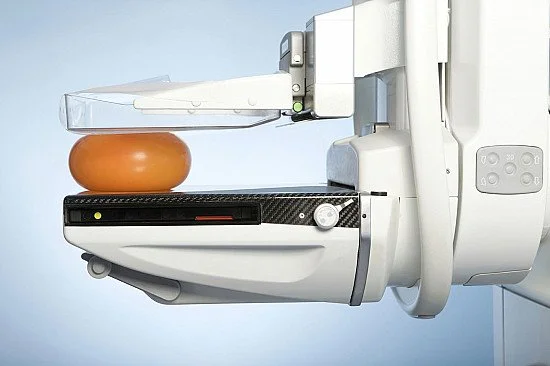
Diagnostic - A diagnostic mammogram is used to diagnose changes in the breast, such as pain, nipple discharge, a lump, or a change in breast size and/or shape. Mammograms require that the breast be compressed so that the X-ray can penetrate the tissue easily. The machine that performs the mammogram helps to compress the breast tissue and spread it apart so that a lower dose of radiation is used.
Mammograms are supposed to be able to show many different things, such as:
Macrocalcifications - coarse calcium deposits that can indicate aging arteries, old injuries, or inflammations
Microcalcifications - tiny specks of calcium that are less than 1/50 of an inch.
Masses - these can be due to different causes, such as cysts (a non-cancerous collection of fluid in the breast), benign conditions (non-cancerous masses), and breast cancer.
BENEFITS OF MAMMOGRAMS
Women are told that mammograms are very important for protecting their health. According to some sources, mammograms allow us to find smaller tumors and this enables us to begin treatment sooner. A study published in the Journal of the National Cancer Institute (JNCI) says that women whose breast cancer is found with a mammogram tend to live longer than those who find their cancer by feeling a lump.
Mammograms also are said to find tumors in earlier stages than other methods. Again, this leads to earlier treatment and the possibility of avoiding a mastectomy.
DANGERS OF MAMMOGRAMS
Some healthcare professionals, even those who are within the modern medical system, are voicing the opinion that mammograms are dangerous and risky. Some professionals are saying that mammograms can actually cause the cancer they are supposed to help diagnose! Mammograms have many risks that should not be taken lightly.
Radiation
Most people realize that radiation is not a desirable thing to submit the body to. While the modern medical system assures us that the amount of radiation that the body receives from a mammogram is very very small (and similar to a chest x-ray) the practice of taking four films per breast results in 1 rad (radiation-absorbed dose) of exposure, and this radiation is focused only on the breast itself. It has been established that, for each rad of exposure, the risk of developing breast cancer rises one to two percent. This means that a woman who has one mammogram every year will have a 10-20% higher chance of developing breast cancer in ten years than a woman who does not submit to the procedure.
It was in 1976 that mammograms were hotly debated. At that time, mammograms delivered 5-10 rads per screening. In the 1960s and 1970s, some women were getting up to ten mammogram screenings every year and were never told the risks they were facing by submitting to this testing. Regardless of increased technology that delivers fewer rads per screening, Dr. John W. Gofman (an authority on the health consequences of radiation) estimates that roughly 75% of breast cancer can be prevented by avoiding or minimizing exposure to radiation!
Radiation also poses a higher risk to younger women. Mammograms have been shown to be responsible for causing 75 cases of breast cancer for every 15 identified in women under 35. A Canadian study has shown that young women who had mammograms had a 52% increase in mortality from breast cancer.
"The risk of radiation-induced breast cancer has long been a concern to mammographers and has driven the efforts to minimize radiation dose per examination," says a panel of experts. "Radiation can cause breast cancer in women, and the risk is proportional to the dose. The younger the woman is at the time of exposure, the greater her lifetime risk for breast cancer". Because breast cancer caused by radiation is not immediate, this aspect of mammograms is often overlooked. The delay between exposure and cancer can be several decades for some women, so pinpointing a possible cause to the radiation she has been receiving from chest X-rays or, even worse, mammograms, is often overlooked. This omission creates a false sense of safety in the minds of the medical system as well as the unsuspecting women who eagerly schedule their yearly mammograms.
Breast Compression
Mammograms not only expose the breast to radiation, but they also expose them to high levels of compression. This aspect of mammograms is often overlooked and seen as just an uncomfortable necessity for breast health. Isn't it curious that the medical system encourages the heavy compression in the breasts that is necessary for a mammogram test while, even as early as the 1920s, it was a well-known fact within the medical community itself that cancers must not be roughly handled? Doctors said in the 1920s that cancerous breasts must be handled with care "for fear of accidentally disseminating cells" and spreading the cancer.
Handling cancer gently is a widely accepted attitude throughout the modern medical system. That is, however, until it comes to testing for the disease. Why is it that one must handle tumors very carefully, but the doctors feel no regret in piercing a tumor with a needle to check for cancer or compressing it as flat as they can get for an X-ray?
Doctors are indeed very rough when they are handling a breast. One survey found that mammographers used "as much compression as the patient could tolerate" without regard to recommended rates. In doing this, most mammographers have no idea how much compression they are actually using, and they don't really care, because their focus is on getting a good picture no matter what the cost. How much compression is recommended for a good mammogram? The public will be very surprised to learn that the recommended force to compress a breast during a mammogram is 300 newtons. In terms that everyone can understand, 300 newtons is roughly equivalent to 50 pounds. That is like asking a five-year-old child to stand on top of a breast!
So what happens to a tumor that is inside the breast when the weight of a small child is applied to it? One animal study showed that the number of metastases (spreading of the cancer to other areas or organs) increased by 80% when the tumor was manipulated. Saying that the compression of the breast during a mammogram could "manipulate" a tumor is an understatement.
Unreliability
Our trust in the modern medical system is immeasurable. While we may not like to consciously admit it, we place our doctors and surgeons on the same level as our chosen God: they can do no wrong! We think they have our best interest at heart and that they will do anything to ensure our well-being. This being the case, we then blindly trust and follow their directions and advice. The medical system and its organizations tell us that mammograms save lives, so we believe that they save lives. They tell us that they are safe, and we believe they are safe. And they talk to us with authority, so we believe they know what they are doing.
In the case of mammograms, despite what the medical system tells us, they are not all that reliable. Some critics tell us that mammography is not an effective tool for detecting tumors at all. In a Swedish study of 60,000 women who had mammograms that showed tumors, 70% of the time these findings were incorrect, and the so-called tumor that the mammogram detected was not a tumor. This shows a very high false positive rate, causing both financial and emotional hardship and worry, and in some cases, unnecessary biopsies and other interventions. Other studies show that 70-80% of all positive mammograms do not show any presence of cancer when biopsies are taken! There is also a high number of false positive results in post-menopausal women on estrogen replacement therapy. A study showed that for women with multiple high-risk factors such as family history, prolonged use of the contraceptive pill, early menarche, and nulliparity (not having children), the cumulative risk of false positive results increases as high as 100% just within ten years.
Mammograms also have a high rate of false negatives - cases where the mammogram showed up negative when there was cancer present. In the book The Politics of Cancer, Dr. Samuel S.
Epstein claims that one in four cases of cancer is missed at each mammography in women ages 40-49. Spokespeople from the National Institutes of Health admit that the test misses over 10% of cancerous tumors in women over 50.
Additionally, the reading of the mammograms is often wrong. In 1996, the journal Archives of Internal Medicine published results from a test of 108 radiologists throughout the USA. The radiologists were tested on 79 mammograms with known and proven results. The radiologists missed cancer in 21% of the films, thought 10% of the women with no breast disease had cancer, and thought 42% of benign lesions were cancerous. Radiologists are not properly trained to do these tests, yet we continue to submit to them. This is absurd and is like visiting a dentist to see if our arm is broken!
Meanwhile, the medical system and its organizations (especially the American Cancer Society) strongly maintain that mammograms are necessary for women over age 40! It is curious why the medical system would make pre-menopausal women undergo yearly or biyearly mammograms when there are a high number of false positives and false negatives. Perhaps the reason is that screening all pre-menopausal women means spending about $2.5 billion every year! If all post-menopausal women were also screened every year, this figure would be increased to $10 million annually!
Failure to reduce mortality
Despite claims that mammograms reduce breast cancer mortality significantly because they find tumors easily and early, allowing for quick treatment, studies show results to the contrary.
The claims that promote mammograms are based on eight international studies involving about 500,000 women; a recent meta-analysis, however, has shown that only a mere two (based on 66,000 postmenopausal women) were adequate enough to show statistically valid conclusions. Other studies show opposite results and prove that mammograms do not reduce mortality.
A recent Canadian National Breast Cancer Screening Study reported results of a trial of 40,000 women aged 50-59 who were followed for 9-13 years. The study stated, "In women aged 50-59 years, the addition of annual mammography screening to physical examination has no impact on breast cancer mortality." Numerous studies show that more women under fifty die who have had mammograms than those who have not!
Another study has concluded that "the annual mammographic screening of 10,000 women aged 50-70 will extend the lives of, at best, 26 of them, and an annual screening of 10,000 women in their 40s will extend the lives of only 12 women per year"! This means that only 26% of women's lives (aged 50-70) are extended due to mammograms and .12% of women in their 40's will have longer lives!
THE CONSPIRACY
Now that the benefits and dangers of mammograms are on the table, we have room to take a peek into another aspect of mammograms that the public does not typically bother to research but that is very important: who is pushing mammograms and for what reason?
Professor Malcolm C. Pike from the University of Southern California School of Medicine warned the National Cancer Institute that giving a woman routine mammograms was "close to unethical" due to the health risks involved. A handful of authorities cried out against mammograms, but their voices were muted quickly because the American Cancer Society and radiologists saw mammograms and the politics of cancer to be highly lucrative.
As stated previously, in the 1960s and 1970s women were given sometimes four mammograms a year! They were told only of their supposed benefits and nothing of the hazards and risks involved with the testing. Director of Biostatistics at Roswell Park Memorial Institute for Cancer Research Irwin J.D. Bross said in 1978, "The women would have been given the information about the hazards of radiation at the same time they were given the sales talk for mammography...Doctors were gung-ho to use it on a wide scale. They went right ahead and X-rayed not just a few women, but a quarter of a million women... A jump to the exposure of a quarter of a million persons to something which could do more harm than good was criminal and it was supported by money from the federal government and the American Cancer Society."
Mammograms are still being pushed today, despite their obvious faults and cancer-causing traits. It is big money for the medical system, pharmaceutical companies (who supply chemotherapy for cancer patients who are victims of mammograms), and the American Cancer Society itself, which has close relations with people in all aspects of power when it comes to mammograms:
• Five radiologists(people who perform X-rays and mammograms) have served as American Cancer Society presidents.
• The American Cancer Society protects the interests of Siemens, DuPont, General Electric, Eastman Kodak, and Piker, manufacturers of mammogram machines and films.
• The mammogram industry players (including some of those mentioned above) serve on advisory boards, conduct research for the American Cancer Society, and donate a lot of money to the ACS.
• DuPont sponsors television shows and media productions promoting mammograms, produces advertising, and promotional or informational literature for hospitals, clinics, doctors, and medical organizations on mammograms, and lobbies Congress or promoting mammogram services.
It is ultimately up to the patient to decide what he or she will and will not allow the medical system to do to or for their body and health. It is the ignorance and laziness of the consumer that the medical system relies on, for these attitudes allow them to get away with using corrupted science, harmful chemicals, and dangerous techniques in the name of saving lives. Most people who have managed to free themselves of the strong grasp of the medical system realize that, like any other business, the medical system as a whole doesn't give a flying frog about individuals or their health and well-being. They care about profits and power. A little thing like mammograms causing breast cancer will not stand in the way of the system collecting billions of dollars from this market!