Continuing Imperialism Government and Religious Tactics
Spotlight: Continuing Imperialism Government and Religious Tactics
Examples of colonialism and imperialism are not lacking in the news, but for one living in a society that practices these tactics on the world (including their own citizens), they can be difficult to recognize. Hopefully, by becoming more aware of examples of such practices, we can begin to see when they are happening around us.
EGYPT'S MUFTI BANS STATUES
Grand Mufti (a Muslim scholar who interprets the sharia.) Ali Gomaa has issued a fatwa (a legal opinion or ruling issued by an Islamic scholar) that bans the display of statues. The fatwa, for now, concentrates on statues in homes, but the interpretation of this Islamic ruling cannot necessarily be limited. Grand Mufti Gomaa is considered to be the most important Islamic leader in Egypt and is listened to by Muslims far beyond his home country. He assesses Islamic law and its application according to Islam's sacred writings, and his conclusions are published as occasional fatwas. Grand Mufti Gomaa expects all faithful Muslims to follow his fatwas.
This new fatwa prohibits Muslims from producing or displaying sculptures in their homes. He has declared possessing sculptures "un-Islamic", calling for all sculptors and vendors to give up their trades. Sculptors and their work are now condemned under Islamic rules.
Although this fatwa does not directly target sculptures in museums and at historic sights, it is not unforeseeable that this will be an eventuality. Egypt has one of the world's highest densities of historic sculptures, and non-Muslims fear that this fatwa will endanger them. While this may seem harsh and extreme, it has happened - the Taliban regime in Afghanistan destroyed the ancient Buddha sculptures at Bamyan, a protected World Heritage site, a few years ago.
The Egyptian government has a history of ignoring fatwas such as these, and it does not seem feasible that the government would change this tactic now. Egypt's historic and modern artwork provides huge contributions to the nation's economy, and to lose this money would devastate the country as a whole.
Knowing this, the Islamic leader still bans display statues...it causes one to wonder the real motives behind this decision.

Meanwhile, intellectuals are outraged. Modern sculptors are finding themselves in a huge dilemma, as most come from poor communities and manage to provide for themselves and their families by selling replicas of ancient statues to tourists. But now, thanks to Gomaa, they are condemned under Islamic law. They are thus at heavy risk of attacks from Islamists, for according to the Hadith (a collection of quotes from Prophet Mohammed), sculptors should be treated harshly on Judgement Day.
Gomaa's ruling overturned a fatwa made by Grand Mufti Mohammed Abdu, the previous leader, which permitted the production and display of sculptures as long as they were not for worshipping. Gomaa explained that his ruling was intended to protect Muslims against sculptures. It comes amidst cartoons of the Prophet Mohammed.
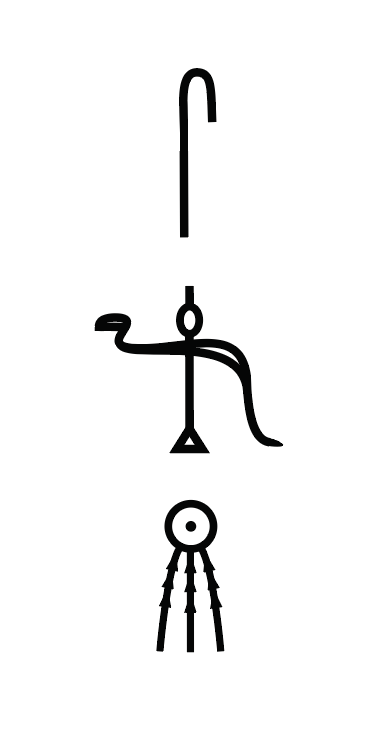
Gomaa also recognized that Egypt has a long history of "sculpture worship" that was extremely strong in pre-Islamic times. Perhaps Gomaa is threatened by the increasing revival in traditional African (Kemetic, or Ancient Egyptian) spirituality, and thus feels the need to ban statues that threaten the power of Islam in the homeland.
This issue affects people not only in Egypt but around the world, for faithful Muslims everywhere strive to adhere closely to the fatwas. This new ruling has the potential to become problematic for people on every continent, as almost every religion or spiritual system has statues that are displayed. From the Christian cross to the Buddha, and from Rama to Heru, sculptures play an important role in other religions. To ban their presence is an attack on all other religions and spiritual systems.
PRO-GAY CHURCH IN KENYA AND UGANDA
Kenya and Uganda are, for the most part, unaccepting of gays and lesbians, as this "alternative" lifestyle is not a part of their traditional culture or spirituality. Despite this fact, St.
Sebastian Church Community (based in the Spanish Canary Islands), a church that not only accepts homosexuals but actively recruits them, is establishing a fellowship in these two countries. The community of St Sebastian is based in the Gran Canaria holiday resort of Playa del Inglés, which itself is one of the world's leading gay tourist destinations.
Reverand Paul Gibson, leader of the St. Sebastian church community, is excited about this endeavor. He said these fellowships are "only the beginning of a new fully inclusive church that will grow in strength and stature, while also becoming a voice for Christians who have been marginalized by an out-of-date system of administration. Gibson is aiming worldwide for this expansion and already has tried to bring a fellowship to Britain, where the fellowship failed.
Reverand Gibson refuses to reveal details on the fellowships in Kenya and Uganda, including their locations. Recent governmental attacks on gay and lesbian communities in both countries have scared many people, including those in the churches.
"With the increasing interest amongst marginalized people in Africa and Asia, as well in parts of Europe, it has been decided to concentrate on these areas of need primarily." he said.
It is interesting that the community would head directly to Africa, where historically, Christians have come to colonize and enslave the people. Now, once again, they bring the same Jesus and the same Bible to indoctrinate the new generations not only in Christianity but in homosexuality as well.