Fair Trade & International Politics
Earth Talk: Fair Trade & International Politics
A woman in West Africa picks cotton in a field in the Fana region of Mali. She works from dawn to dusk, stopping only to eat and tend to her baby, who is strapped on her back. Her hands are callused and scratched, and she eats only two meals a day. This woman's daily life is no different than that of millions of other people in the world. Most employees of corporate America enjoy a level of financial stability that many people in the world do not - one goes to work five days a week for roughly eight hours, and after two weeks, comes home with a paycheck that pays the mortgage, food, utilities, and other expenses, and then some. Even the lowest-paid entry-level positions offer the financial freedom necessary for workers to be able to focus their attention somewhere other than on their basic survival, as shelter, food, and necessities are generally covered by one's income and when it isn't, government programs exist to help supplement the disparities). Yes, we Americans take much for granted and are, generally, a blind lot who do not understand how our greed and comfort contribute to the suffering of others. As we blissfully sip our morning cup-o’-joe in our air-conditioned car, home, or office, we tend to think of our own preoccupying lives, wishes, hopes, and desires. While we drive our cars to work, to the mall, or to baseball practice, we complain to ourselves about the rising cost of gasoline. Meanwhile, the coffee grower in another part of the world cannot afford to eat or educate his children because he was forced to sell his coffee beans at a price that is below the cost of production. The sweatshop worker who made our trendy shirt can only afford to provide her family of six one meal of rice and beans a day. And the worker who pumped the oil that fuels our car is slowly dying because he cannot afford both food and the medicine needed to cure him of work-related diseases.
Why is it that so much of what we consume relates directly or indirectly to the suffering of other individuals elsewhere in the world? Many conscience economists blame unfair international trade policies.
FREE TRADE
It is the subject of many demonstrations. It has caused many WTO disruptions. It is free trade, and many people in modern countries are starting to feel their conscious itching their minds.
Much of the modern world operates under a "free trade" system. Under free trade, countries do not impose taxes or tariffs on imported goods, nor do they use quotas. Under "free trade", a minimum of government restraints are imposed on imports, and certain industries are banned from subsidies. Domestic industries get no special favors, and they must compete in an open international marketplace. Theoretically, if a region uses its labor pool and natural resources to specialize in one product or service, this will lead to greater efficiency, higher production, and benefits for everyone. Theoretically, this system is supposed to create jobs and reduce poverty. But in practice, it does none of these things. Free trade has proven to have many faults.
Trade Deficit - Some countries have experienced a huge trade deficit with free trade. When markets are opened internationally, many countries have more goods coming in than they do going out. This results in a trade deficit and, ultimately, in a country becoming very dependent on other countries for their goods and necessities.
Job Outsourcing - Many people have lost their jobs due to companies moving production to cheaper areas where labor costs are drastically less expensive. The jobs that are lost tend to be more blue-collar, and this creates a problem for the working class.
Environmental Concerns - Goods can be produced more cheaply when protecting the environment is not a top concern. The free trade system encourages international competition, which means that countries that do not protect the environment can produce something more cheaply than one that does consider the environmental impact of their industry.
Health Concerns - Is food that is farmed in the USA the same quality as food that is farmed in Africa? Absolutely not! How can a pesticide-ridden, chemical-drenched, genetically modified crop be compared with an organically grown, natural one? Yet agricultural giants in the USA and Europe export food to other countries, replacing the locally grown (and generally healthier) varieties.
Subsidies - Rich countries can afford to subsidize goods and products, and thus help protect their own manufacturers. Subsidies are payments (often in cash) to farmers producing a crop or raising a certain animal, such as rice, milk, grains, meat, corn, etc. For example, the European Union pays subsidies to sugar-beet farmers, encouraging them to produce so much sugar that the EU produced about 40% of the world's sugar exports in 2001. Meanwhile, sugar farmers in countries such as Mozambique, who actually produce sugar more cheaply, cannot sell their sugar because the EU subsidies have made it possible for the sugar price to drop to unrealistic levels. In 2004, farmers in the US, EU, Australia, Japan, Canada, and a few others received $279 billion in government subsidies. This causes these countries to dump their excess in developing countries, selling them at an extremely low price, making locally grown crops very expensive in comparison.
Poverty - Rich countries grow richer while poor countries grow poorer. Even in places where huge corporations from the USA and Europe relocate, they pay very poor wages and destroy the environment. Small farmers drown when they try to swim in the same ocean as multinational agro giants. Poorer countries cannot afford to subsidize their produce. They are forced to rely on loans from the richer countries and international organizations, and these loans come with a catch - that they abide by the rules of free trade. This means that they are not allowed to subsidize farmers (a policy that the richer countries practice!), tax imports, or otherwise protect their own markets. Meanwhile, many of the richer countries do just that.
Dependence - Developing countries become increasingly dependent on developed countries for money, food, and other needs. This is a very serious complication that contributes to world instability. Our food supply is at risk of being taken over by a few agricultural giants. Our diversity is at risk of diminishing under Western pressure.
Representation - Those who set the rules of international trade are those in power. This means that the poor, developing countries have little say in international rules and regulations. Those in power assure that they will remain in power, giving little opportunity for anyone to progress beyond their current stature and encouraging further poverty and dependence.
Corruption - Powerful countries do not often play by the rules. While a developing country may be banned from certain practices, those in power do not always abide by their own policies. Those with less resources have little recourse against the offending country.
FAIRTRADE
What is the alternative to a free-trade world? Many people are starting to consider "Fair Trade" a viable option. The Fairtrade movement began in Europe in the 1960s. Initially, it was a project of several churches that were hoping to provide relief to refugees and other poor communities by selling their crafts. In the 1970s, other alternative trade organizations joined the effort by importing handicrafts at a fair price and selling them to specialized stores and social/church groups.
Fair Trade Principles
The Fairtrade system is simple - importers pay the producers of a food or product a fair market price for their goods rather than the mainstream price, which is often absurdly low due to unfair trade practices. Under Fairtrade, farmers and other producers have an opportunity to sell their goods at a price that is above the costs of production, ensuring their livelihood does not suffer because of the greed of powerful governments and the industries they protect.
Relationships are established between low-income farmers and artisans (usually from developing countries) and marketers in developed countries.
Fairtrade participants accept many basic principles, which must be met to carry a Fairtrade logo:
• producers must receive a stable minimum price for their products
• producers must be democratically organized
• forced or child labor is not to be used in the production of any product
• producers get financial and technical advice as needed
• there is support for social and economic development projects in the community
• production methods are environmentally friendly
Producers also form cooperatives, allowing resources to be combined to improve the efficiency of production. These coops are in a stronger position to negotiate with authorities at all levels and are controlled by their members. They can apply for loans to expand and grow.
FINE, a group of organizations including Fairtrade
Labeling Organizations International, International Fair Trade Association, Network of European World-shops, and European Fair Trade Association, define free trade as, “...a trading partnership based on dialogue, transparency, and respect, that seeks greater equity in international trade. It contributes to sustainable development by offering better trading conditions to and securing the rights of, marginalized producers and workers - especially in the South. Fairtrade organizations are engaged actively in supporting producers, awareness raising, and campaigning for changes in the rules and practice of conventional international trade."
Fairtrade Labeling
The goals of Fairtrade do not just include fair pricing, but also ethical purchasing. Child labor and slave labor are banned, as are unsafe work environments. Under the Fairtrade principles, workers must have the right to unionize and the environment must be protected. For consumers, Fairtrade seeks to guarantee high-quality and conscious shopping. For a product to feature a Fairtrade label, it must meet all of the Fairtrade principles.
Labeling Fairtrade ducts began with Mexican coffee farmers in 1988. Coffee imported to the Netherlands was labeled by a Dutch development agency called Solidaridad under the name of Max Havelaar. This labeling system is known today as "Fairtrade" or "Fair Trade Certified" and includes the Max Havelaar and TransFair labels.
Fairtrade Labeling Organizations International (FLO) was formed in 1997 and has since become the main worldwide body certifying that products meet Fairtrade principles. There are about twenty national affiliates under FLO.
Most Fairtrade products will show a Fairtrade Mark on the packaging. The Fairtrade Mark is the only independent guarantee to consumers that an item is a Fairtrade item rather than a free trade item. Sometimes, however, a product may claim to be Fairtrade but does not feature the Fairtrade Mark; one can verify the claim of being Fairtrade by checking with the International Federation of Alternative Trade (IFAT) at www.ifat.org.
Current products covered by the Fairtrade Mark include coffee, tea, wine, rice, chocolate, cocoa, honey, bananas, sugar, orange juice, mangoes, and products where any of the above are key ingredients. Footballs have recently been introduced into the Fairtrade Mark labeling as the first non-food product, and more items are being introduced slowly.
One should note that just because a company has a product that is Fairtrade does not mean that the company is 100% Fairtrade. For example, Equal Exchange is a 100% Fairtrade coffee company. Green Mountain Coffee Roasters also have Fairtrade coffee, but only about 20% of their coffee products are Fairtrade.
COFFEE
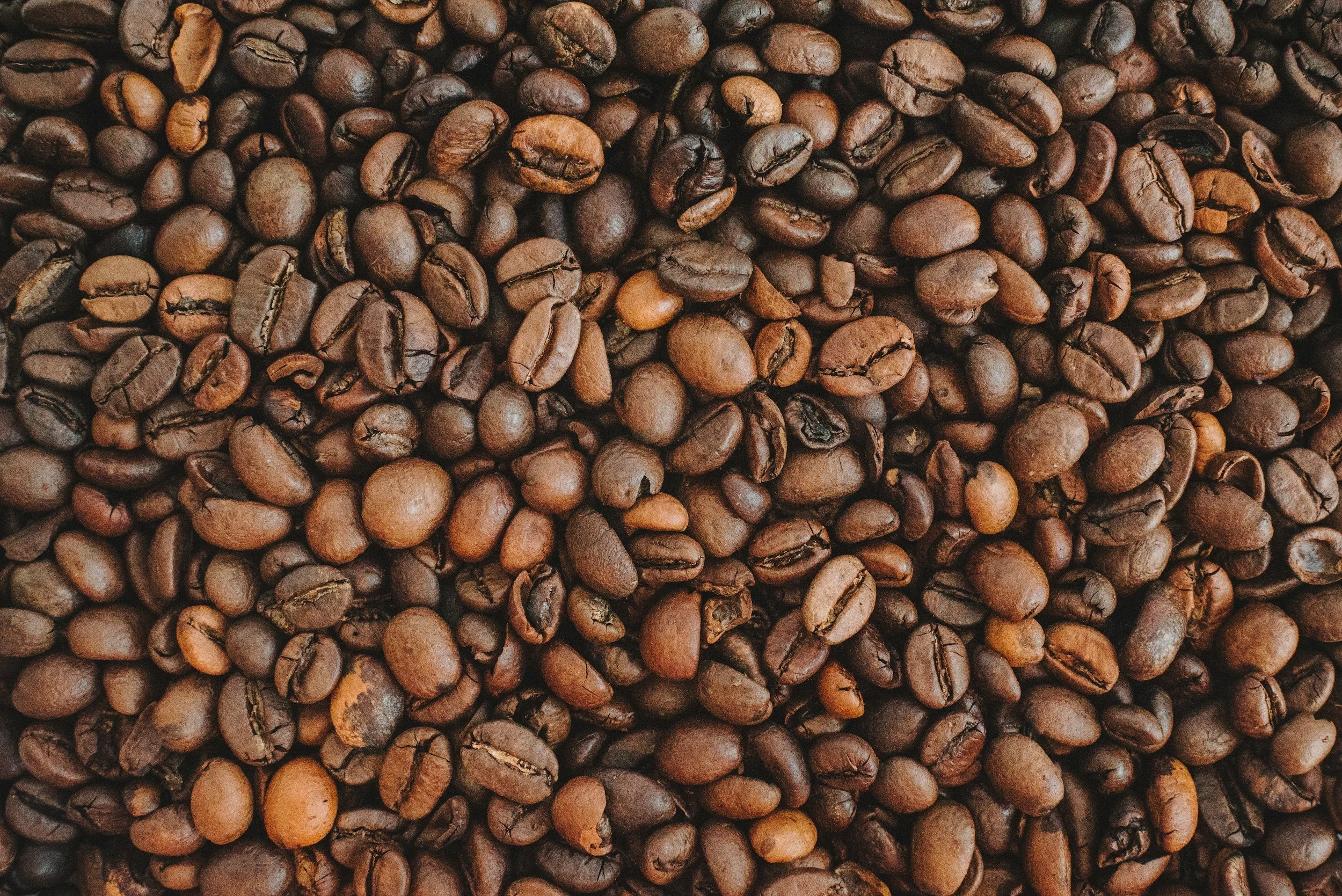
Over 25 million people depend on growing coffee for their livelihood, but because of free trade practices, hardly any of the money that we pay for our breakfast beverage goes to the growers.
Coffee giants like Nestle, Kraft, and Sara Lee milk the coffee producers dry while they make huge profits, leaving coffee growers poor, hungry, and desperate, as developing country growers are forced to sell their beans for much less than it costs to produce. The price of coffee has fallen by almost 50% in the last few years and is at a 30-year low.
Families who grow coffee have started pulling their children out of school (especially the girls) because they simply cannot afford to pay schooling fees. They can not afford medicine and oftentimes do not eat as much as they need. Many coffee traders are going out of business, and national economies are collapsing.
While Nestle made an estimated 26% profit margin on instant coffee and Sara Lee's profits are at 17%, coffee farmers are suffering. The five major coffee roasters (Kraft, Nestle, Procter & Gamble, Tchibo, and Sara Lee) buy almost half of the world's coffee beans each year. Farmers, on the other hand, are pulling in less money than what it costs to produce the beans, forcing them to spiral into a downhill hurricane of debt and desperation.
Coffee is the second biggest commodity in international trade. Most growers are family farmers who are barely able to survive due to the impossibly low prices they are being paid for their beans. Most coffee is grown in Africa, Asia, and Latin America, in countries that are developing. An estimated 560,000 coffee growers exist in Colombia alone, and the families that are producing our beloved cup-o'-joe are in real danger of starving to death.
Fairtrade coffee helps the family farmers immensely. While mainstream coffee is bought at $0.45 a pound, Fairtrade coffee is purchased at $1.26 per pound for conventional coffee and $1.41 per pound for organic coffee. (More than 85% of the Fairtrade coffee sold in the USA is organic).
Most companies with a conscious, such as Higher Grounds Trading Company in Michigan, are very dedicated to the Fairtrade movement. "We would shut our doors before selling anything but Fairtrade coffee," said Jody Treter, co-founder of the company. Higher Grounds buys coffee from Mut Vitz and Maya Vinic, two cooperatives in Mexico, and actually visits the cooperatives every year! They also buy Fairtrade coffee from Sumatra, Peru, Ethiopia, Columbia, and Nicaragua.
"I'd like to tell people in your place that the drink they are enjoying is the cause of all our problems. We grow it with our sweat and sell it for nothing," says Lawrence Seguya of Uganda. In Vitenam's Dak Lak Province, farmers sell their beans for 60% of production costs. Farmers in remote regions often do not have roads, technical backup, credit, or any way of gaining information on market value. They are forced to sell their coffee to tyrants at a "take it or leave it" price.
FAIRTRADE BENEFITS
Why buy Fairtrade products? After all, they tend to be a bit more expensive than free-trade products. What are the benefits of Fairtrade?
Jobs - Fairtrade ensures that people will be able to work and feed their families. Farmers and producers are given a fair price for their products, which is guaranteed to be above production costs, allowing them to actually make a living rather than sink further into debt.
Economy - Fairtrade helps ensure that the entire economy and stability of countries will remain intact. It protects countries from being at the whim of stronger nations. Fairtrade also encourages economic growth at both the individual and national levels.
Environment - Fairtrade products are environmentally-friendly. Many food products that are Fairtrade are organic. All products must meet basic environmental safety guidelines. Buying Fairtrade products not only helps protect the environment but also sends a message to other large companies that people demand that we protect the Earth.
Health - Fairtrade products are high-quality products.
Not only do they usually taste better, but they are generally better for you, as they have been grown under stricter standards and in a cleaner environment. Buying Fairtrade food and other products also encourages farmers to resist foreign pressure to use chemicals, genetically modified seeds, and other health-harming agents, as they will be more independent.
Independence - Fairtrade allows people in developing countries to gain independence from the Western world. It allows people the basic right to feed themselves (rather than having to rely on foreign food that was dumped into their country) and have access to a healthy diet. Fairtrade encourages local participation and responsibility and decreases the need for aid and loans.
Representation - Within Fairtrade, even the family farmers participate in the process. Every producer is encouraged to learn about the business of selling their product, and small farmers (and poor countries) can protect their interests and survival.
Social Justice - It is not just to force a farmer into debt and poverty so those who are better off can pay a quarter less for a cup of coffee. It is not conscientious for big businesses to starve producers while they make large profits. It is not just for the powerful nations of the world to ignore the needs of developing nations. Fairtrade helps solve these world issues, one cup of coffee at a time.
Buying Fairtrade goods will cost a bit more than normally traded items, but the extra few dollars spent actually go to the producers rather than the huge companies who exploit them. Find a list of Fairtrade shops at www.fairtradefederation.com/mshop.com