
Ginger: The Healing Spice
Ginger: The Healing Spice
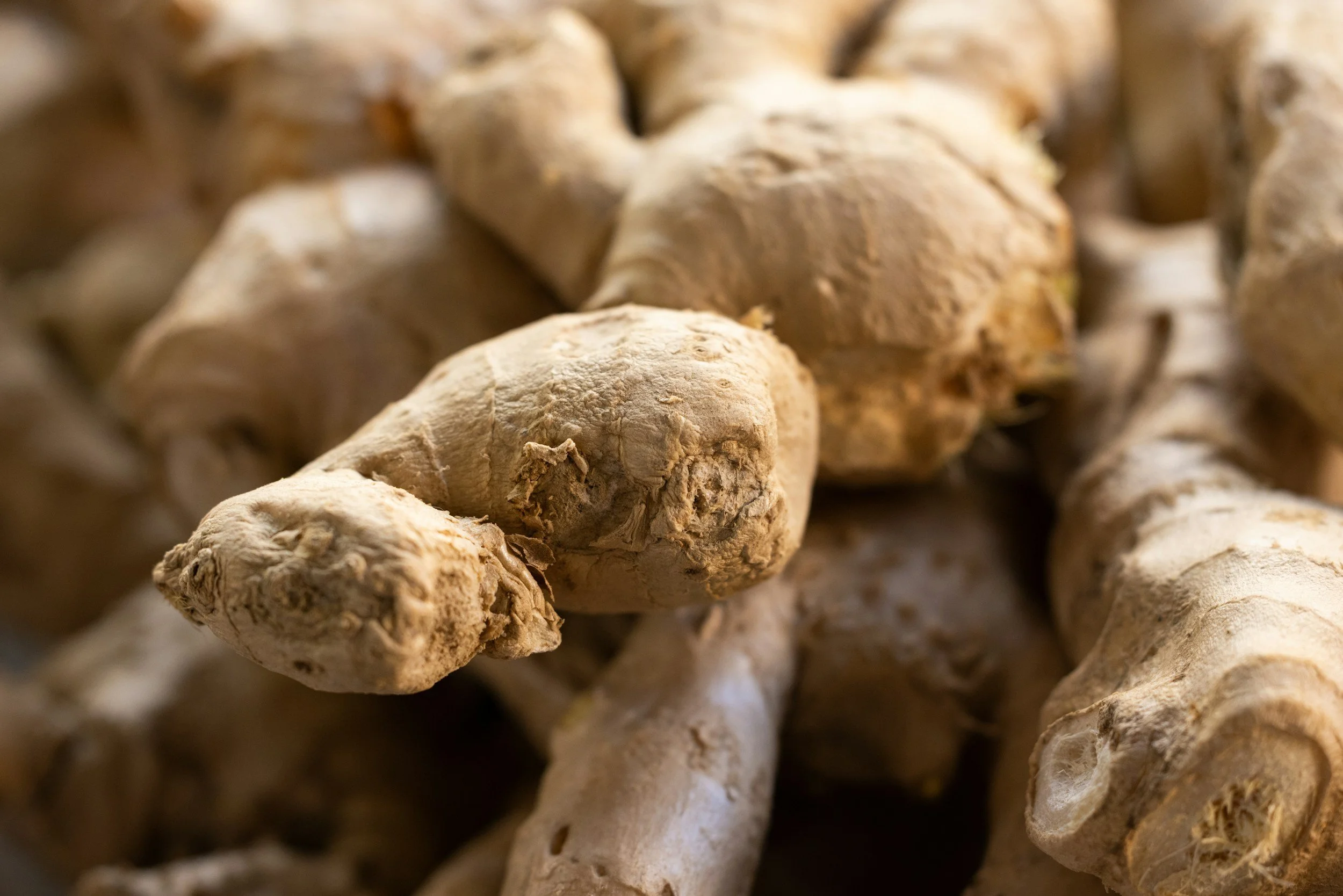
The spice ginger is used in many ethnic dishes and has become the trade-mark of that which calms the adventurous palate. Ginger gives a hint of tang and spice to what may otherwise be an ordinary and bland dish. Ginger is an herb that has proven itself not only in the kitchen, but in the realm of healing as well.
Zingiber officinale, or Ginger, grows in a humid, frost-free environment and is found in Africa, India, China and Jamaica. This perennial herb grows in stalks of 2-4 feet with leaves that grow 6-12 inches long. The root, or rhizome (a horizontal stem on or under the soil) is the most useful part of the plant and is generally not used until it is more than one year old.
Ginger is known for its anti-nausea properties. Mothers have been prescribing ginger ale for upset stomachs for decades, and despite criticism that the effects were psychological, many stomachs have been calmed and pacified by this folklore solution. Pregnant women often find their cure for morning sickness in ginger tea, as it is effective in calming hte stomach and preventing vomiting. For those who may be looking for a simple remedy for a hangover, ginger tea may also be the solution for nausea and an uneasy stomach. Motion sickness has also been lessened with ginger - when traveling by car, plane or boat, many passengers take ginger before departing to help squash nausea.
Gingerol, one of ginger's active components, has many beneficial properties. It slows thromboxane production and thins the blood, reducing the tendency of the arteries to clog (two capsules of ginger twice a day between meals have helped to replace prescribed oral anticoagulants in patients subject to blood clots). As an anti-aggregatory agent, ginger helps prevent strokes. Gingerol acts as an anti- inflammatory agent as well and, like NSAIDS (non-steroidal anti- inflammatory drugs), inhibits prostaglandin. This slows biochemical pathways, reducing inflammation and pain. As an antipyretic, gingerol helps reduce fever.
Traditionally, ginger has been used for centuries. Today the herb is still being used for medicinal purposes across the globe. Tibetans use ginger to simulate vital energies in a person who is lethargic, recovering from illness, or debilitated. In China, ginger has a strong presence and is used to treat rheumatism, bacterial dysentery, malaria, diarrhea, toothache, and the common cold. Using ginger oil is a popular remedy for spine and joint problems in Japan. This soothing herb is also used as a body cleanser, sore throat syrup, respiratory expectorant, digestive stimulator, diaphoretic agent (encourages sweating to help remove toxins) and as a kidney stimulator. It is also known as a carminative, relieving gas and cramping in the stomach and intestines.
Dosage information varies depending on the use of the herb. Generally, one ounce of ginger root to one pint of water is standard, but one should always consult a professional before use.
Ginger Tea
Tea made from ginger root is effective for colds, flu, nausea, coughs, hangovers, fever, mucus buildup, and to encourage menstruation when it is delayed by illness.
Ginger tea is easy to make. Cut ginger into pieces or grate enough to fill two tablespoons. Boil 2 cups of water and pour over ginger. The tea should be allowed to steep for at least twenty minutes. For fever and mucus, drink one cup every 2-1/2 hours. Two cups a day should improve other conditions, but the tea can be consumed as needed without ill effect.
Hot Ginger Compress
Ginger compresses are great for muscular aches, sinus congestion, kidney problems, cramps, stiff neck, bladder inflammation, joint pain, and body tension. The liquid not used as a compress can be added to bath water to help relieve sore muscles or back.
Wash one to two ginger roots. Grate them while you boil one gallon of water. Place grated ginger in muslin cloth and tie with a string or fishing wire, making a bag (be sure to leave enough space so that the water can flow through it). Put the bag into the pot and simmer, covered, for about eight minutes. Press the bag of ginger against the side of the pot with a wooden ladle to help extract the juice. The water should be a deep yellow.
Dip a hand towel into the pot and gently squeeze excess water back into the pot. Fold the towel to desired size and place it on the skin of the affected areas. To be effective, compresses should be as hot as possible without causing harm to the skin. A second compress may be placed on top of or beside the first. Cover the compresses with a folded bath towel to retain heat. Let sit for 15-20 minutes before removing the compresses. Refresh the compresses and re-apply to the affected area immediately for best results. Repeat as necessary.
Ginger can be found at virtually any supermarket or grocery store and is inexpensive. It is always good to have ginger in the kitchen - whether you need it to add flavor to your cooking or to help settle an upset stomach, ginger will get the job done.